
The Supreme Court has financially destroyed a lawyer for warning a school about a pedophile.
Richard Trahant represents clergy abuse survivors in the New Orleans Catholic archdiocese’s 2020 federal bankruptcy proceeding. In late 2021, through that process, he surfaced evidence that a priest named Paul Hart had secretly admitted to his superiors to sexual contact with a 17-year-old girl in the early 1990s. The church already knew. Hart had confessed internally in 2012. A review board recommended his removal. Archbishop Gregory Aymond overruled the board and, in 2017, assigned Hart as chaplain at Brother Martin, an all-boys high school. When Trahant discovered this history, he did not leak the estate’s financial documents. He warned his cousin, the school’s principal, that a documented predator was on campus. The school later confirmed in a deposition that it received the specific details of Hart’s misconduct directly from the archdiocese, not from Trahant.
A working-bar attorney can reconstruct Judge Meredith Grabill’s position: bankruptcy courts depend on protective orders to manage sensitive estate information, and 11 U.S.C. § 105 gives the court equitable authority to enforce those orders and sanction violators. The protective order exists to shield the bankruptcy estate — its assets, its negotiations, its settlement posture. A warning to a high school principal that a credibly accused priest is currently assigned to minister to minors is not a disclosure of estate financial information. It is a child-safety disclosure to the institution employing the predator. An honest application of § 105’s equitable authority would have recognized that distinction. The court had the power to draw it. It chose not to.
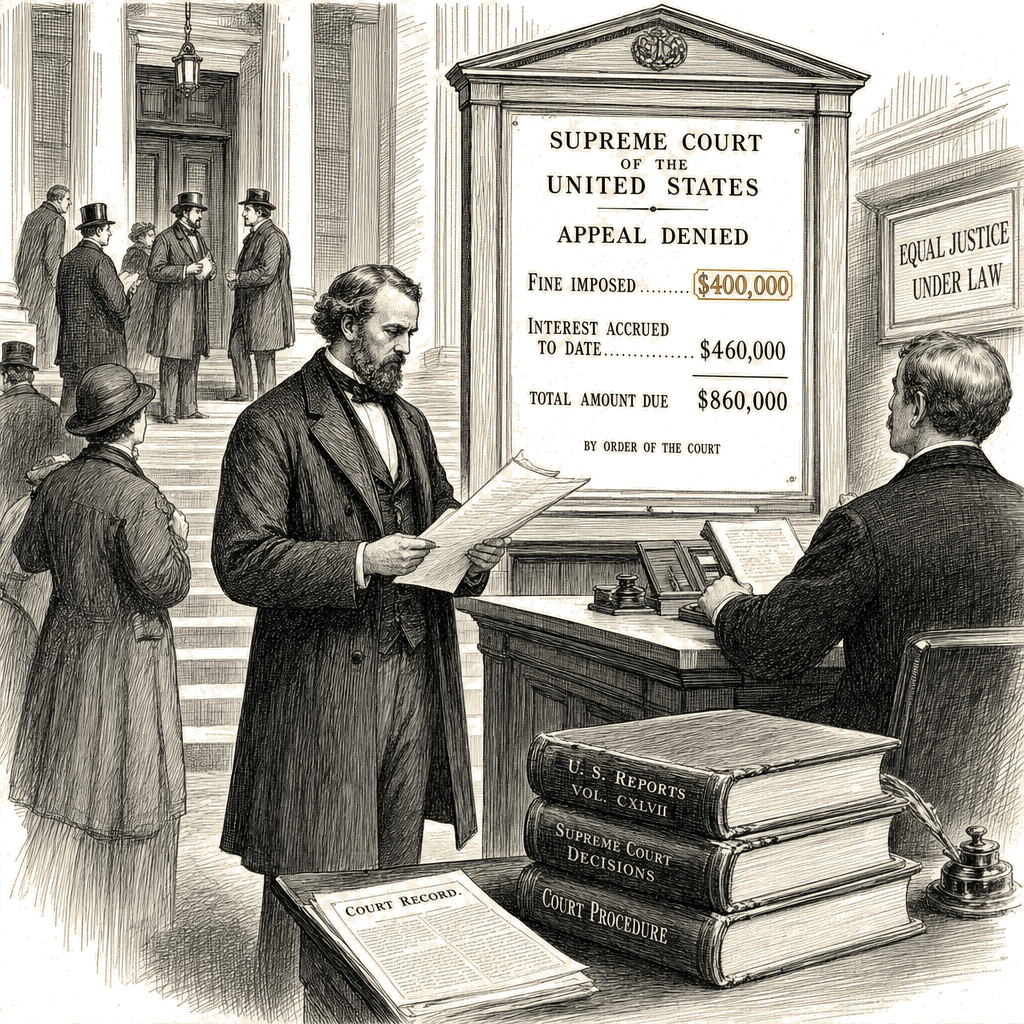
The protective order was weaponized anyway. Judge Grabill fined Trahant $400,000 and expelled four of his clients from the survivors’ negotiating committee. The Fifth Circuit affirmed. On Monday, the Supreme Court denied review.
This is the federal bankruptcy system’s standard operating procedure in institutional clergy abuse: the church files, the court seals the records, the lawyer who tries to warn anyone gets financially destroyed. While the San Francisco archdiocese pays $395 million to settle abuse claims, the federal court in New Orleans prioritized punishing the lawyer who tried to keep a predator away from children. The New Orleans archdiocese closed its bankruptcy with a $305 million settlement. Archbishop Aymond retired in February. Paul Hart died at 70 roughly nine months after his removal, beyond the reach of any proceeding the Court’s denial left standing. The institution paid its way out. The whistleblower is $400,000 poorer. And the Supreme Court has confirmed, by its silence, that in the federal judiciary’s accounting, a predator’s employer’s right to keep his assignment quiet outranks a high school’s right to know he is there.