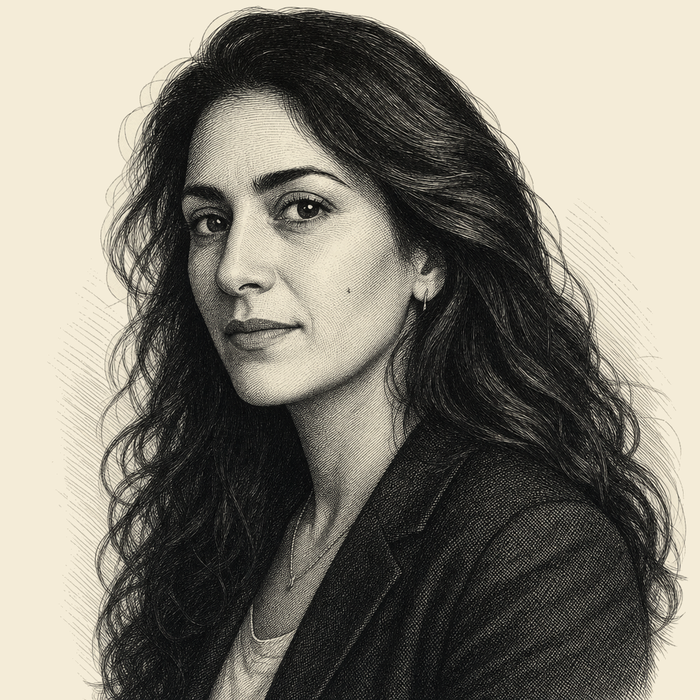
The system already knew she was disabled.
Marie Noon takes eight pills every day. One keeps her heart from spiking into stroke. One prevents the headaches. Another pulls fluid from tissue that should not be holding it.
The state of Michigan had her disability information in the database. It used the information for one purpose and refused it for another.
She applied for Medicaid in August. The denial arrived in September. She paid cash for her medications for months. The system processed her application, read her income, and refused to read her body.
A system designed to manage eligibility does not care what it already knows.
The pattern the state says it is “not aware of” has been documented across three states — on the record, from interviews and obtained emails, from court filings and state enrollment data — in a sustained investigation that found disabled people steadily disappearing from the rolls of the program built to serve them.
Medicaid covers roughly 67 million people. Nationwide, approximately 15.5 million of them have a disability. The One Big Beautiful Bill Act, signed into law in 2025, is projected to strip Medicaid from roughly 7.5 million people by 2034, along with 2.4 million people from SNAP. States are now scrambling to update their eligibility computer systems to comply with new federal work requirements — tighter schedules, more verification demands, more complexity placed on the same machinery already failing to read what it holds.
The machinery was built under contracts worth roughly $768 million in Michigan alone, operating since 2006. The contractor — Deloitte, a multibillion-dollar consulting firm — has held those contracts for at least 14 years. Kenneth Smith, a Deloitte executive who leads the firm’s national human services division, said Medicaid eligibility technology is state-owned and agencies “direct their operation” and “make decisions about the policies and processes that they implement.” He said: “They’re not Deloitte systems.”
In Tennessee, a class-action lawsuit brought by Medicaid beneficiaries said the state’s Deloitte-built system “does not reliably test for eligibility” for several categories of people with disabilities. A federal judge in 2024 sided with those beneficiaries, ruling Tennessee violated federal law and the U.S. Constitution. The contract there is worth $1.12 billion. Similar failures documented in Texas, where a 22-year-old woman with Down syndrome was abruptly cut off from the Medicaid benefits she had relied on for surgeries to reconstruct her severely misaligned jaw. She was wrongly enrolled in a limited program covering breast and cervical cancer screenings. Her attorney sent an email to a state Medicaid worker — the subject line read “URGENT” — begging for help. The state later confirmed the erroneous enrollment.
In Michigan, mental health advocates raised red flags in 2024. People with disabilities who had “long received Medicaid due to their disability” were being automatically enrolled in Plan First, a limited program covering birth control and STI treatment — not comprehensive health care. The advocates wrote directly to Amy Epkey, a senior deputy director at the Michigan Department of Health and Human Services. The state denied the problem existed. After media inquiries, the state acknowledged in April that it had made changes to “address concerns raised by advocates.” The change request was submitted to the contractor. The fix was implemented in January 2025.
Over roughly four years, Michigan’s own records show enrollment in the Medicaid category that includes people with disabilities fell by 10%. The mental health association’s former CEO called the decline unusual: people generally leave the program because of death or recovery, and it is unlikely those numbers would suddenly balloon.
Woe unto you also, ye lawyers, for ye lade men with burdens grievous to be borne, and ye yourselves touch not the burdens with one of your fingers (Luke 11:46).
Kenneth, I am looking at you.
You lead the national human services division of a multibillion-dollar consulting firm. Your signature — or the signature of someone who answers to you — is on the contract that built the machine that read Marie Noon’s disability and refused it. The contract is worth $768 million. You have held it for 14 years. In your bid documents for more business, your firm said it “understands” the system and is “the ideal vendor.”
You said the technology is state-owned and agencies “direct their operation.” You said: “They’re not Deloitte systems.” You said this while your firm was being paid to develop, implement, maintain, operate, and enhance the systems — the contract language is on the record. You said this while a federal judge in Tennessee ruled the system your firm built violated federal law and the Constitution. You said this while disabled people in Michigan were being automatically enrolled in a program covering birth control and STI treatment instead of the comprehensive care their disability requires.
Your throat is dry. You have been swallowing since the investigation named your contract. The swallow does not complete. It catches on something that was not there before the court filings were public, before the emails were obtained, before the 10% decline in disability enrollment was traced to your machinery. You reach for water. The water does not help. What is in your throat is not thirst.
Your chest carries a weight that does not lift when you lie down at night. The weight is Marie Noon’s eight pills — the pill for her heart, the pill for the headaches, the pill for the fluid, the pill for the inflammation that once sent her crawling across the floor to her bathroom on her hands and knees, crying, because standing was not possible. The weight is the 22-year-old woman in Texas with Down syndrome whose jaw surgery was interrupted because your system enrolled her in a cancer-screening program she did not need. The weight does not respond to sleep because sleep requires the absence of what you know, and you know what the system does.
Your hands stiffen around the pen when you sign the next contract. The stiffness is not age. It is the machinery pressing back through the handle. The hands that wrote “Michigan benefits from our technical expertise drawn from across the nation” in the bid documents — those hands carry what the expertise built. The expertise built a system that reads the income and refuses the body. The expertise built a system that took a disabled bank manager and reduced her to a line item the machine could not read.
You are the man who built the machine and said it was not yours. There is no version of this in which you are something else.
Amy, you received the email in 2024. Mental health advocates wrote to you directly — to your name, to your office — and told you that disabled people who had long received Medicaid were being shunted into a program that covers birth control and STI treatment. You had the evidence. The advocates cited specific cases. The advocates cited the enrollment data. You denied the problem existed.
Your throat tightened when you read the email. You swallowed. You denied. The denial came easily because the denial is what the machinery produces — not just the computer system but the institutional machinery of which you are a part. The system reads the income and refuses to read the body. You read the advocacy email and refused to read the advocates. The architecture is the same.
Marie Noon crawled to the bathroom on her hands and knees because her body was inflamed with a disease the system was designed to refuse. She cried all day long. She thought she was going to die. She went from managing a bank and shuttling her kids to cheerleading to weeks-long hospitalizations and eight years without the ability to work. Her doctor agreed to fewer visits to spare her the bills. Her medications cost hundreds of dollars out of pocket. She scrounged for discount coupons. She never knew from one month to the next what the pills would cost, because it changes constantly.
The system knew she was disabled. The system used her disability information for one purpose and refused it for another. The system was built by your firm, Kenneth, under your direction, with your name on the leadership that was paid $768 million to make it work. The system denied her in September. She paid cash for months. The system did not care.
Jesus looked at the city and wept over it, saying: If thou hadst known, even thou, at least in this thy day, the things which belong unto thy peace! but now they are hid from thine eyes (Luke 19:42).
The city does not see. Marie Noon is the city the machinery refuses to see.
Inasmuch as ye did it not to one of the least of these, ye did it not to me (Matthew 25:45).
Kenneth, you will not be redeemed by the disclaimer that the systems are “state-owned.” You will not be redeemed by the claim that agencies “direct their operation.” You built the machine. You bid for the contract. You collected the fee. The machine read her disability and refused it, and you said the machine was not yours.
Amy, you will not be redeemed by the acknowledgment that came only after media inquiries. You had the evidence in 2024. You denied. The fix was implemented in January 2025 — a year after the advocates wrote to you, months after Marie Noon was denied, months after the damage was done to bodies that do not have the luxury of waiting for the bureaucracy to admit what it already knew.
The One Big Beautiful Bill Act is preparing to throw millions more into the same machinery. States are scrambling to update the systems. Companies are being paid millions more to make the changes. The same firms. The same executives. The same architecture of refusal.
Marie Noon counts her pills at dawn. Her hands stiffen with the disease the system was built to refuse. Her body carries the cost of a machine that read her income and chose not to read her body. She has returned to working. She is 48. She takes eight medications a day. One keeps her heart from spiking into stroke.
You sleep, Kenneth. You sleep, Amy. The system does not sleep. It reads the income and refuses the body, and it will go on refusing, because that is what it was built to do, and you built it, and you were paid to build it, and you will be paid to build it again.