
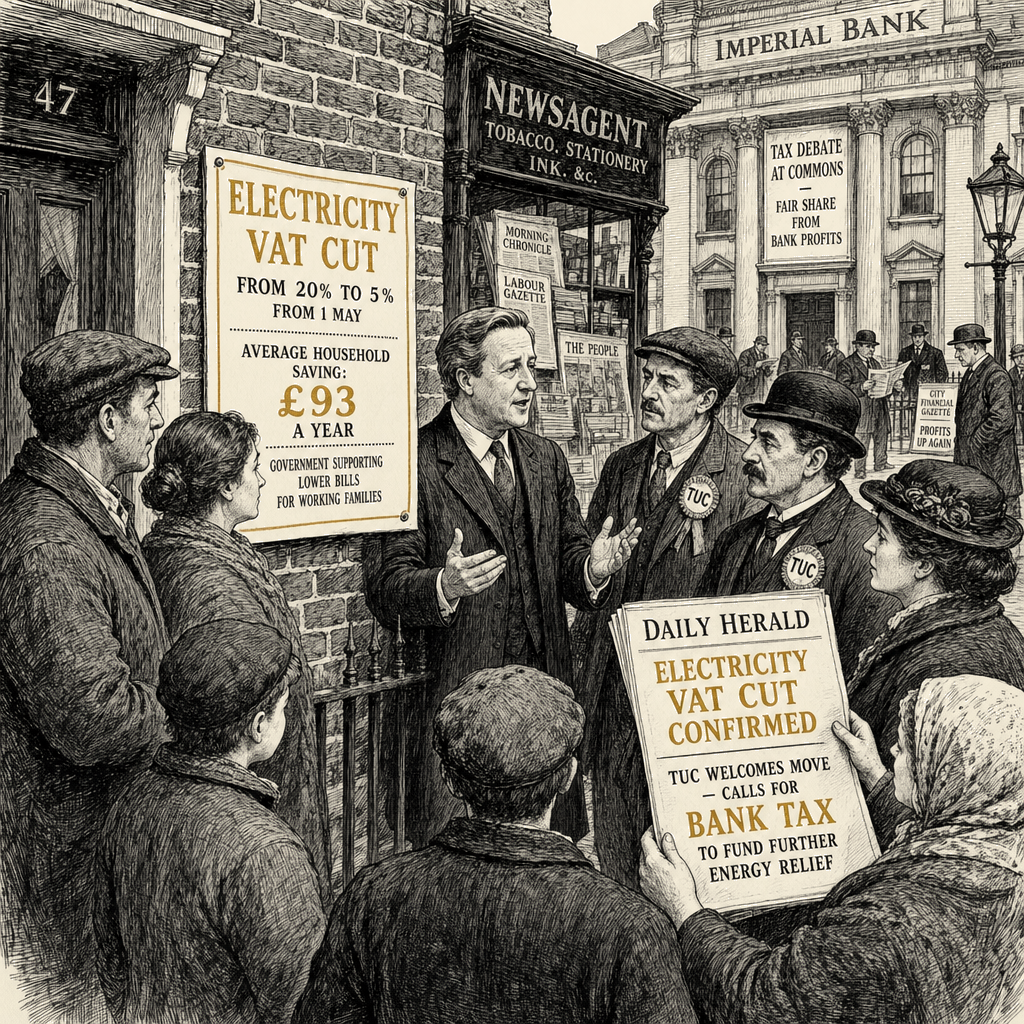
Andy Burnham is cutting VAT on household energy bills, and Paul Nowak of the TUC is right: it is the right thing, and it will not be enough.
The relief is real. Any working parent who opened a winter energy bill last year — or who is doing the advance math on this winter’s — knows what even a few percentage points off the VAT line means. It means one line item on the spreadsheet does not spike. It means the difference between paying the gas bill on time and putting it on the credit card again. It means something. But what it does not mean is a structural answer to the question of who pays for the cost-of-living crisis and who profits from it.
Nowak put the arithmetic on the table. The government could raise up to £60 billion over four years by hiking taxes on the banks — and route that money straight back into bringing household bills down. That is the number the column should start with every time someone says the government cannot afford to go further. The money exists. It is sitting in institutions whose profit margins have not exactly suffered while the rest of the country’s budget lines tightened. HSBC alone posted £17.2bn in net profit last year. Barclays is pushing toward £9bn. The revenue is there — a 35% surcharge on bank profits, as the TUC has costed, would deliver tens of billions. That funds a direct per-household energy subsidy, or capitalises a price-cap fund that keeps winter bills predictable regardless of what global markets do next. The question is not whether the revenue is there. The question is whether the political will to take it from where it is and move it to where it is needed is equally available.
And the pressure to move it is not easing. Donald Trump’s illegal war in Iran is an active accelerant on energy prices — that is not a cyclical swing, it is a compounding geopolitical cost spike with no end date written on it. If the government waits for geopolitical stability to bring bills down, it will wait through another winter and the one after that. The bank tax gives it a tool that works regardless of what happens in the Gulf.
Nor is this just about energy bills. Over a million people are stuck on insecure zero-hour contracts. Another million young people are not in employment, education, or training. The labour-market data that showed unemployment holding at 4.9% also showed wage growth steadying rather than accelerating — stagnant real pay for the people who are in work, and no pathway in for the people who are not. Cutting VAT on energy helps every household that pays it. It does not create a single new job. That is why Nowak is right that Burnham will need to expand the youth jobs guarantee and double down on his reindustrialisation pledge. A structural crisis demands structural answers, not just cheaper electricity.
Burnham’s government came into office with a real mandate and inherited an economy where the gap between what working people need and what the system delivers has been widening for a decade. He has started with the VAT cut. That is the right first step. But the revenue to go further is sitting in bank balance sheets right now. Kemi Badenoch warned the incoming PM he faced a rude awakening in office. The rudest awakening of all would be to discover he had the money to change the arithmetic for millions of households and chose not to take it.