
The Trump administration and the European Central Bank are looting the German consumer. The administration opened the spigot through the Strait of Hormuz closure — its declaration that the Iran memorandum of understanding was “over” escalated the conflict that shut the strait — and the ECB is finishing the extraction with a rate hike that treats a supply crisis as a demand problem.
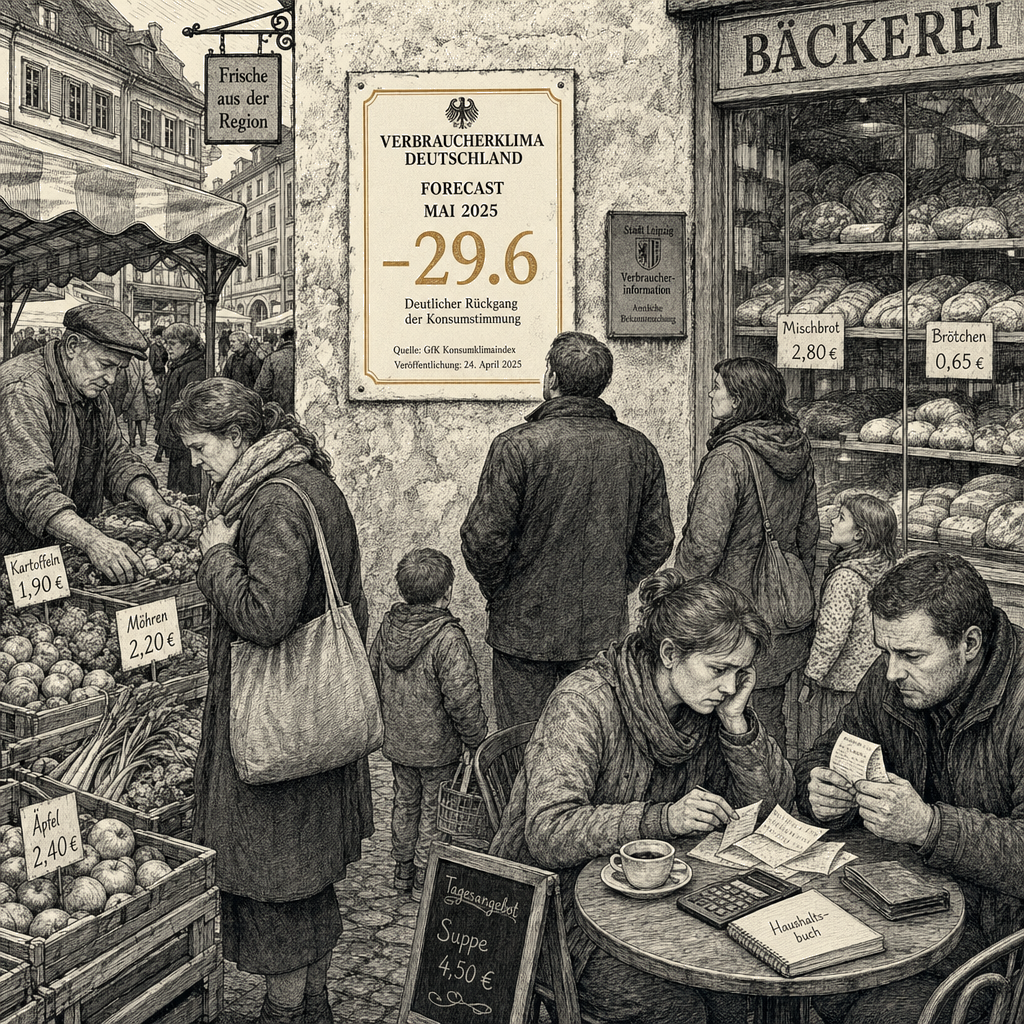
The Nuremberg Institute for Market Decisions and GfK published the receipt this week. The consumer-climate index fell to minus 29.6 in its August forecast, well below the minus 28.1 economists had expected. The survey was taken between July 2 and 13, capturing the rebound in oil prices after the President declared the Iran memorandum of understanding “over.”
The Main Street Independent has documented a one-month jump in factory orders in May. The consumer confidence index shows that even that uptick is unlikely to repeat. The energy price shock generated by the Strait of Hormuz closure is not a weather event. It is a policy choice, and its cost is being itemized on German household balance sheets.
The survey’s drivers are instructive. “Lower income expectations” and a “greater willingness to save” drove the decline. The consumer is not merely cautious. The consumer is poorer. The European Central Bank made the consumer poorer still when it raised its key interest rate in June to fight the energy price surge. A rate hike against a supply-side price level shift is a textbook contractionary error. The ECB’s defenders argue that rate hikes anchor inflation expectations and prevent a 1970s-style wage-price spiral. But the Hormuz shock is a geopolitical choke-point, not a permanent shift in the terms of trade. When the strait reopens, oil prices will fall; a rate hike cannot speed that process, but it can crush domestic demand in the meantime. The ECB is fighting the wrong war with the wrong tool, and the German household is financing the mistake.
The consumer confidence index is a lagging indicator. The policy choices that commandeered it were made this spring. The German household is still paying the invoice.