Democrats are telling people standing in floodwater that the real issue is the price of bread.
That is the calculation the consultants made. Don’t talk about the weather. Talk about groceries. Don’t say “climate.” Say “affordability.” They ran the numbers and decided the voters who are watching their basements fill up and their wells go dry are not worth the political cost of being told the truth. The wonks are wrong on the politics. They are also wrong on the moral question. They have decided the people they claim to serve cannot be trusted to hold two ideas at the same time — the price of bread and the water in the basement.
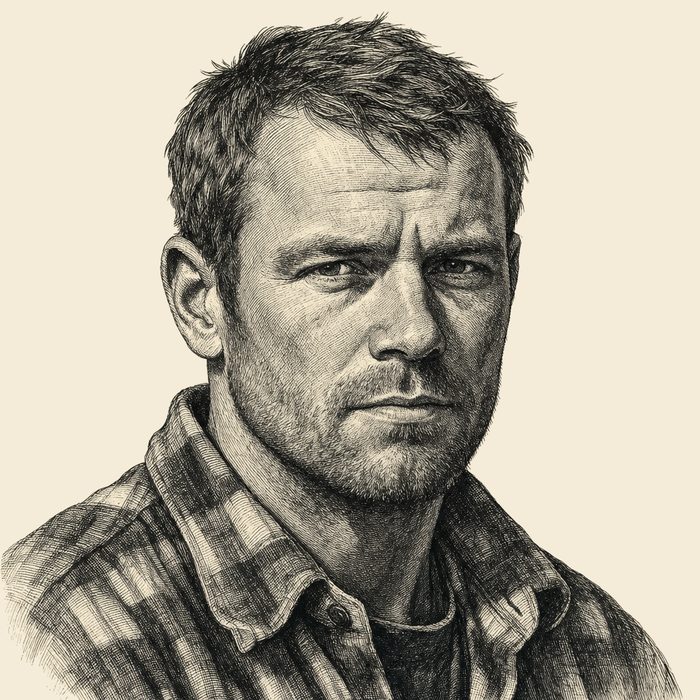
The weather did not wait for the strategy memo to be revised. This summer, the atmosphere is doing what it has been doing for the twelve years I have been writing it down in a notebook I keep at the bench. Texas neighborhoods washed off their maps. Heat smothering the Southeast. Canadian wildfire smoke reaching Florida. Down in Adams County, the ice-out on Petenwell is running a dozen days ahead of where it was when I started keeping track — by my own count. The deer move different. The mosquitoes come sooner. The maple sap runs wrong. I do not need a news organization to tell me the climate is changing. I have been watching it from the same forty acres of central-Wisconsin sand my grandfather worked.
The science says what my bench says. A warming atmosphere holds more water. When it lets go, it lets go all at once. Every insurance actuary in the state knows this. Every county emergency manager in central Wisconsin knows this. The lake knows it. The trees know it.
And yet the political class that once told us this was an existential threat has decided to stop saying so.
In June, the DNC launched a nationwide affordability weekend with hundreds of events organized around kitchen-table economics. Climate was not on the agenda. Our earlier coverage of the recess pressure campaign tracks how this same disconnect between activist energy and party messaging played out on the ground. The Guardian reports that Democrats who once described the climate crisis as an existential danger are now shying away from talking about it. Some strategists have given the trend a clinical name: “climate hushing.”
I have to say what that is in plain language. It is a political party deciding that telling voters the truth is bad for business. The truth being that the planet is warming, that the warming is human, that the warming is doing real and documentable damage to the counties and towns that make up this country, and that the party’s own voters — and a substantial majority of the electorate — already know it and want something done.
A poll from the University of California, Santa Barbara found that emphasizing climate change was neutral to beneficial for Democratic candidates. A July survey from Data for Progress found that 61 percent of likely voters believe extreme weather has grown more frequent, including nearly half of Republicans. A Yale poll one month earlier found roughly two-thirds of Americans worried about global warming.
That is not a fringe position. That is a supermajority. And the party that was supposed to be the vehicle for climate action is looking at that number and deciding, with calculation, to say nothing.
The organizers now mobilizing across twenty states during the August recess understand what the consultants do not. The Climate Action Campaign, along with local Sierra Club chapters, Bill McKibben’s Third Act, and NAACP affiliates, are going to town halls and calling on their representatives to stop whispering and start speaking. In Michigan they are rallying against Representative Bill Huizenga, who voted for the bill that put the fossil companies back in the driver’s seat. In Arizona they are meeting with Adelita Grijalva, a Democratic climate champion, to keep her talking. Margie Alt, the campaign’s director, called climate hushing “the climate denial of 2026.” In 2010, denial was telling people the science was uncertain. In 2026, denial is telling your own voters that the science does not matter enough to mention.
The structural failure here is worse than the Republican position. The Republican Party tells you plainly that it does not believe in the problem. You can argue with that. You can fight that. You know where they stand. The Democratic Party told you it believed in the problem, asked for your vote on the strength of that belief, won your vote, and is now deciding that mentioning the problem is bad strategy. That is not a policy disagreement. That is a broken promise.
Wendell Berry wrote that what he stands for is what he stands on. That is the whole test in six words. A party that will not stand on the ground its people live on is not standing for anything. The extractive mind — the mentality Berry named in The Unsettling of America, the one that treats land and community and people as expendable inputs in the service of the next quarter’s balance sheet — does not have to wear a red hat. It can wear a blue one just as comfortably. When a party decides that the planet’s future is less important than the next polling memo, it is operating on the same logic that closed the mill in Wood County and took the veterinary clinic in Adams County and put the Dollar General where the hardware store used to be.
The affordability crisis and the climate crisis are the same bill, arriving in the same mailbox. When the flood takes the town, when the heat kills the crop, when the smoke keeps the kids indoors, that is the household budget. The line the wonks drew between them is a conference-room line, and it does not survive contact with the county.
I grew up on a road where the wells test high for nitrates because the consolidated dairy operations up the road run lagoons that push through our shallow aquifer. I have watched three families sell out of the county in the last decade because nobody under fifty was farming the way their parents did. I have watched the Dollar General take the hardware store and the regional chain take the bank and the corporate veterinary clinic close the small-animal practice and the paper mill shut down across the county line in Wood County. The county data puts Adams County’s labor-force participation below 50 percent — lowest in the state. The median household income runs about 80 percent of the state figure. We are what is left of the middle class in a county where the institutions that were supposed to be in the fight have been leaving one by one for thirty years.
This is what a community collapse looks like from the inside. Not a single catastrophic event but a slow, deliberate, institutional decision to stop defending the people who depended on the institution. They did not tell you they were leaving. They just stopped talking about it and hoped you would not notice.
McKibben, who co-founded 350.org and has been writing about the warming planet longer than most columnists have been alive, told the Guardian that “there’s perhaps no other question where the gulf between Maga and the general public is higher.” I have read his Eaarth twice — the argument that we are not preparing for a future climate but living on a changed planet right now. The lake says it. The notebook says it. The grassroots says it. The only ones not saying it are the people with the podiums.
Aldo Leopold wrote that we can be ethical only in relation to something we can see, feel, understand, love, or otherwise have faith in. The political calculation that silences climate talk is a calculation against faith itself — against the idea that voters can be trusted to hear the truth about what is happening to the place they live and to respond like adults.
The notebook does not care about the polling. The atmosphere does not read the focus groups. The ice-out date on Petenwell is going to keep moving whether Hakeem Jeffries mentions it at a press conference or not. The wells in the county are going to keep testing for nitrates. The smoke from Canadian fires is going to keep drifting south. The heat is going to keep killing people who cannot afford to leave.
The question is whether the people who were supposed to be listening will find their way back before the cost of silence becomes the thing none of us can afford — or keep walking past the basement stairs, telling the man inside that the real issue is the price of bread.