
I did everything they told us to do. Go to school. Build a resume. Apply everywhere. Customize the cover letter. Hit Submit.
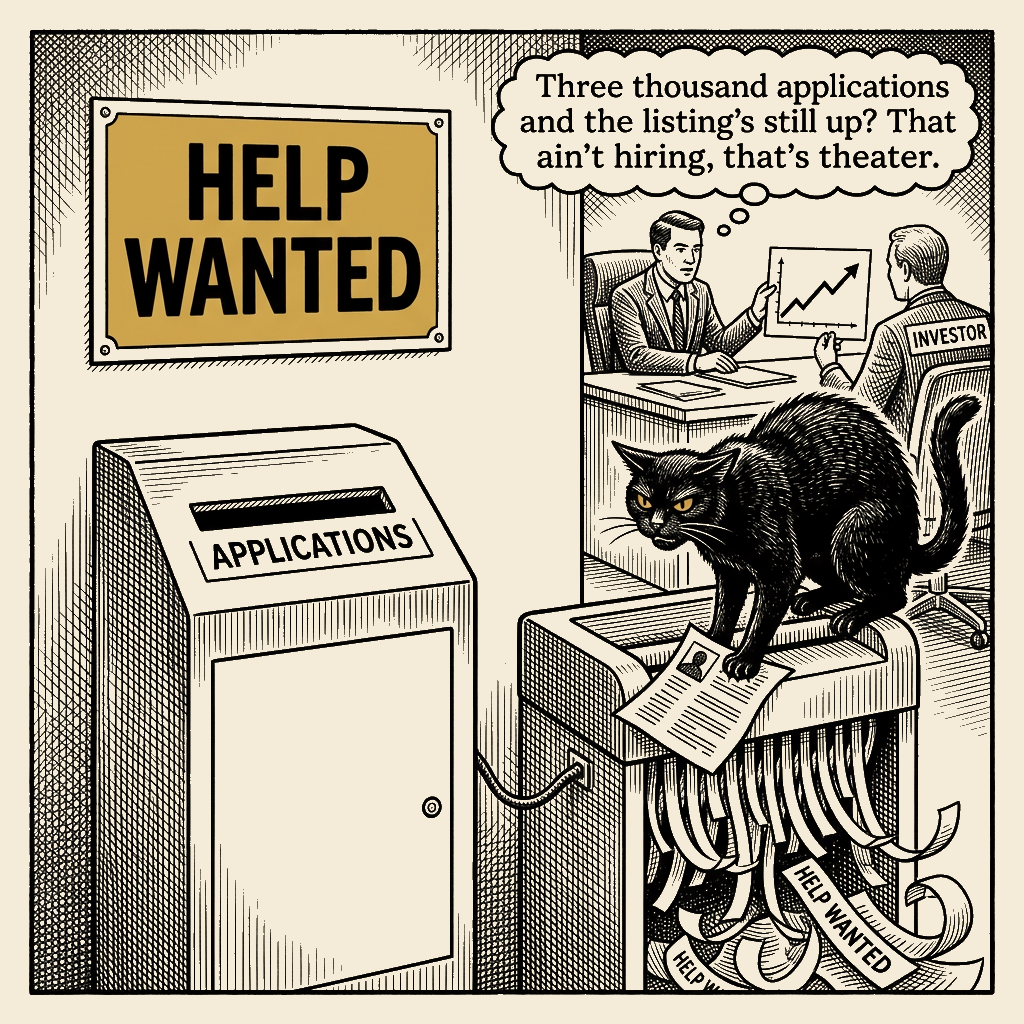
Turns out one in five of those job listings is a goddamn phantom. Not a real opening. Not a real employer looking. Just a posting — ghost data on a job board designed to make some company look healthy to investors, harvest your resume for data, or keep a “pipeline” warm for a job that may never exist.
Heather Sanford, a 44-year-old marketing professional in Texas, applied to over three thousand jobs. Three. Thousand. She burned through nearly forty thousand dollars in savings — every damn penny — and now she’s moving in with her father to stretch what’s left. Three thousand applications into a job market that was performing for the investors in the back row, not the people in the front.
And LinkedIn? LinkedIn collects the ad fees and shrugs. No requirement to tell you whether the listing is real. No penalty for wasting months of your life on a job that doesn’t exist. The platform profits from the employer’s performance and the worker’s desperation simultaneously.
New York passed a bill. Pennsylvania proposed one. Some state AG opened an investigation. Good. But the real question is: why was it legal in the first place to sell people hope at scale while pocketing the proceeds? Why does the employer get a free performance — looking like they’re hiring, looking like they’re growing — while the person applying loses their savings, their time, and their dignity?
Because the system was never built for us. It was built for the company’s quarterly narrative. The job ad was a prop in somebody else’s investor deck, and we were the unpaid extras.
Fuck that. Eat shit, you donor-owned dickweeds. You sold us the dignity-of-work lie and charged us rent to stand in line for a job that was never real.
Source story: State lawmakers push bills to curb ‘ghost job’ listings.