
Hurricane Ida’s second wave was a fraud machine, and Richard William Huye III’s guilty plea is the first piece of it to crack. The homeowners were left with damaged roofs, signed-away insurance claims, and repair money that never arrived or vanished into unauthorized fees.
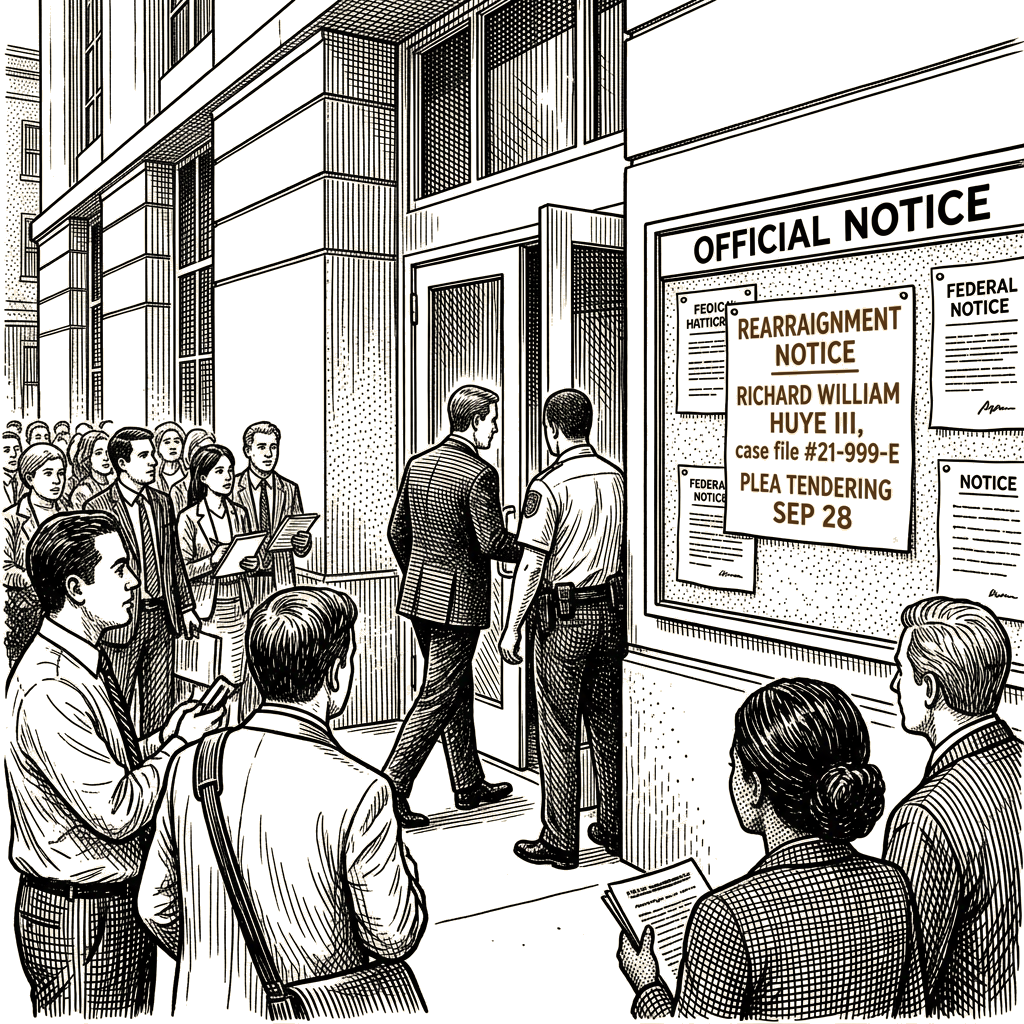
Huye, 34, a former attorney at the Texas firm McClenny Moseley and Associates, is scheduled to appear in New Orleans on September 28 before Magistrate Judge Karen Wells Roby for arraignment and then, ninety minutes later, before U.S. District Judge William Crain for rearraignment. That is the federal choreography of a guilty plea. His lawyer, Sean Toomey, did not respond to a request for comment, which is itself a kind of comment.
The federal bill of information charges Huye with one count of conspiracy to commit wire fraud. It is not a grand-jury indictment. It is a cooperation-grade filing, the sort of document that names one defendant and leaves an unnamed associate sitting in the next chair as “Co-Conspirator 1.”
That description tracks Zach Moseley, MMA’s managing partner.
The bill lays out the paper hurricane. Within days of Hurricane Ida hitting Louisiana as a Category 4 storm in late August 2021, MMA opened a New Orleans office. Before homeowners had figured out which tarp to buy, the firm brought in Apex, an Alabama roofing company. Apex induced hundreds, eventually thousands, of storm victims to sign Assignment of Benefits forms, handing over control of their insurance claims.
Louisiana homeowners’ policies restricted such assignments or required prior approval from the insurer. MMA and Apex treated those limits as a speed bump. They drove through.
In some cases, Apex signed legal agreements on homeowners’ behalf without their knowledge. MMA then sent letters to hundreds of insurance companies claiming exclusive representation of those homeowners without disclosing that the claims had already been assigned to Apex. The victims were left holding cut-rate payouts, unpaid roofs, or bills reduced by attorneys’ fees and expenses they had not authorized.
Eight households appear in the charging document. Eight roofs. Eight small disasters inside the larger one.
Velawcity supplied the funnel. The online lead-generation outfit paid non-lawyers to recruit storm victims and signed up “thousands” of them, an arrangement that violated Louisiana’s legal ethics code. The legal entrepreneurs arrived before the rebuilding. The paperwork moved faster than the plywood.
This is disaster capitalism with a bar number.
The second hurricane was made of legal paper.
The charge against Huye carries a statutory ceiling of about five years in federal prison and a fine near $250,000. It looks small only if the defendant is mistaken for the enterprise. The case is not principally about the former attorney at the bottom of the filing. It is about the structure above him: a Texas law firm, an Alabama roofer, an online marketing vendor, homeowners whose claims were redirected, and insurers induced to pay while the arrangement remained concealed.
The pattern is familiar from catastrophe to catastrophe. A disaster hits. Out-of-state operators arrive. A victim’s confusion becomes somebody else’s business model. Local people absorb the loss while distant professionals collect the paperwork.
A small South Carolina town is still fighting to recover $545,000 lost to a phishing scheme. Different crime. Same lesson. When the financial plumbing of a recovering community is left unguarded, the looters arrive on schedule.
The chickens are roosting in slow motion. Louisiana disbarred Huye. The state insurance commissioner imposed a record $2 million in fines on Huye, Moseley, and MMA. MMA filed for federal bankruptcy protection in Houston in 2024 and sought liquidation. In July, the Louisiana Supreme Court ruled that MMA could not collect fees from successor firms that took over its abandoned caseload if those clients were proved to have been recruited illicitly or unethically.
The civil reckoning reaches the homeowners. The criminal case reaches the ladder.
That is why Huye’s rearraignment matters. A defendant who pleads before trial rarely receives the harshest sentence available. The more valuable currency is information. Bills of information against cooperating defendants give the government room to bargain: the more Huye gives up, the softer his sentence may become, and the farther the line can move up the org chart.
The docket is not merely recording a plea. It is opening a door.
The same New Orleans courthouse is also digesting a separate insurance-fraud prosecution in which more than sixty people have been convicted for staging crashes with 18-wheelers and filing fraudulent claims. On September 3, a jury deadlocked on murder charges against Sean Alfortish and Leon “Chunky” Parker, who were accused of arranging the assassination of a witness. The murder counts ended in a mistrial, not an acquittal. Prosecutors have vowed to retry them. Alfortish, a disbarred attorney, was still convicted on fraud charges.
That case is a grinder’s case, one wreck at a time. The MMA case is different. It puts the enterprise itself on the table.
The comparison matters. Organized-enterprise fraud does not become respectable because one defendant wears a suit, another carries a roofing license, and a third operates behind an online advertising dashboard. The form changes. The taking does not.
The filings now point toward Moseley without naming him. The firm was stripped of its clients. Huye was disbarred. The regulator imposed the fine. The bankruptcy court has the wreckage. None of that has yet put the playbook under oath.
That is what the federal prosecution is for.
Federal prosecutors are not simply asking whether Huye committed a crime. They are asking who built the machine, who supplied the victims, who redirected the claims, who signed the papers, who knew the homeowners’ policies stood in the way, and who decided the barriers did not matter.
The dominoes are queued.
What the country should watch is not whether Huye pleads guilty. He is set to. What matters is whether he explains who decided that the second hurricane Ida brought—the one made of assignments, hidden arrangements, and ruined roofs—was theirs to run.
The next bill of information may not have a name attached.
It will have theirs.