
Now, I’m just a simple man who fixes trucks for a living, and when I hear a politician say the government needs to find an extra £30 billion a year for defence, I don’t think about deterrence posture. I think about the council tenant whose boiler broke in February and waited three months for the repair. I think about the care worker pulling twelve-hour shifts who hasn’t seen a real raise since before the pandemic. I think about the NHS waiting list my English friends post about while they wait to find out if the lump means something.
That is what £30 billion looks like when you take it off a spreadsheet and put it where people live.
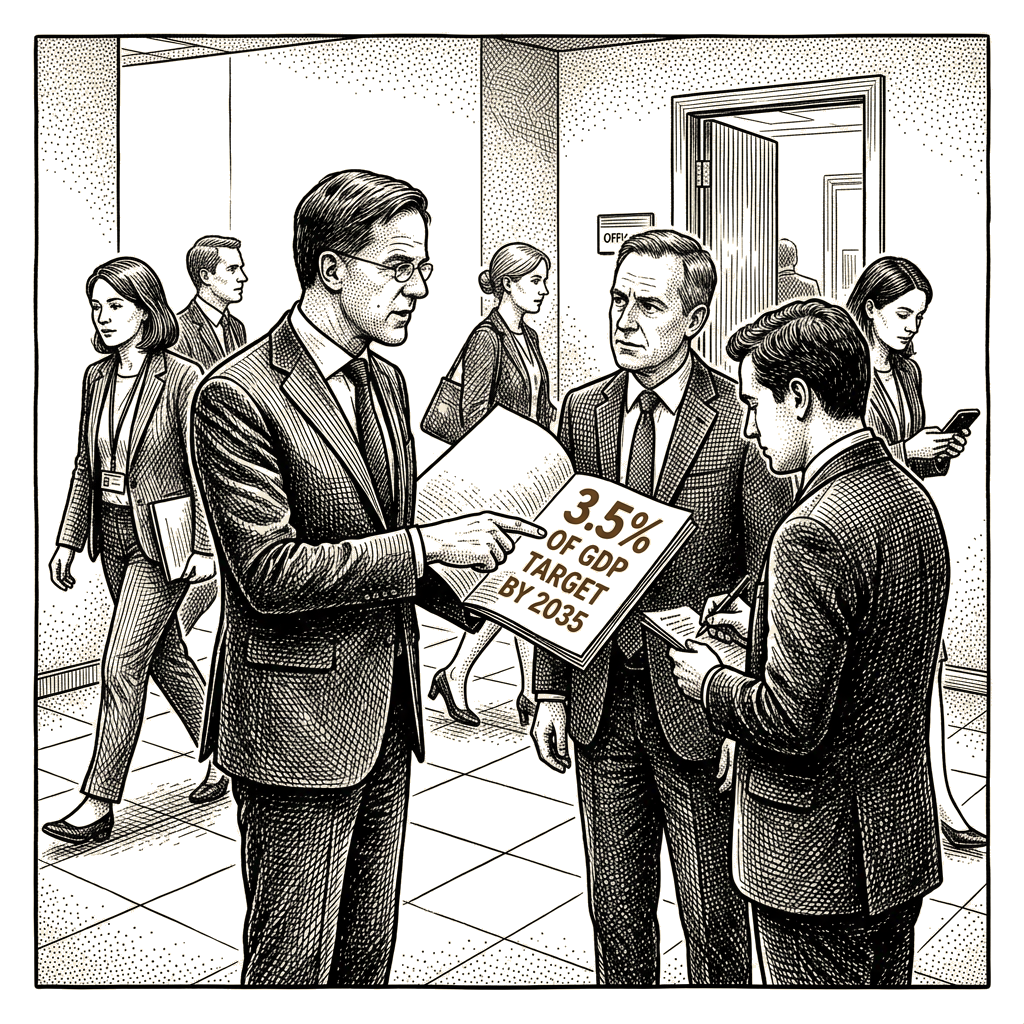
Mark Rutte, NATO’s secretary general, was in London this week telling the Burnham government it must demonstrate “a credible path” of annual defence spending increases to reach 3.5% of GDP by 2035 — nearly £30 billion more than Britain currently plans to spend. He sat down with defence secretary Wes Streeting and foreign secretary Ed Miliband. The day before, prime minister Andy Burnham received him at a business park in Didcot. He also met representatives from the defence industry, which always turns out for these visits. Rutte made the same pitch to the BBC the morning after, pressing the urgency of gradual increases.
The money, when it comes, has to come from somewhere. Britain’s current plans have defence levelling off at 2.7% of GDP through 2028/9 — almost £30 billion short of the target. Nobody in government has explained how to close that gap without raising taxes on working families, cutting public services that are already stretched past breaking, or borrowing against the next generation’s earnings. At PMQs this month, the Conservatives proposed cutting welfare to fund defence, and Burnham rebuffed them — which means the money is going to have to come from the places where cuts don’t make headlines. The nurse’s vacancy that doesn’t get filled. The school roof that doesn’t get repaired. The pensioner’s warm-home discount that gets quietly means-tested down.
Eisenhower, in his farewell address of January 17, 1961, warned about exactly this: the acquisition of unwarranted influence by the military-industrial complex. He said the potential for a disastrous rise of misplaced power exists and will persist, and that only an alert and knowledgeable citizenry can stop it. Sixty-five years later, here is the mechanism in plain sight. NATO sets a target. The arms industry shapes the target. A former head of government carries the demand to the next capital. The defence contractors who stood in the room at Didcot smile and shake hands. And the money moves upward, from people who can least afford it to firms who have never once told a government they have enough.
Think about who picks up the tab and who cashes the cheque. On the side that pays: the nurse working overtime on an understaffed ward. The pensioner who turned the thermostat down in March because the state pension didn’t keep pace with energy prices. The single mother in a council flat whose child’s school needs a new roof. The veteran with a four-month wait for a mental health appointment — a man who served his country and now watches that country find £30 billion for missiles before it finds funding for his treatment.
On the side that profits: BAE Systems, which reports record revenues while the NHS reports record waiting lists. Lockheed Martin, which does not have a high street presence and does not employ your neighbours. The defence primes whose lobbyists never miss a meeting, whose lobbyists never lose a contract, and whose shareholders include every pension fund that’s been told there is no money for a pension increase.
This is not a left-right question. This is a who-pays and who-profits question. Keir Starmer signed the UK up to the 3.5% target in the summer of 2025 under pressure from Donald Trump. Andy Burnham and chancellor John Healey — himself a former defence secretary — have endorsed it. But current plans don’t reach 3% until well after the next general election, and Healey, who resigned from the defence brief in June because he wanted a “clear path” to 3%, has since avoided committing to one as chancellor. The next spending review is due next year. Every honest person in Whitehall knows the arithmetic: there is no credible path to 3.5% that does not take from ordinary people to give to arms firms.
Rutte says he is “absolutely confident” the Burnham government “totally takes and accepts” the need for annual increases. And he was told there will be “a credible path.” What that path “exactly will be, we will see with the spending review next year.” That is how money gets moved from the people who need it most to the industry that needs it least: not in a single vote, but in a series of deferred decisions, each one too small to fight over, until the total is so large that objecting seems unreasonable.
There is nothing unreasonable about asking where the money goes. There is nothing unreasonable about a care worker wanting a raise before a missile system gets a contract. There is nothing unreasonable about a pensioner expecting a warm home before a warship gets an upgrade. The people who arranged this deal — Rutte, the defence industry, the political class that signed the target without asking the people who pay — have never had to make those choices. They have never had to look a constituent in the eye and explain why the hospital can’t afford another surgeon but the arms firm can afford another factory.
From where I’ve sat, I can tell you this: the people who order the weapons and the people who build them and the people who lobby for them have never been the people who carry them or the people who pay for them. That has not changed since Eisenhower said it, and it will not change because a politician flew to London to remind the British government of its obligations. The obligation runs the other direction. The government owes the people who elected it a straight answer: what are you cutting, what are you raising, and which of your constituents are going without so that BAE Systems can book another year of growth.
That is the credible path Britain actually needs. Not to 3.5% of GDP. To a government that tells the truth about what this costs and who pays for it.