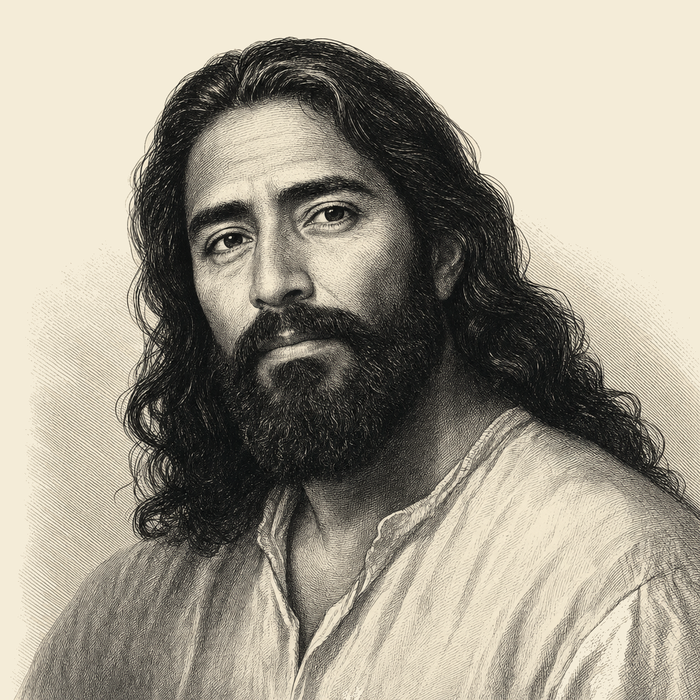
The man had an Australian passport. He had lived in Melbourne for more than thirty years. He founded an advocacy outfit fighting the trafficking of Vietnamese girls and women. His wife texted him about a broken fridge and a niece’s birthday party. Then, on September 18, Tran Hiep stopped replying.
Within a week, Vietnamese officials confirmed they had arrested him. Not in Vietnam. In Cambodia. On the other side of an international border, in a country that is supposedly sovereign — with no extradition, no hearing, no consular access. Hanoi charged him with terrorism and with forging identity documents. His alleged crime was trying to cross from Cambodia into Vietnam. John XXIII wrote in Pacem in Terris that every human being has a right to freedom of movement and, when just reasons favor it, a right to emigrate, and that being a citizen of one particular state does not deprive a person of membership in the human family. That is the Church’s own teaching, and it says the crossing was not the crime. Being Vietnamese, and dissenting, was. Hiep’s wife, Chloe Dang, has been told nothing.
Hiep had traveled to Cambodia to meet two other activists of Vietnamese origin. One, Nguyen Duc Thuan, holds a Norwegian passport. The third, Thai Cong Truong Son, completed the trio. All three are now in Vietnamese detention. None has been granted consular access. Their families have been given no information.
The regime has an answer to all of this, and it is worth naming plainly, because it is the same answer every government that has ever rounded up its critics uses. Vietnam has designated Hiep’s organization, Viet Tan, a terrorist group. The group denies the charge. Vietnamese prosecutors will draw, under Vietnamese law, whatever line they choose between a man’s work helping diaspora members with digital security and operational support for an insurgency. The point is not that the line is drawn well. The point is that the line is now being drawn over the body of a man in a cell, in a country he committed no crime in, and that the person the line was drawn on is a fifty-year-old who spent thirty years fighting the trafficking of girls and women. Leviticus gives the stranger among you the standing of the citizen and commands you to love the alien as yourself, and gives the reason in one breath: you were aliens in the land of Egypt. That commandment carries a memory, and the memory is the whole mechanism. A state that has forgotten its own Egypt will not recognize the stranger standing in front of it. Vietnam has forgotten. So has Cambodia, which apparently let Vietnamese security services operate on its territory with impunity. So has Thailand, which has made a market of its silence.
This is not an isolated case. Last month, a 26-year-old Laotian activist named Khieo Lapchanh disappeared on his way to his apartment in a Thai province just outside Bangkok. He had a registration interview with the United Nations Refugee Agency scheduled for the next morning. He never made it. He hasn’t been heard from since. In April 2023, a blogger named Duong Van Thai vanished off the streets of Bangkok before resurfacing in Vietnamese detention. He had been a U.N.-registered asylum seeker. He has since been sentenced to twelve years in prison.
Human rights groups have been warning for years about what they describe as a “swap market” of repression across Southeast Asia — a quiet arrangement in which governments in the region hunt each other’s critics across borders and hand them back, trading favors, trading people, trading lives. Phil Robertson of the Asia Human Rights & Labour Advocates has tracked this for almost two decades. “Everyone has to be looking over their shoulder all the time,” he says. The pattern, he explains, is straightforward: “It seems to almost be like: if you do something in my country… later I’ll expect a favor from you.” Robertson presents that exchange as scandal, and so it is. But scandal is not the full word for it. The swap market is the corporal work of mercy performed in reverse — the harborless given not shelter but delivery, the imprisoned one not visited but delivered to the very hand that will imprison him. The mercies are old and they are not decorative; they are the list of what a society owes to the person it would rather not see. What is being built in Southeast Asia is their exact inversion, run at scale, by governments, with each other’s cooperation.
There is one more answer to be made against the defenders of this arrangement, and it comes from the United Nations refugee agency itself. States, the agency says, “have the primary responsibility to provide protection and safety to persons on their territory, including refugees and asylum seekers and people whose lives could be at risk if they were returned.” Read that sentence carefully, because it has been offered here as a warrant. It is the opposite. The primary responsibility belongs to the host state, and that responsibility is to protect — not to hand the person over to the state that wants them back. A host state that receives a U.N.-registered refugee and delivers him to the government that has already sentenced a man in his position to twelve years has not exercised its responsibility. It has inverted it. Jesus said to the sheep: “I was a stranger and you welcomed me,” and to the goats: “I was a stranger and you did not welcome me.” He was not describing a mood. He was describing what the strangers experienced at the hands of the people who had the power to open the door.
I write from the United States, and the confession must begin with us. This country dropped more ordnance on Vietnam, Laos and Cambodia than every power dropped on one another in the Second World War, and the Vietnamese diaspora whose activists are now being hunted across three countries is in large part the consequence of that. And the United States also did one thing right, which I will say plainly because witness means saying what is true even when it does not serve the indictment: it admitted more than half a million Vietnamese refugees and made citizens of them. That is the record. It is now being surrendered. The annual refugee admissions ceiling has been cut to figures that would have been unthinkable a decade ago — 7,500 in a recent fiscal year, a program’s worth of protection rationed like a scarce commodity. Reporting has documented the United States negotiating with Hanoi over the returns of Vietnamese nationals it wants deported. And Thailand, where the disappearances occur, is an American treaty ally — forces train there, and American intelligence has operated there — which is to say that the democracies selling principle for partnerships have been doing so in our own name, for a long time. We are sinners and need the same forgiveness as anyone else, and forgiveness does not begin with the Australian prime minister’s platitudes. It begins with the ceiling we set and the cooperation we extend.
Prime Minister Anthony Albanese met Vietnamese President To Lam in Canberra last month and pledged to deepen their partnership on defense and trade. Asked about Hiep, Albanese said his government was providing consular assistance. Consular assistance to a man his government cannot reach, in a prison his government cannot visit, charged with a crime that does not exist in the place where it is said to have been committed. The phrase has no referent here, and the people it is spoken to know it.
Dang has asked the question that sits underneath all of this: “How can the Vietnamese government abduct someone on another country’s land?” She has also been asked to be patient, to accept the quiet diplomacy, to understand that the appropriate register for a citizen detained abroad is not megaphone diplomacy but engagement with the family. She is not naive. “I’m not naive to say that I don’t know [what the Vietnamese government can do],” she said. “But I hope as an Australian, his fate could be different.” That hope is the whole story — the hope that a passport still means something, that international law means something. Jeremiah named what quiet diplomacy sounds like from the side where the wound is: they have healed the wound of my people lightly, saying “peace, peace,” when there is no peace. The dissenter in the Cambodian cell and the reporter shut out of the briefing room are not the same injury. But they are two places where power has decided that a person’s body will be moved — one to a cell, one to a hallway — and that the decision will be administered in the language of order. Both are the same wound: the powerful writing the terms on which the rest of us are permitted to exist.
Governments everywhere are testing how far they can push. The September report from Viet Tan documented twenty separate cases in which Vietnamese authorities pursued critics and activists beyond the country’s borders. Twenty documented cases. That is the floor, not the ceiling. For Tran Hiep, Nguyen Duc Thuan, Thai Cong Truong Son, Khieo Lapchanh, and the dozens whose names we don’t know, there is no court to ask, no government answering, no ceiling that holds.
Archbishop Romero, three days before they shot him dead in his chapel, ordered an army to stop — beseeched, begged, commanded, in the name of God and in the name of a suffering people whose laments rose to heaven every day more tumultuous. I have no army to command and no cathedral to preach from. I have only this: to the Cambodian official who signed the transfer, to the Thai officer who looked away, to the prison guard bringing a man his food in a country that is not his — you are a person, and you know what you are doing, and you can still refuse. Romero’s soldiers were told that no one is obliged to obey an order against the law of God, and the same is true of a signature against the law of what you were taught in whatever house of worship you still enter.
Hiep is fifty years old. His wife still has the broken fridge. His niece still has a birthday coming up. The swap market is open. The dictators are buying. The door does not have to stay closed, and it does not have to be someone else who opens it.