
Trump is buying Russian diesel with Ukrainian lives.
Sunday morning, he posted that “effective immediately, there is an ENERGY CEASEFIRE in the War between Russia and Ukraine.” Both parties have agreed, he said. Do not break it.
Sunday evening, Russia broke it.
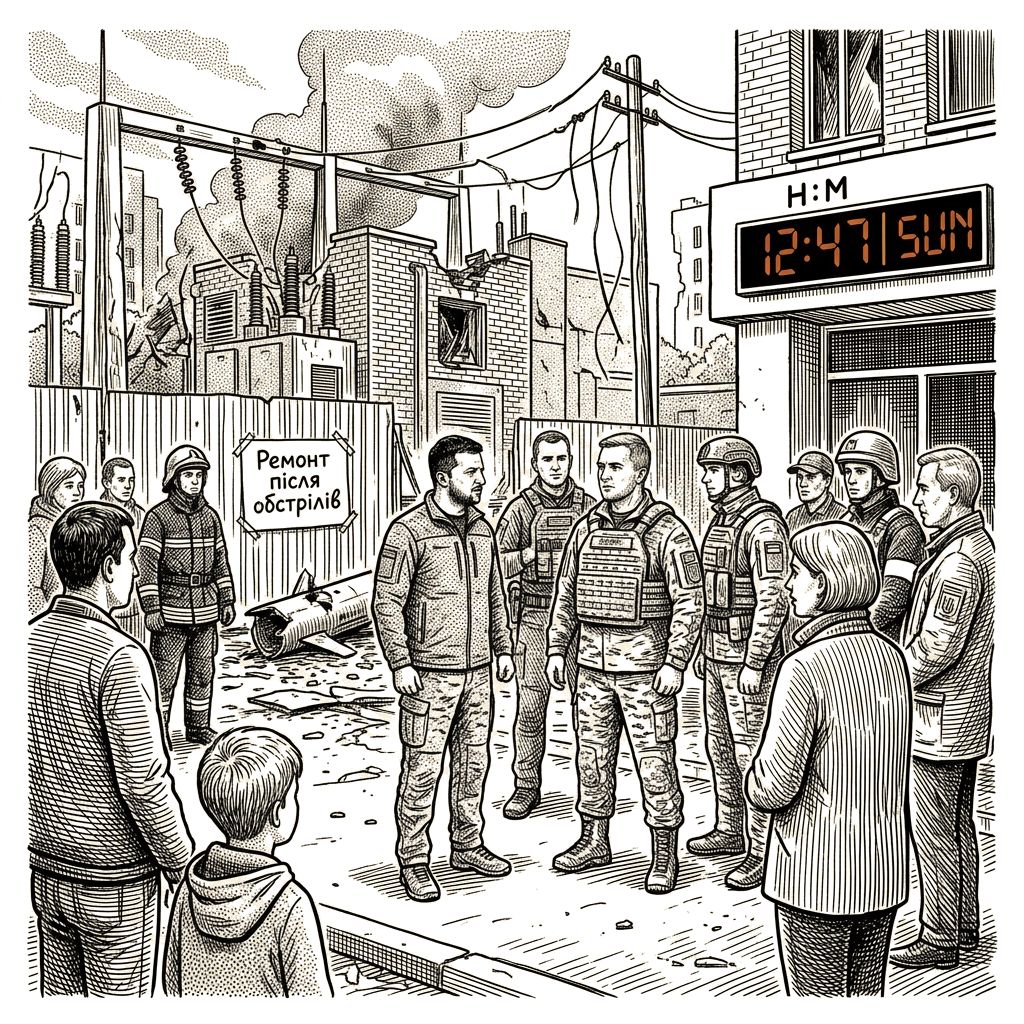
A drone hit a power plant in Kyiv, and the lights went out in the capital. Then a strike on a power plant in Kharkiv. Earlier that same day, a Russian missile hit a grocery store in Kharkiv. Three dead, twenty wounded, two of them children. A separate strike in western Ukraine killed three more. Six dead in one day. “Ukrainian skies have been infested with Russian ‘shaheds’ all day,” Zelenskyy wrote, naming the Iranian-made drones that fill the sky.
Zelenskyy called the announcement “news to me.” He had already put the terms in writing: Ukraine would stop striking Russian energy infrastructure if Russia would do the same. Russia never agreed. The United States announced a deal that no party to the war had signed, on terms only one side ever heard about. And when the strikes kept coming, Zelenskyy did what a man under attack does. He threatened to hit the Russian grid in return.
Now, I’m just a simple man who runs a repair shop in Redemption Springs, Georgia. I know a one-sided deal when I see one. A customer tells me he bought a used transmission, and both parties agreed, and the ticket is signed. Then the parts man calls and says the seller never touched a pen. That’s not a deal. That’s a story a man tells to make a sale.
Two days before the ceasefire, Trump announced a deal to buy Russian diesel. He lifted sanctions on the country whose army is bombing that grocery store, so American buyers could tank up on Russian fuel. Asked about the outrage, he said it was time for Ukraine to get a new president. A man in Washington who doesn’t have to duck a drone is telling a country under bombardment who should run it. Zelenskyy answered right. With all respect, that is for the Ukrainian people to decide. Right answer, wrong room. It will not stop the diesel.
The ceasefire came two days later, with the same signature. Moscow gets the concession. Kyiv gets the announcement.
Put a face on it. There is a woman in Kharkiv, about my mother’s age, whose building lost power Sunday night. The grocery store where three people died is on her street. She is being told a ceasefire is holding. She is being told to trust the man who signed it. She is standing in a dark apartment in October, in a city that has been bombed all day, and the heat is not coming back tonight.
Here is the part that should make every working family sit up. The administration is telling Ukraine and the Europeans: stop striking Russian oil refineries, or the weapons stop. The guns. The shells. The things a country under invasion needs to survive. The ceasefire is the sales pitch. The threat to cut off the arms is how the sales pitch gets enforced.
Read that plain. The man being bombed is told to stop hitting the thing that feeds the man doing the bombing. If he won’t, his arms get cut. That is not a ceasefire. A ceasefire is both sides putting down their guns. This is one side being told to drop its guns so the other side can keep selling what it needs to keep killing.
This is where it comes home. Not to a think tank. To the kitchen table.
I heat my shop with gas. I know what that bill does to a small business in January. The refinery worker in Ohio. The woman in Pennsylvania filling the tank twice a week to get to her shift. They’re told the diesel deal is for them. Prices come down, they say. And sure, if you let the Russian diesel in, the price at the pump eases.
But the price is blood. The diesel flows because the refineries aren’t being hit. Because Ukraine is being threatened with an arms cutoff if it hits them. Russia keeps selling. Ukraine is told to stop shooting back. The ceasefire runs one way, and the traffic on it is money to Moscow. The working family in Ohio never sees the connection. Nobody explains it to them. But it’s the same old squeeze. The bill at the pump is the price of somebody else’s peace, and the people paying it weren’t asked.
I spent four years in the Army, and I saw combat in Iraq in the early occupation. I know what it is when the men doing the math aren’t the men doing the dying. The men making this deal aren’t in the dark apartments of Kharkiv, and they aren’t feeling the pinch at the pump. They never are. That’s the oldest law in this game.
The Europeans see it. Kaja Kallas said the bloc would welcome a truce when it holds. It doesn’t hold. Mark Carney called the diesel deal “in direct opposition” to the peace everyone claims to be working for. Germany says it still fully supports Zelenskyy. The Lithuanian foreign minister wants the EU to call Russian military intelligence, the GRU, a terrorist organization. NATO’s commander in Europe, Alexus Grynkewich, is in Warsaw warning Moscow what the alliance can do. They all said what they think. Not one of them said what they intend to do about it.
The market read it the only honest way. Brent crude fell to $103 a barrel. West Texas fell to $90. Traders priced in more Russian supply, not less bombing. That’s the money men taking the ceasefire for exactly what it is.
Smedley Butler was a Marine general who saw this game from the inside. War is a racket, he said, conducted for the benefit of the very few at the expense of the very many. That is this week. The few get the diesel contract. The many pay in heating oil and in the lives of people they will never meet.
Here is what the republic owes, and I’ll say it plain. The sanctions stay on until Russia stops bombing. The weapons keep flowing while the invasion keeps flowing. And no family’s heating bill is ever balanced against a murdered stranger’s life. That is not a think-tank position. That is what a man would expect if his country means what it says about defending people.
The diesel deal is the first cut in the wall. If it stands, the template is set. Grain. Fertilizer. Aluminum. Nickel. Every sanctioned thing Russia sells has a hole in the embargo waiting to be drilled, and this administration is drilling the first one.
The ceasefire is not a ceasefire. It is a trade arrangement with a peace flag over it, and it was never agreed to. It was announced, and the Kremlin broke it before the news went cold. What’s left is the old arrangement dressed up. Russia bombs. Ukraine begs for the weapons to defend itself. Washington holds the arms in one hand and the diesel in the other, and calls it peace.