
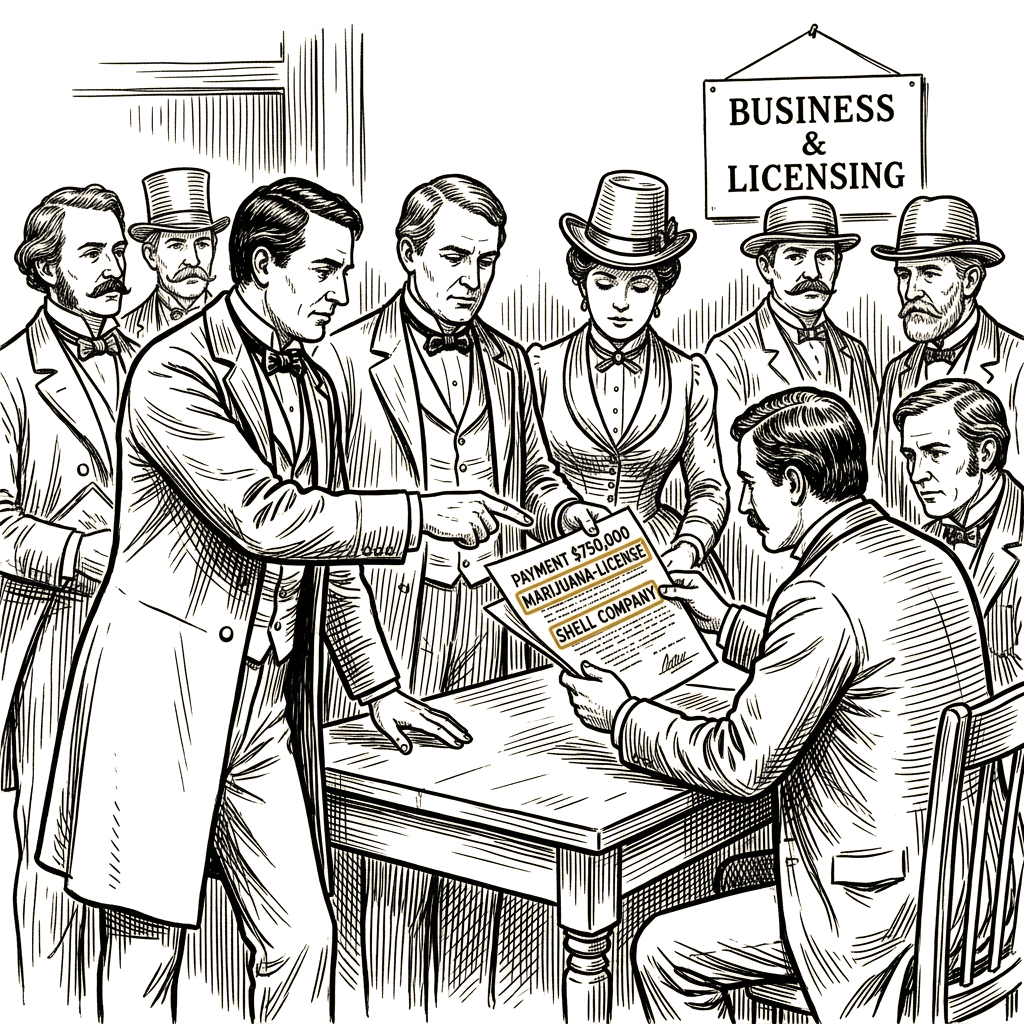
Federal prosecutors say Virginia state Sen. Louise Lucas used her Senate chairmanship to shield the cannabis business she owned, and they have indicted her for paying $750,000 to buy the shell company that made the deal possible.
The federal indictment against Lucas alleges that she bought the full controlling interest in a shell company used to obtain a state marijuana license, took bribes, conspired to distribute marijuana and launder money, and met with co-conspirators on government property to conduct the scheme’s dealings. The charges include conspiracy to distribute marijuana, money laundering and public corruption.
Lucas is 82, has represented Virginia’s 18th District since 1992, and chairs the Senate Finance and Appropriations Committee. She surrendered to federal authorities Thursday. Members of her family have also been charged.
Her social-media statement chose a different set of facts. Lucas said “the full weight of the federal government” had been “wielded against an 82-year-old great-grandmother.” Great-grandhood is a fact, not an answer to bribery. The investigation began under the Biden administration; it was not opened after Donald Trump returned to office.
Attorney General Todd Blanche supplied the measure: “Her first duty should have been looking out for her constituents before herself.” FBI Director Kash Patel alleged at the announcement that Lucas used her chairmanship to shield criminal activity and made legislative decisions to enrich herself.
Again.
This is how public corruption gets made: the public gatekeeper becomes the private beneficiary or protector. On prosecutors’ theory, the business needed a license. The officeholder could help. She owned the business. She took bribes. Her chairmanship shielded the operation. Each piece made the next easier.
Private money crosses a public gate. Here, prosecutors say, $750,000 bought the controlling interest in the shell company, and the alleged public shield was Lucas’s own committee chairmanship. The beneficiary owns the key; the officeholder guards the lock.
The class is not merely people with money or people with office. It is officeholders who use public power to protect a regulated business in which they hold a financial interest. Put ownership of the beneficiary, power to write the rules and power to hide the beneficiary in the same hands, and the separation meant to catch misconduct becomes part of the scheme. The more one person can steer decisions and protect the winner, the fewer hands stand between decision and profit.
Remove Lucas, and the arrangement remains unless ownership, legislative oversight and enforcement are untangled.
The public docket has other exhibits. The FAA delegated key aircraft certification tasks to Boeing; two 737 MAX crashes killed 346 people. The Interior’s Minerals Management Service collected federal oil royalties while also overseeing offshore drilling safety, until the safety function was split into a separate agency in 2011. A 2008 inspector general investigation documented MMS staff taking gifts and cash from industry, using drugs, and having sexual relationships with oil-company personnel. GM concealed a deadly ignition switch from NHTSA for more than a decade.
The common mechanism is public authority placed close enough to a private beneficiary for private leverage to grow. Lucas allegedly held the same conflicted position inside Virginia’s cannabis-licensing system: a legislator who used her chairmanship to shield a business in which she had a financial interest.
The obvious political-targeting story is weak. The calendar offers a talking point, not an alibi. Lucas is not up for reelection until next year. Earlier this month, federal agents raided the Washington home of Rep. Ilhan Omar, D-Minn., as part of a fraud investigation related to her legal immigration status; unlike Lucas, Omar is up for reelection on Nov. 3. The Justice Department has rarely brought charges against political figures this close to an election.
Do not change the subject, dear. The calendar does not erase the conflict alleged inside: money, a license, a chairmanship, alleged bribes.
The license baron can have her lawyers. The federal case alleges the $750,000 purchase, the state license, the office, the bribes and the family charges. On Thursday, she surrendered. Call it what it is: public power turned to private gain.
The gavel has not fallen.