
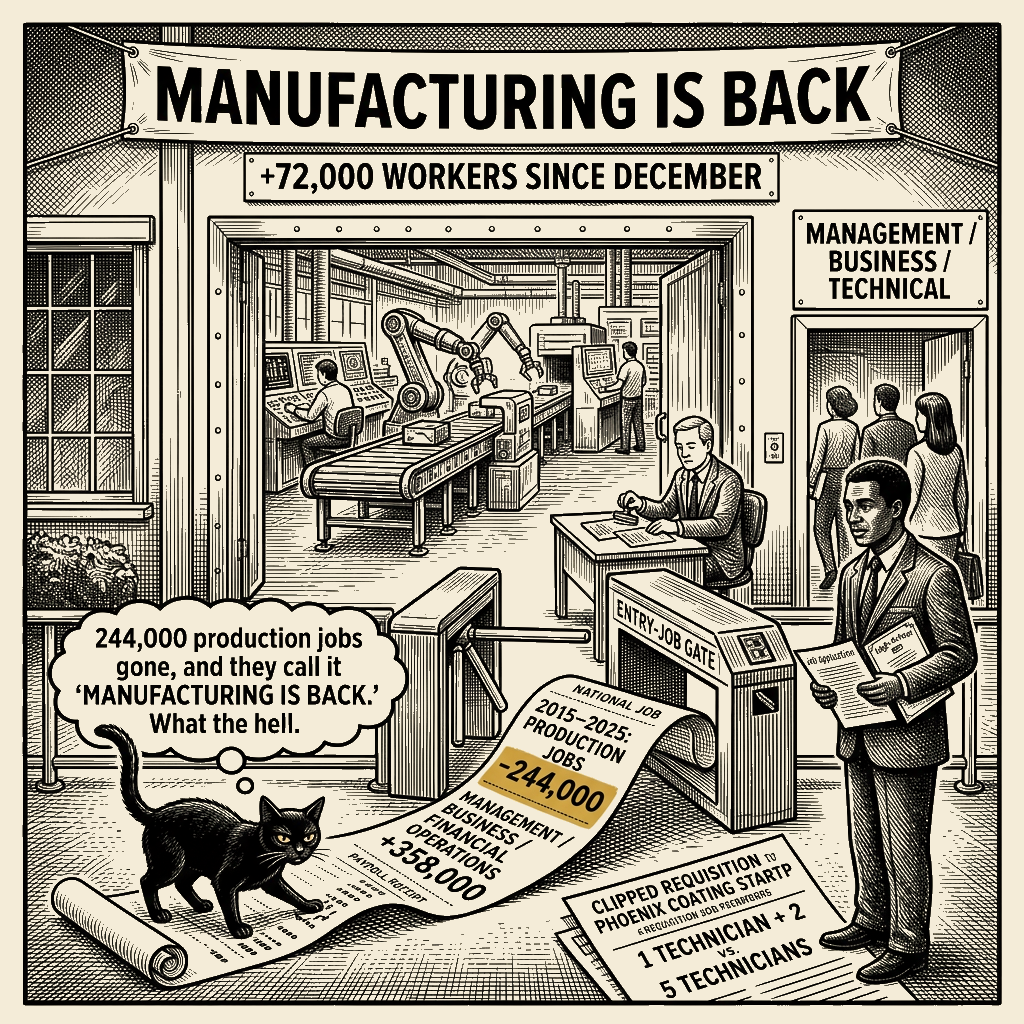
The comeback is real, if you count the kind of comeback that locks the front door on the people who used to walk through it.
Manufacturers added 72,000 workers since December after years of declining factory employment. Fine. That is what the headline says. Now read the receipt. From 2015 through 2025, manufacturers shed 244,000 production jobs—assemblers, machine operators, jobs that once let a high-school graduate walk onto the floor—and added 358,000 management, business and financial-operations jobs. The factory is hiring again. It is not bringing back the old factory job.
At Swift Coat in Phoenix, the new automated line may need one technician and two engineers instead of five technicians. The company says it may not be spending less on people. Good for Swift. But ‘not less spending’ does not put back the five technician jobs. It moves the entryway behind credentials. The old shop floor was an entry. The new one is a checkpoint.
Now schools and employers are scrambling for technicians: SME is sending drone kits and 3-D printers to middle schools; Arizona State is training people for TSMC. Fine. Build the bridge. But do not slap ‘manufacturing is back’ on the bill while the old entry ladder has been cut down.
That is the countrywide receipt: 72,000 more jobs since December, 244,000 fewer production jobs over the prior decade, and 358,000 management and business jobs added. One number is the rebound. The other is the lock on the door.
This is not workers failing to ‘upgrade.’ It is employers changing the job and moving the entry requirement after the ladder was cut. Higher-skill work can pay more and help profits. Fine. Let the robots run the line. Fund the training. Open a real route for the kid who cannot walk through the old door.
Manufacturing is back, my ass. That is factory-job bullshit. Manufacturers can pay for the goddamn training they demand, or quit acting like access was always sitting in the family mailbox.
Source story: U.S. manufacturers add jobs with higher skill requirements.