
Judge Ana Reyes forced the Trump administration to stop destroying East Potomac’s trees without notice.
An announcement is not a permit. Donald Trump’s administration can announce a renovation with certainty and begin it with speed. What it cannot do is announce away a federal judge’s order. Presidential confidence is not a substitute for law.
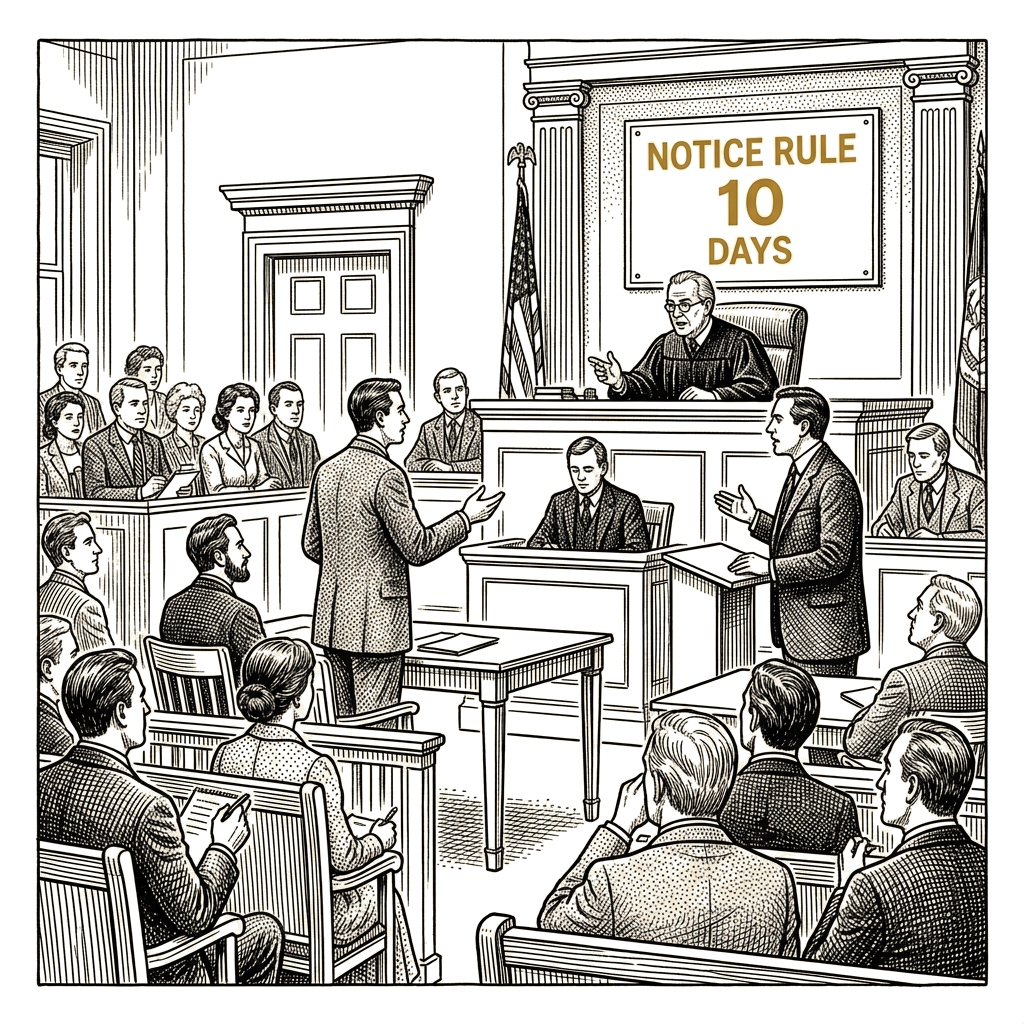
On Monday, U.S. District Judge Ana Reyes extended a preliminary injunction—a temporary order preserving the parties’ positions until final judgment—that bars the administration from removing or damaging additional trees at East Potomac Golf Course. It also requires 10 days’ written notice before the government makes any “irreparable modification” to the course’s “forms or features” while the lawsuit proceeds. The order does not approve or reject the entire project. It prevents the government from converting a presidential announcement into accomplished destruction.
The restrictions directly collide with Trump’s timetable. On Oct. 18, he announced plans to close the 106-year-old Washington park and golf course for 15 months beginning Nov. 15 and redevelop it. A day later, he said work would start immediately.
The fight is not new. The Preservation League and two golfers sued to block Trump’s overhaul, arguing that the administration was inflicting irreversible damage on a historic public landscape. Trump’s plan to turn the course into a world-class golf venue did not suspend that challenge. In May, Reyes had already ordered the administration to suspend tree-cutting. Monday’s extension carried that protection beyond its previous expiration date.
The damage is already severe. Workers cut down at least 400 trees over a holiday weekend with little notice to the Preservation League and the two golfers. At least 400 trees, whatever justification the administration offers for the work, are no longer the careful management of a historic landscape. They are a fait accompli—a completed fact. The injunction stops the government from treating more cutting as routine cleanup and from enlarging that completed fact while the case proceeds.
The strongest defensible position is also the narrowest. A preliminary injunction cannot approve or reject the entire redevelopment, and a district judge cannot claim general authority over every tree or every element of the president’s Washington agenda. The government should be free to pursue a lawful plan. If the work advances legitimate public purposes and follows required process, one judge should not become the final arbiter of the city’s public landscape.
Reyes has made no such claim. Her order does not cancel the project or preserve every feature of the course. It requires the government to set out its proposed changes in writing before it makes them irreversible. Ten days is not a technicality. The administration must identify what it intends to do before doing it. Process first, destruction later.
The administration’s conduct after the injunction exposes the deeper problem. It asked Reyes to disregard Trump’s statements, as though a presidential announcement could settle disputed facts or override the court. She responded with open astonishment to the request that a court “not to believe the sitting President.” The President’s words can announce a project. They cannot establish that the project is lawful, reverse an injunction, or make an irreversible change reversible.
The administration also asked Reyes to recuse herself after government lawyers questioned her impartiality and accused her of “egregious” conduct from the bench during an emergency hearing. Reyes rejected the request. The recusal demand exposed the real stakes in the dispute: not whether the administration could find a sympathetic judge, but whether presidential declarations could erase the rules governing a public park. The sequence was change the landscape first, ask the court to accommodate the president afterward, and attack the judge when the law interfered.
Reyes described the case in terms that leave no room for administrative pretense: “This started as a case about golf. That good walk spoiled. But it has become much more.” The court must now reconcile Trump’s assertions with sworn testimony from government employees and the arguments of senior Department of Justice attorneys.
Reyes made the court’s role unmistakable: “I am not the Lorax. I do not speak for the trees.” She continued, “The Court still does not speak for the trees. It speaks only for the rule of law.”
East Potomac is part of a broader effort to remake Washington’s historic landscape, alongside a large White House ballroom, a massive arch and the addition of the president’s name to the Kennedy Center. Those projects are political monstrosities, and none can be made immune to ordinary legal process merely because the president has made an announcement.
Reyes cannot undo the cutting of at least 400 trees, and her injunction will not preserve every feature of the course. She can do something more durable: she can make the government explain itself before it makes the landscape irreversible. Ten days of written notice is a modest safeguard, but it restores a sequence the administration tried to reverse.
The court has drawn the line. The administration may pursue its plan, but it must document what it intends to do and give notice before acting.
A presidential post can announce a transformation. It cannot perform one. Announcements may command attention. They do not supersede the rule of law. Until the administration supplies the required notice and submits to the injunction, Trump’s closure-and-redevelopment timetable stands behind a fence built by law.