Advance Colorado tried to turn an accusation into a deportation. On Tuesday, the voters of Colorado refused. Amendment 81, the measure backed by that conservative nonprofit, failed to reach the fifty-five percent of votes it needed, and a mechanism that would have made a filed criminal charge the trigger for removal is dead on the paper where it was born. The measure would have required Colorado law-enforcement officers to notify the Department of Homeland Security within seventy-two hours of charging a person with murder, assault, or arson if that person was not lawfully present or if their legal status was undetermined. Read that mechanism slowly, because its whole weight rests on one word: accused. Not convicted. Not proven. Accused. The trigger was the filing of charges. Not the weighing of evidence by a jury. Not a verdict. A charge — an accusation written by one government employee against another human being — would have started a clock, and when the clock ran out the state would have handed the accused to the federal government for the mass-deportation campaign it is running.
A charge is a claim. It is where the law begins its work, not where the work ends. The entire apparatus of trial — evidence gathered, witnesses tested, a defense heard, a judge persuaded — exists for one reason: an accusation, standing alone, has never been permitted to be the verdict in this country. Amendment 81 would have converted the moment of filing into the moment the machinery of removal started turning. The warning was plain: notifications to the Department of Homeland Security might place people at risk of deportation before trial. Colorado Democratic Party chair Shad Murib said the plainer thing: “Being accused of a crime is not the same as being convicted, and our laws need to respect that distinction.” Both statements are true, and the second is older. The Guardian reported what it meant in practice: for a person whose status was merely undetermined, the call would be made on an accent, a surname, a face; for one who was not lawfully present, it would be made before any court had tested the charge. A status the law has not settled is a question, not an answer. This measure proposed to answer it with a hunch. It also handed officers a judgment about citizenship they are not trained to make, and the worry about racial profiling was not an invention of the opposition; it was the predictable shape of the power being distributed. People had already gathered at the state capitol in September to say so. On Tuesday they said it again, and the second time it counted.
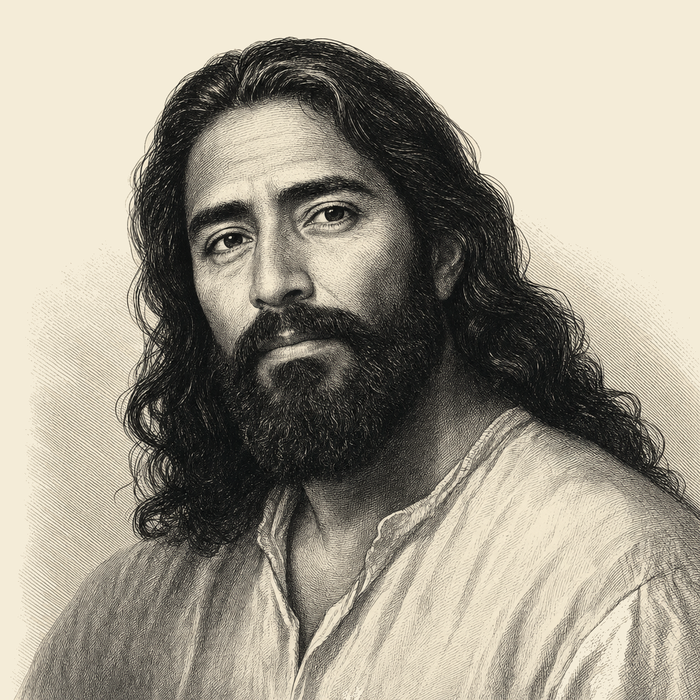
The tradition I write from says it harder than Murib did. The Torah commands, more than thirty times, that you shall love the stranger as yourself, for you were strangers in the land of Egypt — a command given to a people who knew what it was to be feared on sight. It carries no rider demanding a clean record first. And the gospel does not soften it: I was a stranger and you welcomed me; I was a stranger and you did not welcome me. In neither sentence does the judge ask what the stranger was accused of. To the officers who would have filled out those notification forms, and to the men who drafted the requirement, the texts this country inherited speak to you in the second person. The prisoner in the county jail is the one the gospel calls Christ. You were being asked to hand him over before his trial.
King wrote from the Birmingham jail that justice too long delayed is justice denied. Amendment 81 proposed the other kind of denial — justice cancelled before the delay could even begin. Arraignment, bail, trial, verdict: that architecture exists because accusation and guilt are different things, and a state that will not wait for its own courts to speak has not enforced the law. It has replaced the courts with itself. The measure was cruel, and the cruelty was not a side effect. It was the mechanism.
I know what an accusation can do to a family before any court speaks. I grew up in El Paso, and I remember the mornings when a classmate was simply gone — a desk left empty, the school day continuing as if the empty desk were ordinary. No trial had done that. A knock at dawn had done it. And I will not stand outside the indictment when I make it: before I say more about Advance Colorado, I have to say what my own hands and my own country did to build the machine it tried to feed. The immigration-reform law Congress passed in 1996 wrote the modern deportation machinery with bipartisan hands — retroactive grounds for removal, expedited removal, bars on reentry, immigration judges who serve inside the Justice Department rather than Article III courts. By Adam Goodman’s count, roughly eight million formal deportations over the past century, and tens of millions more pushed out through what officials called voluntary departure, a word applied to people choosing between removal and starvation. Mae Ngai’s older point stands underneath all of it: the illegal alien, as a category, is not a natural fact but a thing our own laws produced, when we capped legal immigration far below the labor our economy kept asking for. And my church, which baptizes the children of the undocumented, has too often gone quiet the morning after the pre-dawn knock — it has praised the men who roof its houses and then voted afraid of them. If a state governed by the other coalition had put this same mechanism on its ballot, every sentence in this column would have to be written again, unchanged. None of this belongs to one party. Every administration has kept some of the bishops’ principles and broken others, and every administration has produced family separations of the structural kind that never reaches a press release.
So Tuesday was Colorado declining to add a new gear to that machine. The same state where, in May, a federal judge found ICE violating a court order on warrantless arrests refused to deputize its police as intake clerks for DHS. It refused a few months after state officials had begun pushing back against federal threats to prosecute over noncitizen voting. The vote came amid larger losses for the administration in state and national races, in a midterm widely read as a referendum on the presidency, with the economics of the war in Iran and the immigration crackdown part of what voters were weighing. But do not let the larger story swallow the smaller one. The smaller one is the moral one. Colorado was asked whether an accusation should be able to end a family’s life in America before a trial could begin, and Colorado said no. Amendment 81 was a cruelty that had to ask permission. The machine it served does not.
The strongest word ever spoken against such an order was spoken by Óscar Romero on March 23, 1980, to the soldiers of his own country: no soldier is obliged to obey an order against the law of God, and an immoral law no one is obliged to keep. He was addressing men of the same pueblo, conscripted to treat their own brothers as the enemy. A barracks conscripts a conscience; so does a ballot. The refusal Romero named is owed to an unlawful command whether it arrives by radio or over the speaker at a polling place, and no one who drafted Amendment 81 gets to hide behind the fact that voters rather than officers were meant to do the arresting. Colorado’s officers were being conscripted into the same work in another form: the ballot language asked them to treat the accused neighbor as the deported one, an instrument of the administration’s mass-deportation agenda. Romero begged. He pleaded. He ordered, in the name of God: stop the repression. The voters of Colorado said their version of it on Tuesday. The Colorado version of that sentence is smaller and better news: nobody had to disobey anything; the voters had a ballot. But a ballot is one door held, not the war ended.
Here is what public safety actually requires, and Colorado already owned it: charges proved at trial, convictions earned by evidence, sentences carried by courts with a defense in the room. The bishops of the United States and Mexico wrote in Strangers No Longer that nations have the right to control their borders and that the human dignity of undocumented migrants must be respected — both, at once, neither purchased with the other. A state can convict every actual murderer it catches without turning a single accusation into a deportation. That is not softness toward crime. It is the line between justice and its imitation, and Colorado drew it in the right place. A humane policy was never a mystery, and it was never on Tuesday’s ballot: hold people accountable for proven crimes, through courts that weigh evidence before consequences. Let police do police work and let enough real immigration judges do the immigration work. Keep the trial before the sentence, for the citizen and the stranger alike.
So to the people of Advance Colorado I hold out what Romero held out to the soldier with his open hand: you can stop, and you can come back. Stop building measures that make suspicion the verdict. Build the thing you claim to want — a state where the law binds everyone — and begin with the law’s oldest promise, that no one is condemned on accusation alone. Bring your next measure with the trial in it. Insist that consequences wait for verdicts, and we will meet you in that argument — not because you have earned it, but because the tradition that refused your measure is the same tradition that will not give up on you.
Keep this image, because I intend to. Somewhere in Colorado tonight a man sits in a county jail on a charge not yet tested, and down the hall his family waits for the trial. Before Tuesday, the state was prepared to hand him to the agency that could put him on a plane before he ever saw it. Colorado voted, and now he gets the trial first. Tomorrow the courtroom opens at eight, and the state will have to prove what it says. That room is where the country keeps its promise to the stranger and to itself. I repair broken things for a living, one at a time. Tuesday, Colorado repaired one.