Donald Trump Is Expanding Sweeping Deportations Against Workers and Their Families.
On CBS’s 60 Minutes, Donald Trump gave himself an “A plus” for closing the border and “very high marks” for removing “the bad ones.” Then he said the sweeping deportations had been politically “too tough” because the administration also took people with good jobs after one violation or unauthorized entry. “I think it was too tough.” His party lost its congressional majorities after the midterms. Election-day polling placed immigration third among voters’ concerns, behind the economy and the state of democracy, and a Latino shift in Texas toward Democrats helped seal the result.
Our earlier coverage found that most midterm voters said Trump’s immigration enforcement had gone too far. The new interview was not another poll. It was the president hearing the damage and preserving the machinery. You gave the border an A+. You did not grade the human cost. That sentence was not a moral retreat. It was the price of politics. The cruelty was too much because it cost votes, not because the state had torn workers from their jobs and families. Nothing in the interview stopped an arrest, released a mother, reunited a child, or reduced the daily quota. The retreat was an adjective. The machinery continued.
I have eaten food grown and picked by undocumented hands and accepted pay for work performed by people whose legal status could vanish at a knock. I grew up in El Paso watching classmates disappear after pre-dawn raids, their empty desks left beside the next morning’s lessons. That is how a country is taught to call cruelty an adjustment. The deportation machine is older than this president, and earlier enforcement regimes also detained families and separated children. A machine that outlives one administration is not innocent in the hands of the next. The history widens the indictment without transferring it away from the current one. The standard is symmetrical; the accusation follows the conduct.
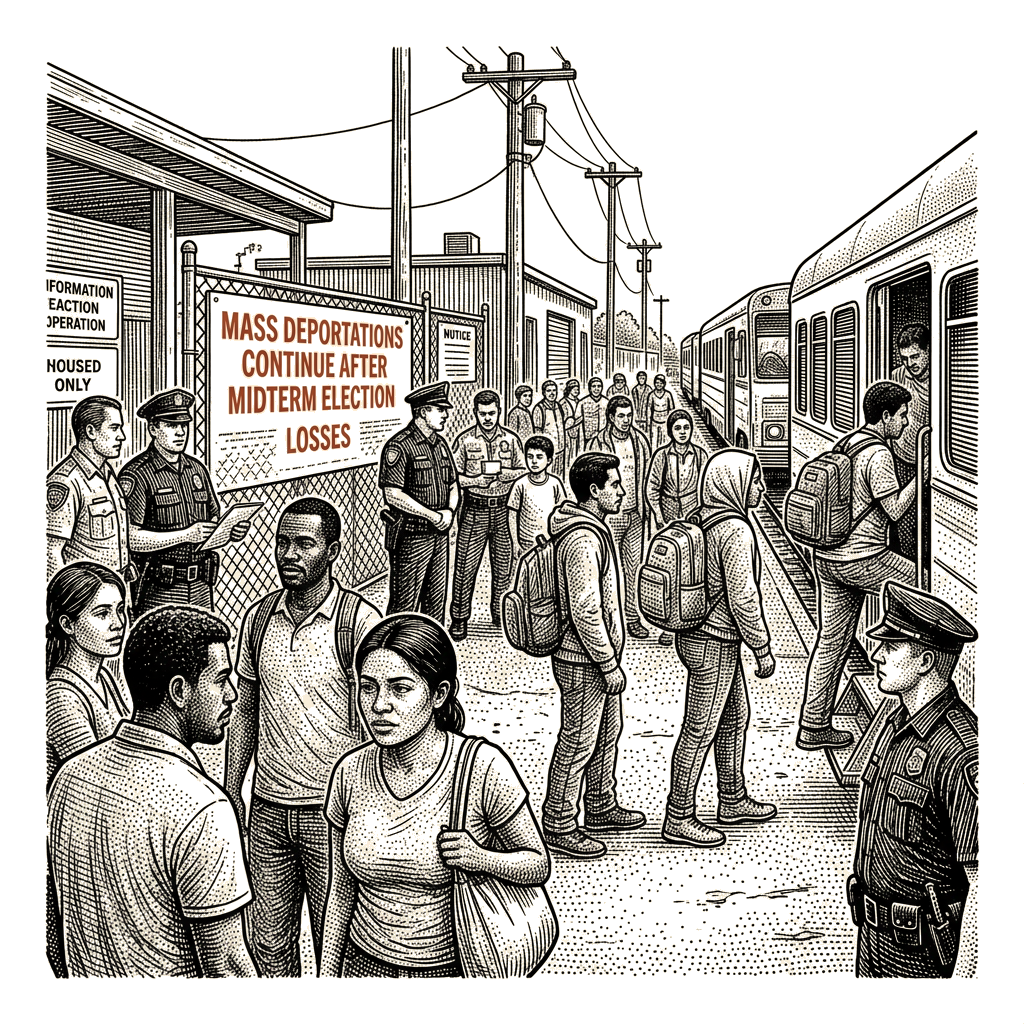
The retreat did not touch the machinery already documented in the administration’s reshaping of US immigration enforcement and admissions. DHS said ICE was not backing away or slowing down. Its spokeswoman promised to keep arresting and deporting people under the label “criminal illegal aliens who terrorise our communities.” CBS reported, citing ICE sources, that officials had been instructed to aim for about 2,700 arrests a day, up from an earlier target of 2,000. Stephen Miller, widely seen as the architect of the administration’s hardline immigration policy in both Trump presidencies, became White House chief of staff. The gap was the operation: the category of criminal menace made policy painless to announce, while the people inside it bore the loss.
The daily arrest target was not a plan for justice. It was a production schedule for separating families. For one household, a number could become a knock before dawn, handcuffs, a van, a lost job, a country denied to the children, and a parent placed beyond the reach of those who loved them. The policy turned one violation into a chain: arrest, detention, the immigration-court system, where immigration judges are Department of Justice employees, removal, and exile from the labor and community that sustained the person. The system turned human presence into inventory. When an employer hires undocumented workers in violation of law, the worker pays for the employer’s violation. The employer loses labor. A family loses a parent. A community loses a neighbor. The state calls it enforcement. I call it state cruelty because the state has chosen a measurable output, arrests, over the human consequences of each arrest.
Enforcement sweeps this year spurred anti-ICE demonstrations in Chicago, Minneapolis, and Los Angeles. In Minneapolis, immigration agents fatally shot protesters Renee Good and Alex Pretti. When agents fire on demonstrators, dissent itself becomes a bodily danger. That was not incidental friction. It was what an expanding machine does.
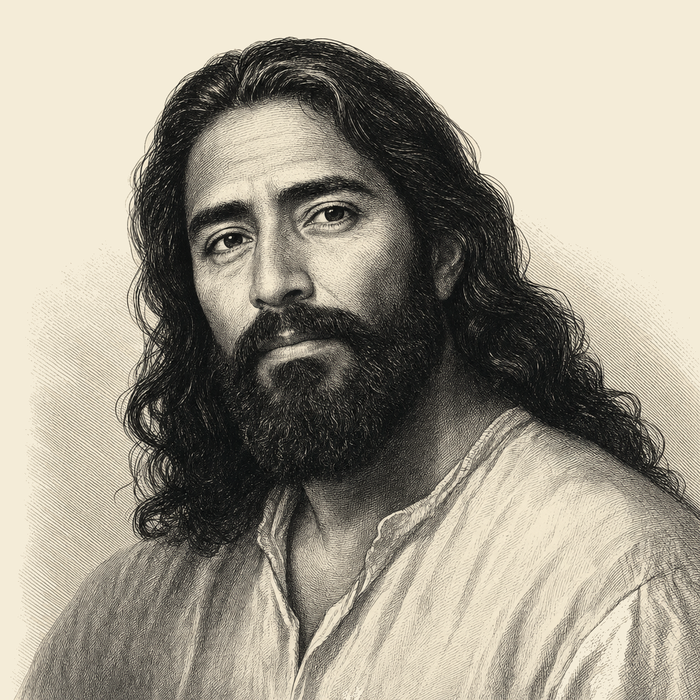
The Torah did not leave the stranger outside the moral compact. “For you were strangers in the land of Egypt” was the memory that should govern every power that called itself a border guardian. Leviticus commanded that the alien residing among us be loved as ourselves. Jesus removed the distance further: in Matthew 25, “I was a stranger and you did not welcome me.” The stranger was not a category to be processed. The worker pulled from a job, the family divided at the airport, the person waiting in a detention hall, none of them disappeared into the administration. Each had a name, a history, and a future. The tradition did not excuse lawlessness. It forbade the state to mistake a legal category for a human being’s worth.
On March 23, 1980, Archbishop Óscar Romero faced men ordered to kill and told soldiers in San Salvador: “No soldier is obliged to obey an order against the law of God. An immoral law, no one has to fulfill it.” Then he commanded: “¡Cese la represión!” “Stop the repression!” The prophetic and the pastoral were one act. Romero did not exclude the soldier from mercy; he summoned him out of sin. His word was for the ICE officer carrying a target, the Homeland Security official carrying a political strategy, and the president carrying an election result. The duty was not to abandon the public trust. It was to refuse the order of sin.
Vice President JD Vance’s suggestion to focus enforcement more on businesses that hire unauthorized labor points in the right direction: prosecuting exploiters who turn another person’s desperation into cheap labor is justice, while making workers disposable to punish employers is not. A just immigration system can enforce border authority without making human presence punishable: it can hear asylum claims promptly, protect children, keep families together, open lawful pathways, and give every person due process before detention or removal. Border authority is not moral authority. You can control a border without making a family’s love, work, and safety disappear when paper is missing.
President Trump is a person. Stephen Miller is a person. The ICE officer on the street is a person. Their power did not erase their humanity, and their humanity did not erase their responsibility. Mr. President, your sentence changed no policy; the workers bore the cost. Stop the repression. Romero’s command was not a sentence passed on enemies. It was a summons to conscience. The door of return remains open, but it opens toward repair.
Before dawn at a bus station, a family waits to learn whether the law will recognize them as neighbors. Let the answer begin with the people who wield the law. At dawn, before the parish opens, I sweep the floor of the little shop. A broken chair waits on the bench. It needs glue, not a louder speech. The repair begins there.