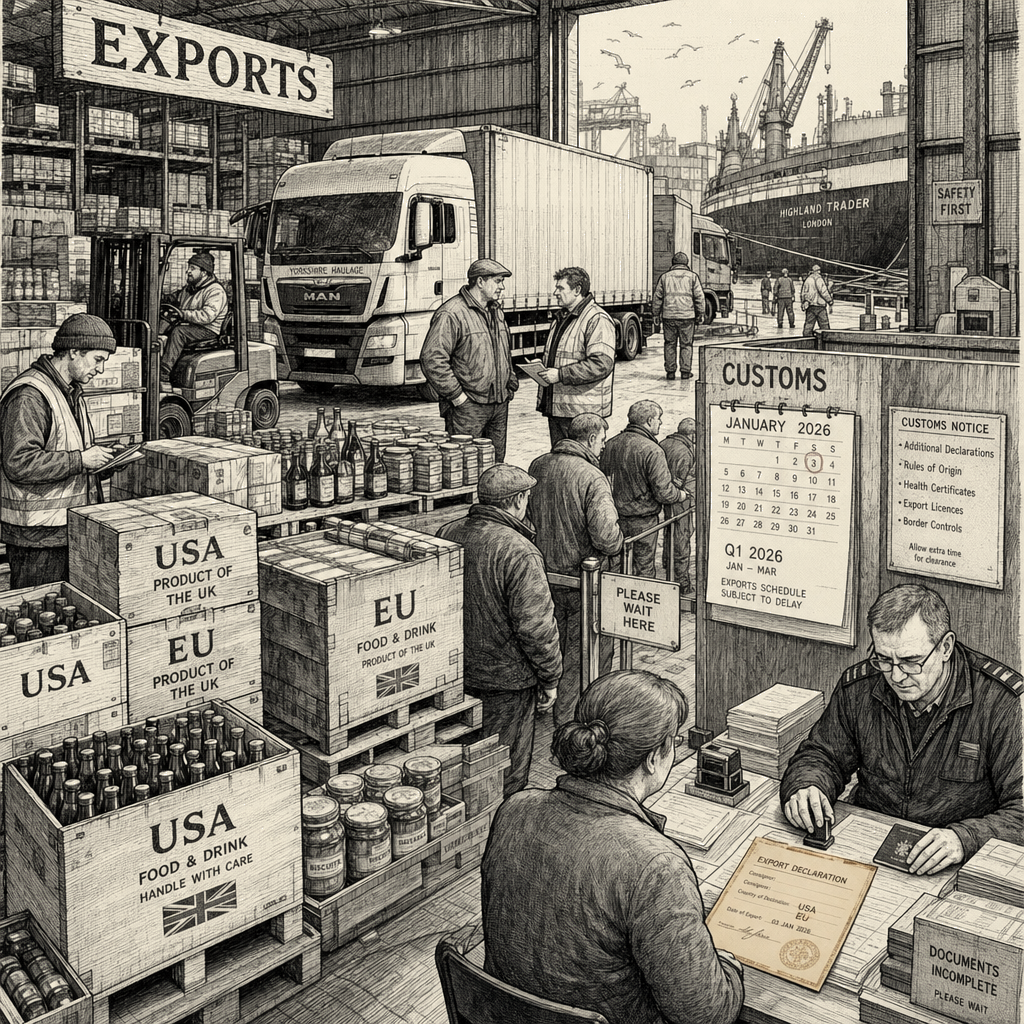
Food and drink exports from the UK fell to their lowest volume in a decade in the first three months of 2026, according to the Food and Drink Federation, as US tariffs and persistent post-Brexit trade barriers with the European Union squeezed the country’s manufacturers.
The FDF’s latest Trade Snapshot report showed the value of UK food and drink exports dropped 4.8% year-on-year to £5.7bn in the first quarter. In volume terms, exports in January-March declined 8.9% to the lowest level for that period in the last decade — excluding 2021, when the Covid pandemic hit shipments, the federation warned.
The biggest single blow came from the US, where exports fell 28% after President Donald Trump’s tariff regime disrupted transatlantic trade. The US in April 2025 imposed additional duties on British goods, which the FDF previously said had a “significant impact” on supply chains.
Exports to the European Union, the UK’s largest trading partner, also declined. EU export volumes fell 6.9% in the first quarter, a drop the FDF attributed to “the added cost and complexity of trading with our closest trade partner since Brexit,” the federation said.
Karen Betts, the FDF’s chief executive, said in a statement that food and drink businesses were “part of the fabric of every community in the UK, and it’s concerning to see them struggling to compete overseas.”
“The UK produces world-class food and drink, drawing on our heritage and our reputation for innovation, but we have to be able to remain competitive overseas against local products,” Betts said. “The costs of producing food and drink in the UK are higher than in many competitor economies, from energy to employment, and constantly changing regulation only adds to these.”
Betts called for government action to improve competitiveness, including helping small and medium-sized enterprises access the benefits of trade deals and lowering the cost of doing business in the UK.
The Federation said it hoped that a new sanitary and phytosanitary agreement being negotiated between London and Brussels would remove some trade friction by reducing paperwork and border checks.
The trade data comes after UK food and drink export values climbed to a record £25.6bn in 2025, a figure the FDF had flagged as a “landmark year.” But the industry has warned that rising production costs, tariffs, and behind-the-border barriers continue to make real export growth challenging.
The figures add to a broader picture of economic strain on UK manufacturing from trade disruptions. MSI previously reported that Babcock International’s underlying operating profits fell 19% in part from Brexit-related cost increases, and that UK auto manufacturing rose only 2.7% in May despite a surge in US shipments after the US-UK trade deal took effect.
The UK’s food and drink trade surplus with the US shrank by 69.3% from £359m to £110m in the first quarter of 2026, according to the FDF, which noted a “clear asymmetry between US producers growing their share at the same time UK exporters are losing ground in theirs.”