Rehearing requests rarely granted by high court
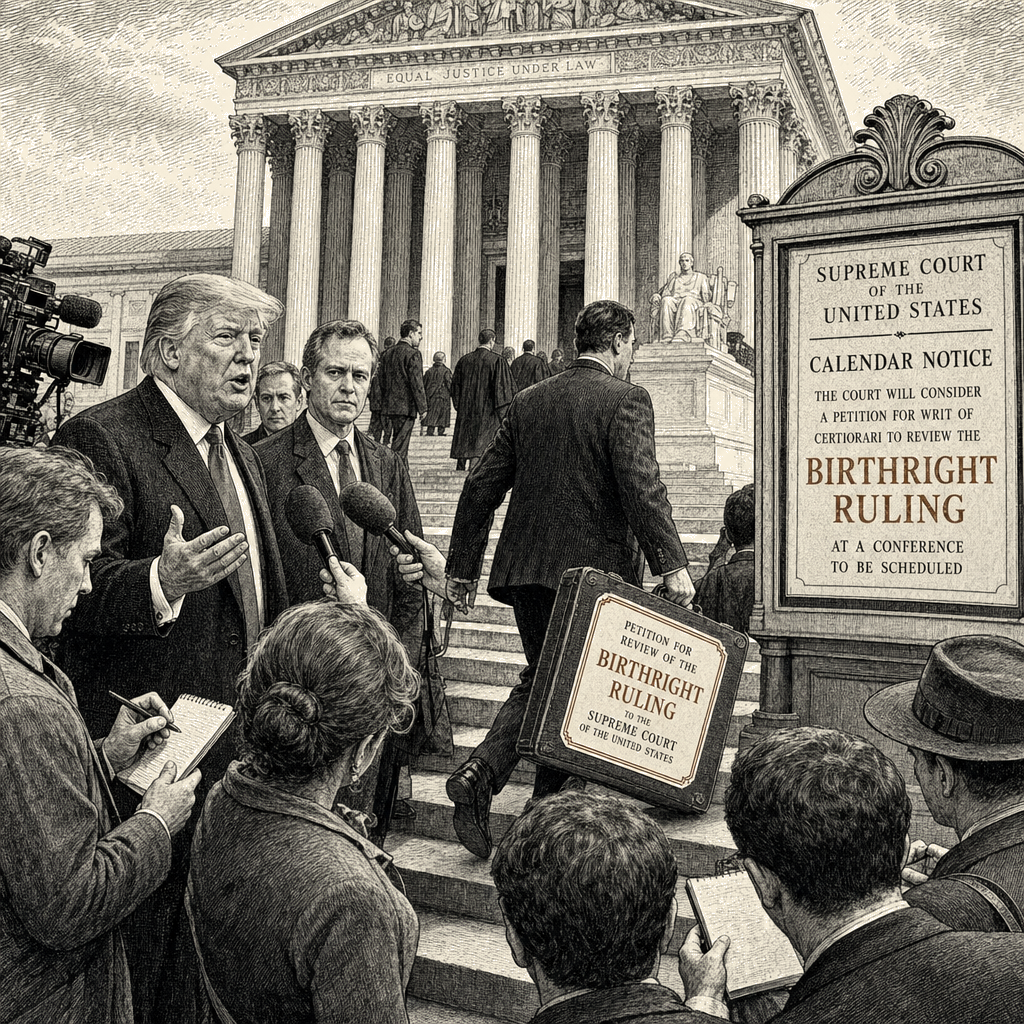
President Donald Trump said Wednesday he will ask the U.S. Supreme Court to rehear a case challenging birthright citizenship, one week after the high court ruled his executive order restricting the 150-year-old policy unconstitutional.
The Supreme Court’s rules allow a losing party to file a formal request for a rehearing within 25 days of the decision. A majority of the nine-member court would have to approve granting the rehearing. The high court has rarely ever granted such requests; the last time a decided case was reheard was about 60 years ago.
“This miscarriage of justice will destroy America if they don’t change their absolutely insane decision,” Trump wrote on social media Wednesday.
The June 30 ruling marked a setback for the president’s immigration agenda. In a 6-3 decision, Chief Justice John Roberts ruled that children born in the United States “to parents unlawfully or temporarily present” are “citizens at birth” under the 14th Amendment of the U.S. Constitution. The court rejected Trump’s executive order that sought to limit the right, which has been in place since 1868 and has been bolstered by prior Supreme Court rulings.
Trump had argued that children of undocumented immigrants and some temporary visitors were not “subject to the jurisdiction thereof” and thus not eligible for birthright citizenship. Five justices, including Chief Justice Roberts, agreed that the executive order violates the Constitution’s 14th Amendment. Justice Brett Kavanaugh wrote separately to say he believed the order violates federal law rather than the Constitution.
After the ruling, Trump vowed to continue to fight to end birthright citizenship through legislation, which would require passage through the U.S. Congress.
The June 30 ruling was welcomed by civil rights groups.