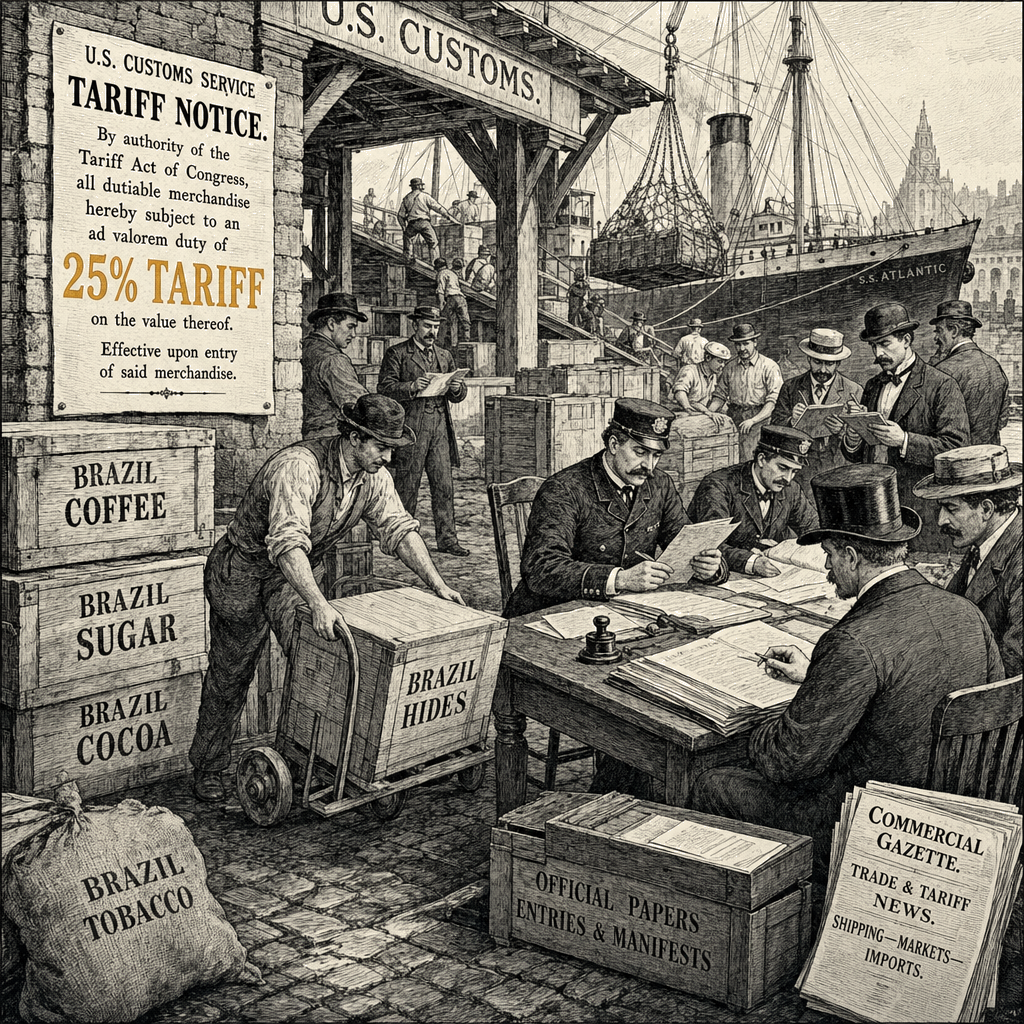
- U.S. Trade Representative Jamieson Greer imposed a 25% tariff on certain Brazilian goods under Section 301 of the Trade Act, citing unfair trade practices found in a yearlong investigation.
- The tariffs, excluding Brazilian beef and coffee, take effect July 22 and raise the existing duty on non-exempt Brazilian imports from 10% to 25%.
- Secretary of State Marco Rubio said President Trump directed the action, accusing Brazilian President Luiz Inácio Lula da Silva’s government of failing to negotiate in good faith.
- Brazil rejected the tariffs and said it would invoke its economic reciprocity law in response, calling the date a “lamentable milestone” in bilateral relations.
Brazil to invoke reciprocity law in response
The measure marks the second major U.S. tariff action against Brazil in under two years. Trump imposed a 50% tariff on Brazil last year, but the Supreme Court later struck it down alongside other emergency-based duties. Non-exempt Brazilian imports currently carry a 10% duty, which the new 25% levy replaces.
Greer said the action addresses practices that have “prevented U.S. workers and producers from accessing this important market with over 210 million consumers.” The move is being carried out under Section 301 of the Trade Act, which allows a president to impose duties as long as his administration can point to unfair trade practices. The investigation was launched at President Trump’s direction.1
Secretary of State Marco Rubio said on X that President Trump directed the USTR to impose the tariff. “Let there be no confusion about why: President [Lula] and his government have not negotiated with the U.S. in good faith,” Rubio wrote. “His economic policies are bad for Americans and bad for Brazilians.”
Brazil’s government said in a statement posted by Lula on X that it rejected the tariffs and would invoke its economic reciprocity law in response. “There is no justification for unilateral measures against our country,” the statement said. It said July 15, 2026, will go down as a “lamentable milestone” in the history of Brazil-U.S. relations. Brazil said it had engaged with the USTR to end the Section 301 investigations and provided evidence against claims of unfair trade practices.
Footnotes
-
MSI previously reported that the Trump administration in June proposed a 25% tariff on Brazilian imports over digital services, intellectual property, and environmental enforcement, a move that Brazilian President Lula said was encouraged by the sons of former President Jair Bolsonaro, whom he called “traitors to the nation.” ↩