Manufacturing employment fell 75,000 since January 2025, BLS data show
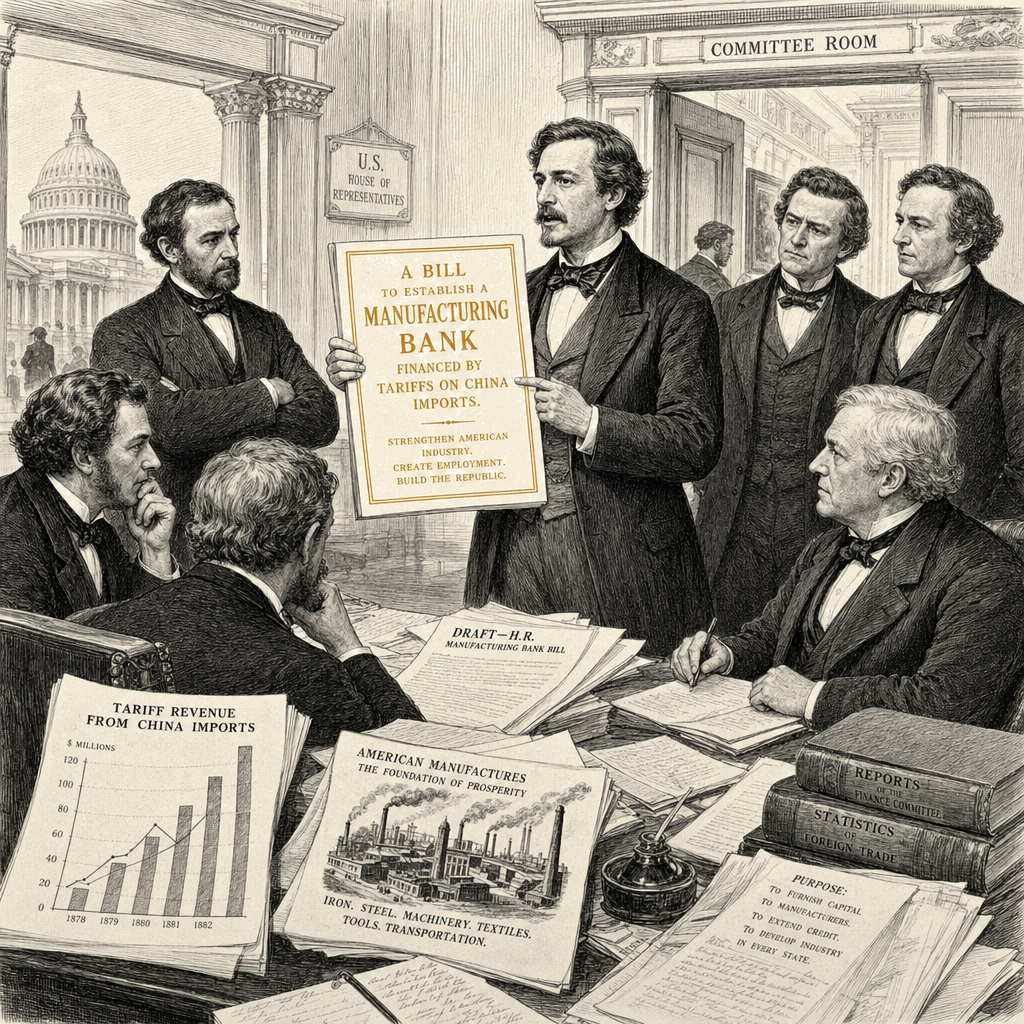
Rep. Ro Khanna of California, joined by Reps. Tom Suozzi of New York and Debbie Dingell of Michigan, introduced the Industrial Bank for American Manufacturing Act this week, a bill that would create a new federal bank capitalized by tariff revenue on Chinese imports to finance domestic manufacturing projects.
The legislation would redirect up to 50% of Section 301 tariff revenue away from the Treasury’s general fund and into a newly created bank authorized to provide up to $15 billion annually in grants, loans, and equity investments targeted at small and medium-sized manufacturers.
“This is one of the boldest industrialization proposals since FDR’s industrialization efforts, and it’s in the tradition of Hamilton’s efforts,” Khanna said in an interview. “This bank would support small and medium-sized manufacturers who are making things that we’re currently importing, and it would help thousands of our manufacturers across America to make things here, instead of importing them.”
The bank would target de-industrialized areas such as Johnstown, Pennsylvania; Lordstown, Ohio; the Downriver region of Michigan; and the Lower Bucks County Delaware River corridor in Pennsylvania, where Khanna grew up.
“It would be an effort to re-industrialize the country,” Khanna added. “We need what I call the ‘modern Marshall plan for America.’ This is part of my vision for a Marshall plan for America, that this is the most patriotic and boldest jobs agenda for industrialization since FDR and Bill Knudsen in the 1940s.”
The bill caps individual loans at $500 million and requires congressional approval for any loan exceeding $100 million.
Khanna said the legislation followed a recent “heartland tour” across the Midwest. During the tour, he recounted meeting a small manufacturer outside Cleveland, Ohio. “They could make the part here, but they didn’t have the money. They needed about a million dollars of capital to do it,” Khanna said.
“We have a country right now where all the capital is going to build AI, technology apps and financial firms, but we need capital also for our small and medium-sized businesses, for our manufacturers,” Khanna said. “We need to be developing not just New York and Silicon Valley and Austin – we need to be developing industry in the midwest, in the south-west, in the south, and I believe an industrial investment bank is a concrete step towards that.”
The proposal arrives as manufacturing employment in the U.S. has declined by 75,000 jobs since January 2025, according to Bureau of Labor Statistics data, extending a long-term decline from a peak of about 19.6 million jobs in 1979 to roughly 12.6 million in 2026.