Iran war stockpile depletion drives series of Pentagon production agreements
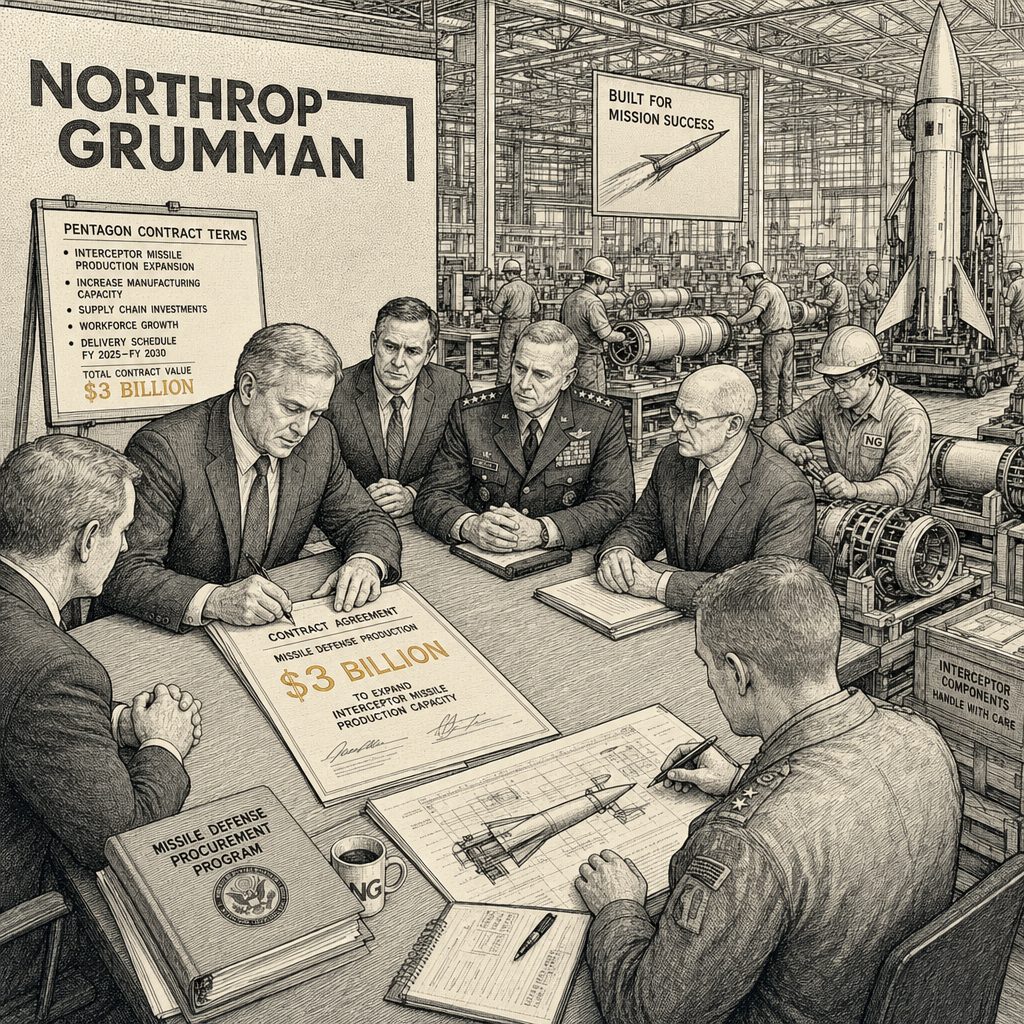
Northrop Grumman’s two new framework agreements, announced Monday, are the latest in a series of Pentagon contracts aimed at rebuilding weapons stockpiles drawn down during the Iran war. The defense contractor signed the multi-year deals with the Pentagon and Lockheed Martin.
Under the first agreement, valued at $2 billion, Northrop will supply components including solid rocket motors and ignition safety devices for U.S. air and missile defense systems. The second deal, worth $1 billion, will enable the company to significantly increase monthly deliveries of terminal high-altitude area defense components over the next seven years. Terminal high-altitude area defense, known as THAAD, is a key element of the U.S. layered missile defense architecture.
The agreements come as U.S. munitions reserves have declined during the Iran war. Government officials have been debating how to manage the impact of falling weapons stockpiles as tensions in the Middle East escalated in recent weeks, according to the Wall Street Journal.
The Northrop deals follow a series of similar production-boosting agreements with other defense contractors. Last week, L3Harris said it would quadruple propulsion production for missile defense as part of new seven-year agreements with the Pentagon. In June, the government awarded Lockheed Martin a contract worth up to $35 billion to produce hundreds of missile interceptors per year.
The pace and scale of these contracts reflect the breadth of the replenishment challenge facing the defense industrial base. The Iran war, which began earlier this year, has consumed munitions at a rate that has drawn concern from lawmakers and defense analysts about the time required to rebuild stockpiles.
Northrop Grumman’s stock rose 1.43 percent following the announcement, while Lockheed Martin’s shares gained 1.50 percent, the Journal reported.