Scope of deal disputed as implementation obstacles remain
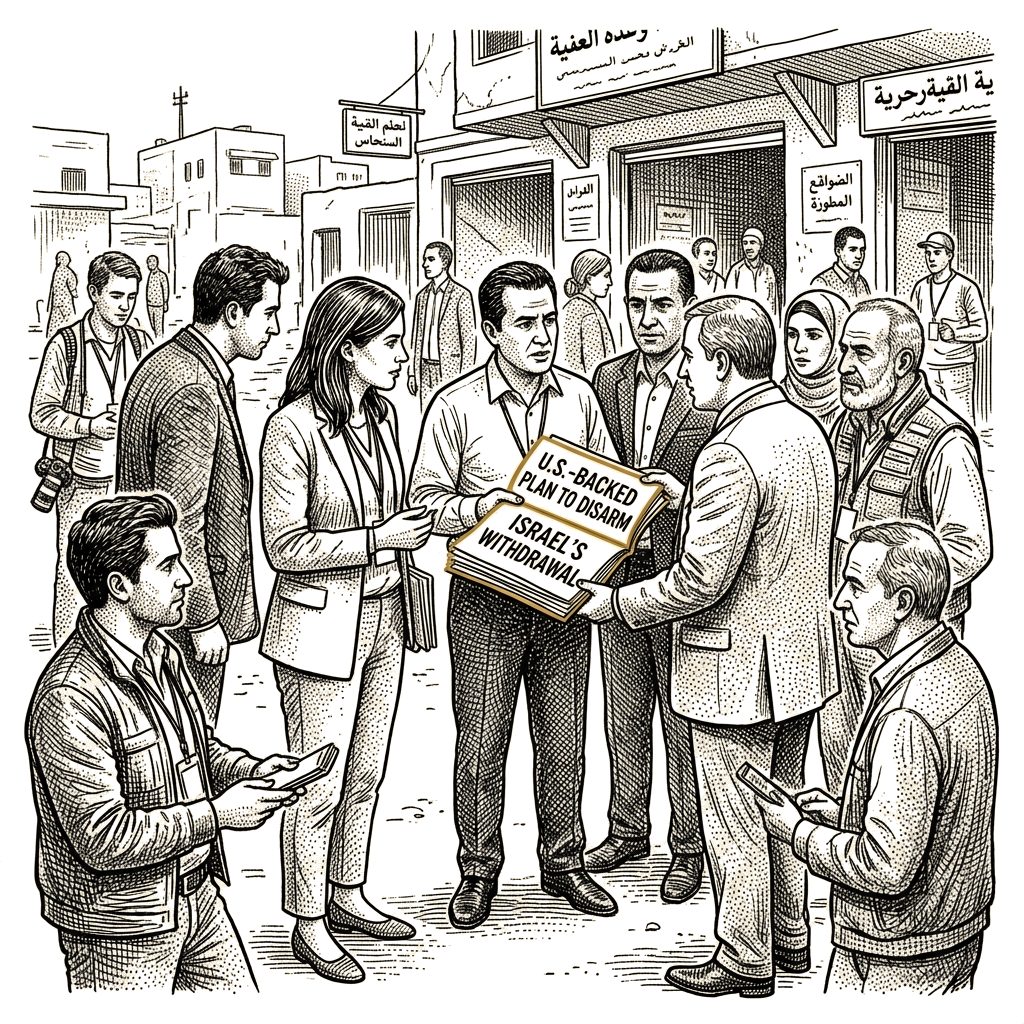
The Wall Street Journal reported Tuesday that Hamas has agreed to a U.S.-backed plan aimed at disarming the group and securing Israel’s withdrawal from Gaza. Reporter Feliz Solomon’s examination of the agreement, published with a video breakdown, walks through the deal and the challenges that lie ahead in carrying it out.
President Donald Trump announced last Thursday that his Board of Peace had reached a tentative agreement with Hamas and other militant groups after months of negotiations. “The agreement will be carried out in carefully structured phases,” Trump said on social media. “As disarmament is completed, Israeli forces will withdraw, and the International Stabilization Force will work with a new Palestinian police force to take responsibility for Gaza being safe for its residents and its neighbors.”
The Board of Peace is a coalition of 28 countries, including Israel, formed in January and tied to a U.N.-backed 20-point plan for the stabilization and reconstruction of Gaza. The first phase of that plan included the release of all remaining hostages taken during the Hamas-led attack on Israel on Oct. 7, 2023, which triggered the war.
The scope of the agreement is contested. Ghazi Hamad, a member of Hamas’s negotiating team, told The Wall Street Journal: “We didn’t say disarmament, we didn’t say handing over the weapons, and we didn’t agree on any Israeli involvement.” Hamas has said it agreed only to relinquish heavy weapons, stopping short of a pledge to hand over light arms such as assault rifles, which security analysts say are crucial to the group’s control over the population.
Israel’s government takes the opposite view. National Security Minister Itamar Ben-Gvir, part of Prime Minister Benjamin Netanyahu’s right-wing coalition, called the agreement “unacceptable to Israel” and said the targeted killings in Gaza “must continue, emigration must be encouraged and Israel must win.” An Israeli official said Israel demands genuine demilitarization of Palestinian forces in Gaza before it will pull its troops back. Netanyahu, who faces elections later this year, has not commented publicly on the plan.
The plan has been complicated from the outset by a sequencing dispute: Hamas insists Israel withdraw before it turns over weapons, while Israel refuses to relinquish territory until the group is completely dismantled.
The institutions meant to implement the plan have yet to take shape. A U.S. military official said the new Palestinian police force that would decommission Hamas’s weapons is still in the early stages, with thousands of candidates being vetted but not yet hired or trained. The International Stabilization Force, which Trump originally envisioned as a 20,000-strong force spread throughout Gaza, has an initial contingent of 10 to 20 troops that has yet to deploy. The official said it might be months before even limited operations inside Gaza can begin.
“To me this all sounds unrealistic,” said Amir Avivi, a former senior Israeli defense official. “We’re talking about a very, very long-term process.”
Since the ceasefire took effect nine months ago, Israel has expanded its area of control to command almost 70% of the territory, squeezing Gaza’s population into an ever-shrinking space.
Violence has continued since the framework was announced. The Palestinian news agency WAFA reported that Israeli attacks killed at least 14 Palestinians in Gaza on Sunday, including four children, and that Israel has attacked the enclave every day since the framework’s announcement. Turkey’s Ministry of Foreign Affairs, one of the mediators in the talks, said more than 30 civilians were killed in Israeli attacks on health facilities after the framework’s announcement. Local health authorities say more than 1,000 people have been killed by Israeli attacks since the ceasefire, and United Nations estimates show that more than 81% of all buildings and structures in Gaza have been either destroyed or damaged.
Nickolay Mladenov, director general of the Board of Peace, said his team is working “around the clock” with the parties, mediators and regional partners “to de-escalate and create the space for the full implementation of the president’s plan.” He said the attacks have come despite the framework.
MSI previously reported on the announcement of the agreement, when President Trump said Hamas would disarm and both sides immediately disputed what the deal requires — that report detailed the competing interpretations of the plan’s scope. The Wall Street Journal’s new examination of whether Hamas can genuinely be disarmed arrives with those questions unresolved and with fighting in Gaza continuing.