Plan projects $2.2 billion in savings and 200,000 new slots
The proposal would start with a 60-day public-comment period. The administration said the notice of proposed rulemaking would be published in the Federal Register on Friday, and that the process could take six months to a year before new standards take effect.
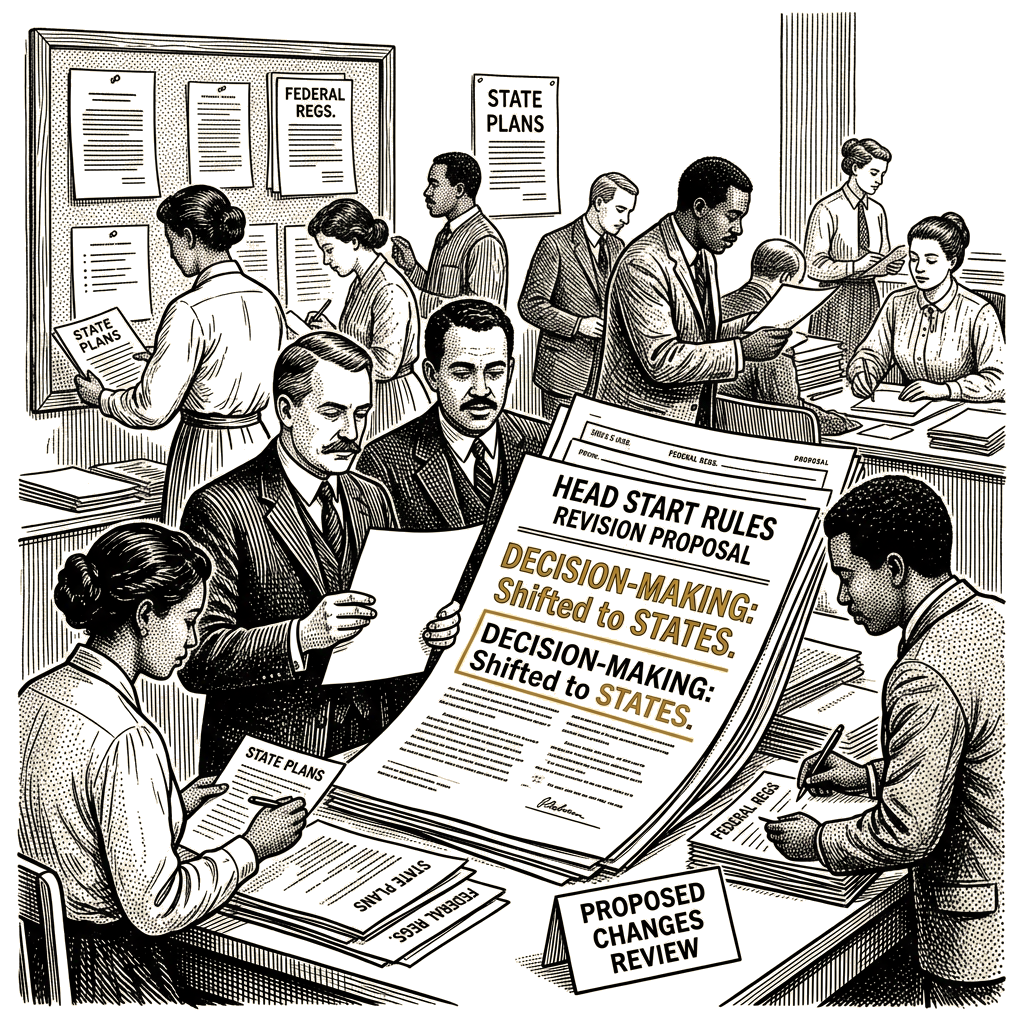
The Department of Health & Human Services said the plan would reduce “compliance-driven activities” and give states authority over decisions involving student-teacher ratios, education requirements, background checks and transportation practices. It also calls for greater parent input on classroom “structure and curriculum” and emphasizes nutrition and exercise.
The proposal would reduce the share of funds Head Start centers can use for administrative overhead from 15% to 5%. Alex Adams, HHS assistant secretary for family support, said the change would save the government $2.2 billion. The administration plans to reinvest the savings in Head Start and use them to create 200,000 additional slots.
Adams said the changes would give providers more room to respond to local conditions. “We have 1,600 Head Start providers across the country,” Adams said in a call with reporters. “And one-size-fits-all mandates from Washington cannot fully account for the realities facing these 1,600 grantees.”
He described flexibility as optional rather than compulsory. “Flexibility is permission. It’s not a mandate,” Adams said. “The opportunity for these programs to make a different decision does not necessarily mean they must make a different decision.”
Head Start providers and advocates said the regulatory shift could affect the consistency of services. Yvette Sanchez Fuentes, senior vice president with Start Early, an Illinois-based Head Start partner, said providers were not convinced the proposal would expand the program.
“If we look at the previous actions of the administration, what they have done is not in favor of expanding the program,” Sanchez Fuentes said. She also questioned whether adding enrollment would be enough without maintaining services for children and families. “Is it enough to just bring kids in the door if we’re not actually giving kids and families what they need?” she said.
Sanchez Fuentes said administrative spending can support more than payroll and daily operations. In her account, those funds can also help centers provide specialized services for children with disabilities and hire staff with relevant expertise.
Erica Phillips, executive director of the National Association for Family Child Care, said about 10% of the organization’s members are Early Head Start child care partners. The organization’s other members are home-based providers around the country.
Phillips said the existing Head Start performance standards offer a consistent benchmark. “The Head Start performance standards were a consistent … evidence-based set of standards,” Phillips said. “It can be helpful to have a nationally recognized benchmark.” She said she was concerned that “quality is now dependent on your zip code or on your geography.”
Head Start advocates have described the proposal’s reduction in standards as an initial step toward dismantling the program. Tommy Sheridan, deputy director of the National Head Start Association, said the program remains open and its staff will remain in place.
“I just really want folks to know Head Start is open,” Sheridan said. “The quality of Head Start children and families truly comes from the people that are running Head Start programs. Those folks are going to be the same. They’re going to be able to do that.”
Head Start provides preschool, child care, meals and support services for qualifying families. It serves more than 700,000 children each year from birth to age 5, including children who are homeless, in foster care or disabled.
The program began in 1965 and is a $12 billion HHS program. It has generally received bipartisan support. Health Secretary Robert F. Kennedy Jr. cited it as a success during the call announcing the proposal, while some conservatives have criticized Head Start as wasteful and said it does not produce a lasting impact on students.
The program’s current requirements are contained in a 133-page guide used by Head Start centers and many unaffiliated private child care centers. The standards address safety and eligibility as well as detailed practices, including a requirement that children brush their teeth once a day with fluoride toothpaste.
The Heritage Foundation has long criticized Head Start, saying it “doesn’t work.” Its Project 2025 policy blueprint, which NPR reported the administration has taken many cues from, calls for eliminating the program.