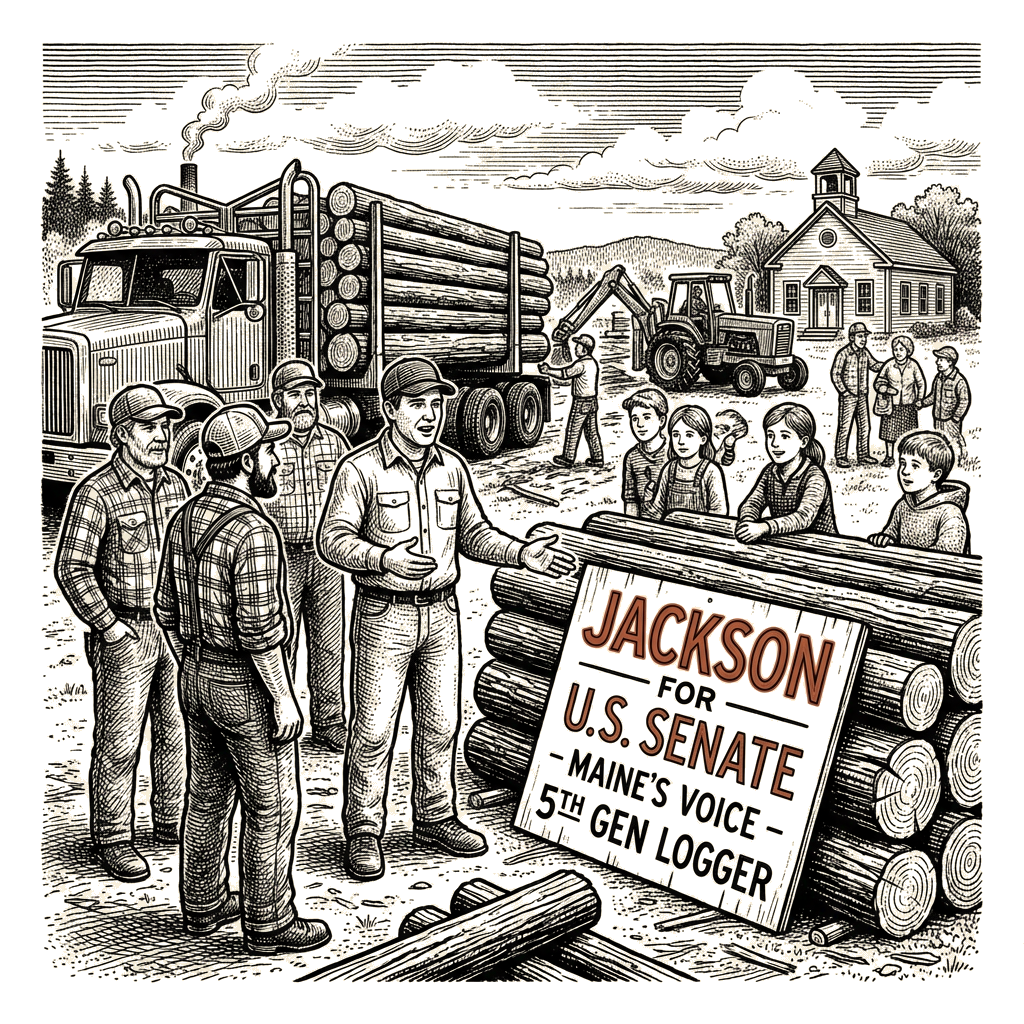
A border blockade pushed the fifth-generation logger toward politics
Jackson stood with a small group of loggers in the northern Maine woods near Allagash and faced State Police troopers who threatened to arrest them, according to the Associated Press.
The loggers had used their trucks to block access to the Quebec border. They were protesting Canadian loggers whom they said were taking their jobs by working for less.
The blockade failed to stop the problem. For Jackson, the episode instead became a turning point that redirected his approach.
“He realized that the only way to change, to change it from the inside, was to be involved,” said Hilton Hafford, a logger who stood with Jackson at the blockade.
Jackson eventually entered politics and became Maine’s Democratic nominee for U.S. Senate. He now faces Collins, a longtime Republican senator, in a contest that is among a small number of races that could determine which party controls the chamber in November.
The campaign places Jackson’s background in the lumber industry at the center of his political biography. His path from a confrontation over work at the Canadian border to a Senate nomination reflects the route he took from an industry protest to electoral politics.
The blockade occurred nearly 30 years ago, but its significance in Jackson’s story comes from what followed: Rather than stopping at the protest, he pursued political involvement as a way to seek change from within the system.