Swonk says today’s economy differs from Hoover’s
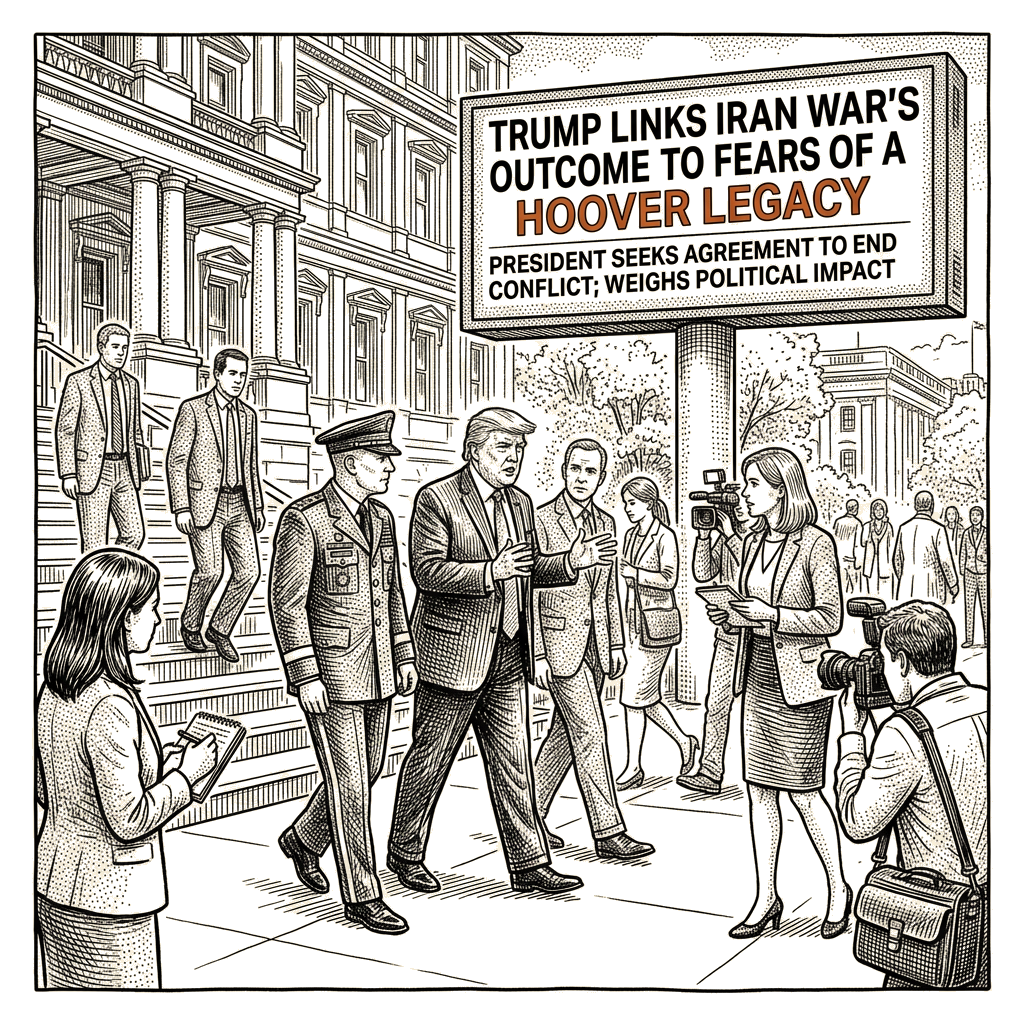
Trump’s concern about Hoover emerged in public remarks and behind-the-scenes efforts to seek an agreement ending the Iran war, according to NPR. The war has lasted longer than predicted, and its effects on inflation, gas prices and voters’ lives have become part of the president’s calculation about how his presidency will be judged.
At a June G7 summit in France, Trump described Hoover as the president he did not want to become.
“I’ve studied presidents, some good, some bad, some great,”
Trump said. He continued: “Not too many are great and some really bad. We had one just recently. The one president I did not want to be was the late, great Herbert Hoover. I didn’t want that and who knows what would have happened. But bad things happen.”
Trump, who was born in 1946, grew up when Hoover served as a warning about presidential decisions during difficult economic periods. Hoover maintained that government should not interfere in the economy, a position that many viewed as a major political mistake of the 20th century.
“Trump often reveals what he’s thinking with these comments he makes,” said Tevi Troy, a presidential historian and former White House aide to George W. Bush. “They sound like asides, but I think they’re indicative of his upbringing. He grew up in a period where Herbert Hoover was a very negative thing to be.”
Other Republican presidents have faced similar comparisons. During the 2008 financial crisis, George W. Bush urged congressional leaders to approve his plan to stabilize financial markets. Presidential historian Russell Riley wrote in Inside the George W. Bush White House: An Oral History that Bush told the leaders, “We’re going to act. I’m not going to be Herbert Hoover.”
Ronald Reagan also faced comparisons with Hoover during the recession of 1981 and 1982. Reagan avoided the association after the economy rebounded.
“Any Republican president who gets hit with bad economic times faces the danger of being tagged as Herbert Hoover,” Troy said. “You don’t really hear people saying Jimmy Carter was Herbert Hoover. It’s constantly something that happens to Republican presidents.”
For Trump, the concern comes as the Iran war adds pressure to an economy already affected by persistent inflation. Diane Swonk, chief economist at the accounting firm KPMG, said recession risks are higher than they were before the war but are “not off the charts.”
Swonk said those risks could rise further if inflation persists and the Federal Reserve leaves it unaddressed. She noted that inflation has persisted for five years.
At the same time, Swonk cautioned against treating the current economy as a replay of Hoover’s experience. The economy is different from the one Hoover faced, she said, and policymakers now have better tools to prevent a similar catastrophe.
“It’s hard to get back to a Hoover-type situation where there are all these Hoovervilles,” Swonk said. “There were so many policy mistakes made back then that caused that situation and how it played out.”
Trump has long understood that his political success may be defined by economic performance. The prolonged Iran war has added another way for the conflict to shape his presidency and the reputation he leaves behind.