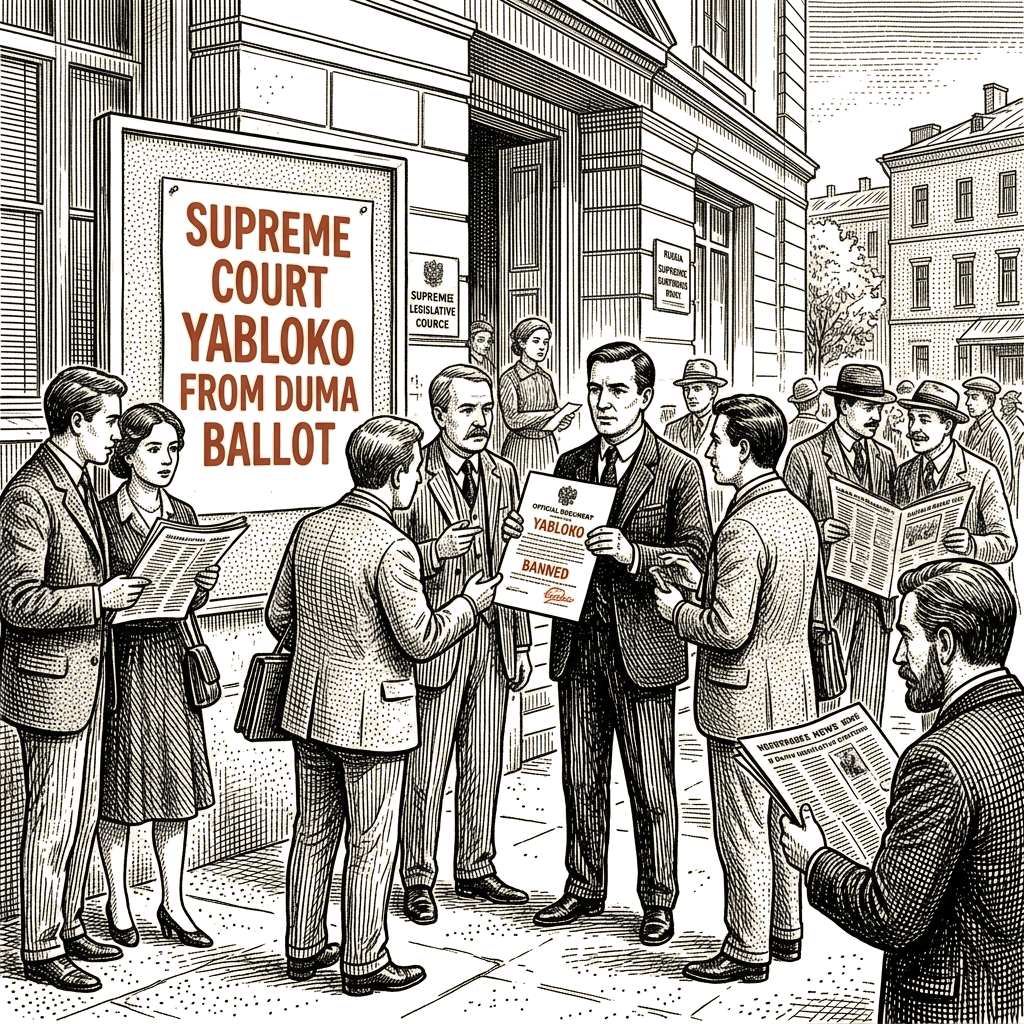
Yabloko to appeal; UN and EU call on Russia to overturn ban
Russia’s Supreme Court ruled Monday that Yabloko, the Russian party that has organized an anti-war campaign, will be removed from the ballot for the Sept. 18 Duma legislative elections, according to a copy of the decision the party released Wednesday.
The court cited three grounds: allegations that Yabloko had received donations from Russian nationals who had themselves received money from abroad; the presence of Yabloko’s campaign material on Instagram and Facebook, social media platforms that are blocked or restricted in Russia; and unspecified copyright infringement, according to the decision document.
Yabloko rejected each accusation and said it would pursue the matter on appeal. “Yabloko firmly rejects all the accusations brought against it and believes that they were convincingly disproved in the course of the proceedings,” the party said in a statement. “The party intends to prove it is right at the appeal stage.” Yabloko said the actual reason for its removal was its anti-war campaign, organized under the slogan “For Peace and Freedom.”
The lawsuit had been filed by State Duma deputy Alexey Zhuravlyov, chairman of the nationalist Rodina Party, according to Russia’s state-run TASS news agency.
The United Nations Office of the High Commissioner for Human Rights on Wednesday called on Russia to overturn the ban. “We are deeply concerned about the barring of Yabloko, one of Russia’s oldest political parties, from the September parliamentary elections,” it said in a statement.
At a Tuesday press conference in Brussels, European Commission spokesperson Anitta Hipper called the ruling “further evidence of Russia’s attacks against fundamental freedoms and continued pressure on opposition figures.” She added: “This basically shows that Russia is afraid because they truly need to eliminate any dissenting voice. So, by silencing the political opposition, the Kremlin is also removing any domestic voice that has been critical of its unjustified war of aggression against Ukraine. I would say this comes as a surprise, but it’s not.”
Yabloko founder and former chairman Grigory Yavlinsky urged supporters to keep backing the party despite the ruling. “This is not about Yabloko’s fate — it is about Russia’s fate,” he said in a statement on Telegram. “Voting for Yabloko is an opportunity for Russian citizens to declare the need for an alternative. It is an opportunity to say: In Russia, more and more people believe that preserving human life should be the political priority and that reaching a cease-fire agreement should be the goal.”
Yulia Navalnaya, the wife of the late Russian opposition figure Alexei Navalny, framed the Kremlin’s move as a response to growing opposition unity. “They saw what they very much did not want to see: people are beginning to unite,” she said in a statement. “But what happens if we do not give up? If we keep speaking out, uniting and supporting one another? We have a Plan B too.”
The ban adds a new front to years of international criticism of Russian restrictions on civil society and political opposition, which the United Nations and human rights advocates say have intensified since Russia’s February 2023 invasion of Ukraine. Among other accusations detailed by the United Nations and rights groups, the Kremlin has been accused of politically persecuting Navalny, a vocal critic of President Vladimir Putin, contributing to his death in February at a penal colony.