House vote looms with some Democrats wary of expanded Trump tariff powers
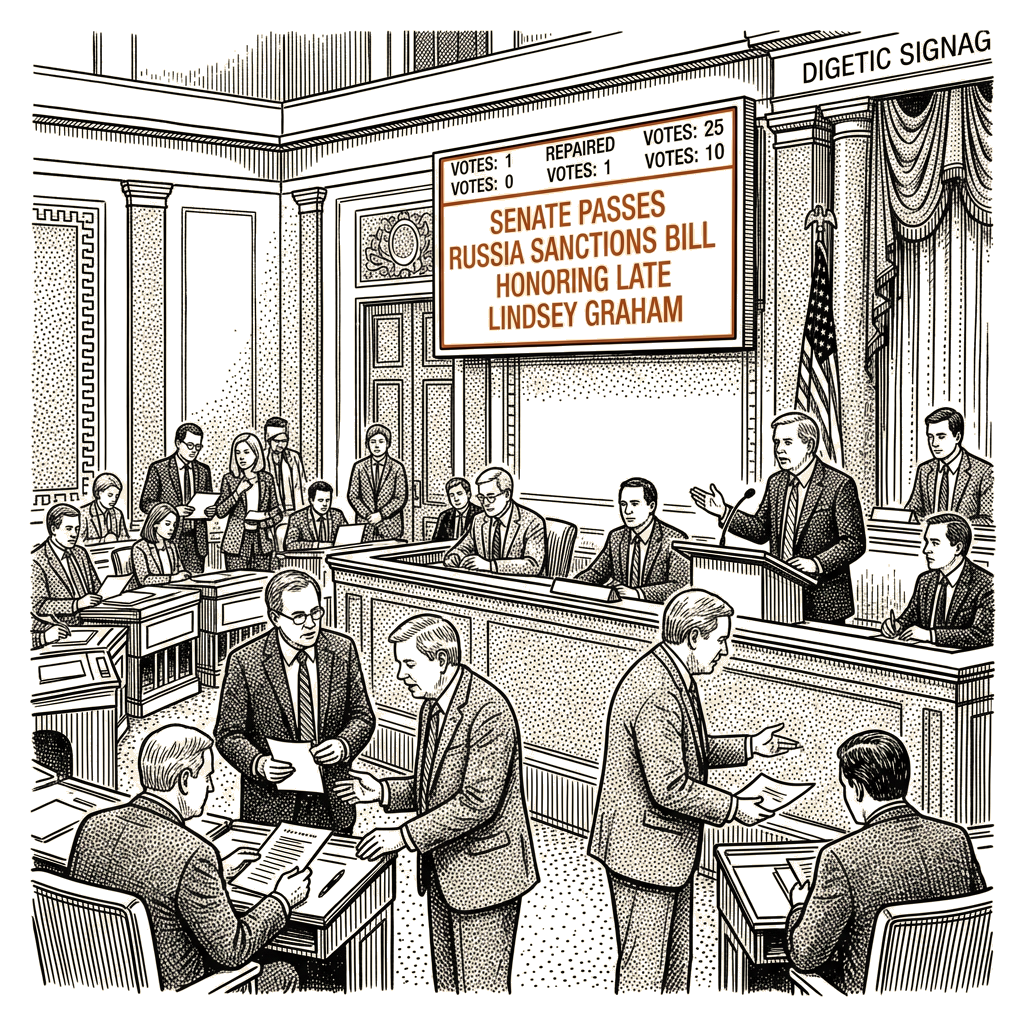
The Senate passed a bipartisan Russia sanctions bill Friday by a lopsided 86-11 vote, sending sweeping new economic penalties targeting the Kremlin and the countries that continue to purchase Russian energy to the House of Representatives.
The legislation, renamed the Lindsey O. Graham Sanctioning Russia Act in honor of the late South Carolina senator who championed it, would impose new sanctions and visa bans on Putin and senior military commanders. It also authorizes Trump to impose tariffs of up to 100% on the top five importers of Russian oil and gas — a provision aimed at major buyers such as China and India. The Guardian reported that the bill also includes tariffs of up to 500% on Russia’s own exports.
Graham spent more than a year pushing the bill before his unexpected death last month at age 71. Shortly before he died, Graham met with Ukrainian President Volodymyr Zelenskyy and announced he had reached a deal with the White House to support the legislation.
“My late brother Lindsey was a foreign policy and national security expert. He was also a peace maker who was determined to bring an end to the conflict in Ukraine,” said Sen. Darline Graham, R-S.C., who was appointed to fill her brother’s seat, in remarks from the Senate floor before the vote. “The war against Ukraine is primarily funded by the revenue Russia rakes in from energy sales. Without these profits the ability to fund the war would be crippled. This legislation hits Putin where it hurts.”
Darline Graham also said the bill “forces those primary countries keeping Russia’s economy afloat to make a simple yet critical choice — a choice between doing business with America or buying cheap Russian energy.”
Sen. Richard Blumenthal, D-Conn., who worked with the late senator on the package, noted the moment. “Today, President Zelenskyy is watching from Ukraine — and Putin is watching from Moscow,” Blumenthal said.
The bill also extends sanctions against Iran.
The Senate vote capped a months-long effort that accelerated after Graham’s death. Zelenskyy visited the Capitol hours after Graham’s funeral, met with senators from both parties, and watched from the gallery as the Senate took its first procedural votes on the legislation.
The legislation still needs House approval before it can reach Trump’s desk. Trump has signaled support for the bill, as has House Speaker Mike Johnson, R-La. But the House may not take it up until lawmakers return from recess at the end of August, and the path there is not without obstacles.
Some House Democrats have voiced opposition, citing concerns about the bill’s grant of expansive new tariff authority to the president. Sen. Ron Wyden, D-Ore., who opposed the bill in the Senate, warned that the legislation gives Trump unchecked power over trade policy.
“This bill gives him so much discretion that Trump can ultimately decide what countries to tariff, or what countries to exempt. And he can modify tariffs at his will,” Wyden said. “If Congress passes this bill, members will be condoning the tariff chaos of the last year and a half — and inviting more.”
Rep. Gregory Meeks, the top Democrat on the House Foreign Affairs Committee, called the proposal “a massive backdoor authority for President Trump to impose more tariffs, including on our European allies, that hurt American families.” Meeks has encouraged the House to consider a separate bill that would couple new aid to Ukraine with Russia sanctions — a measure the House passed in June over the objections of its Republican leaders but the Senate has not taken up.