Rand Paul, Wyden seek to strip tariff provision from Russia bill
The Senate’s Russia sanctions legislation reached the House with its contested tariff authority intact, over the objection of two senators who sought to remove it. Sens. Rand Paul (R., Ky.) and Ron Wyden (D., Ore.) proposed an amendment that would strip the bill of its tariff provision. “It would be a dangerous mistake to sign our names on a blank check that gives Trump even more power to indiscriminately use these tariffs,” Paul said.
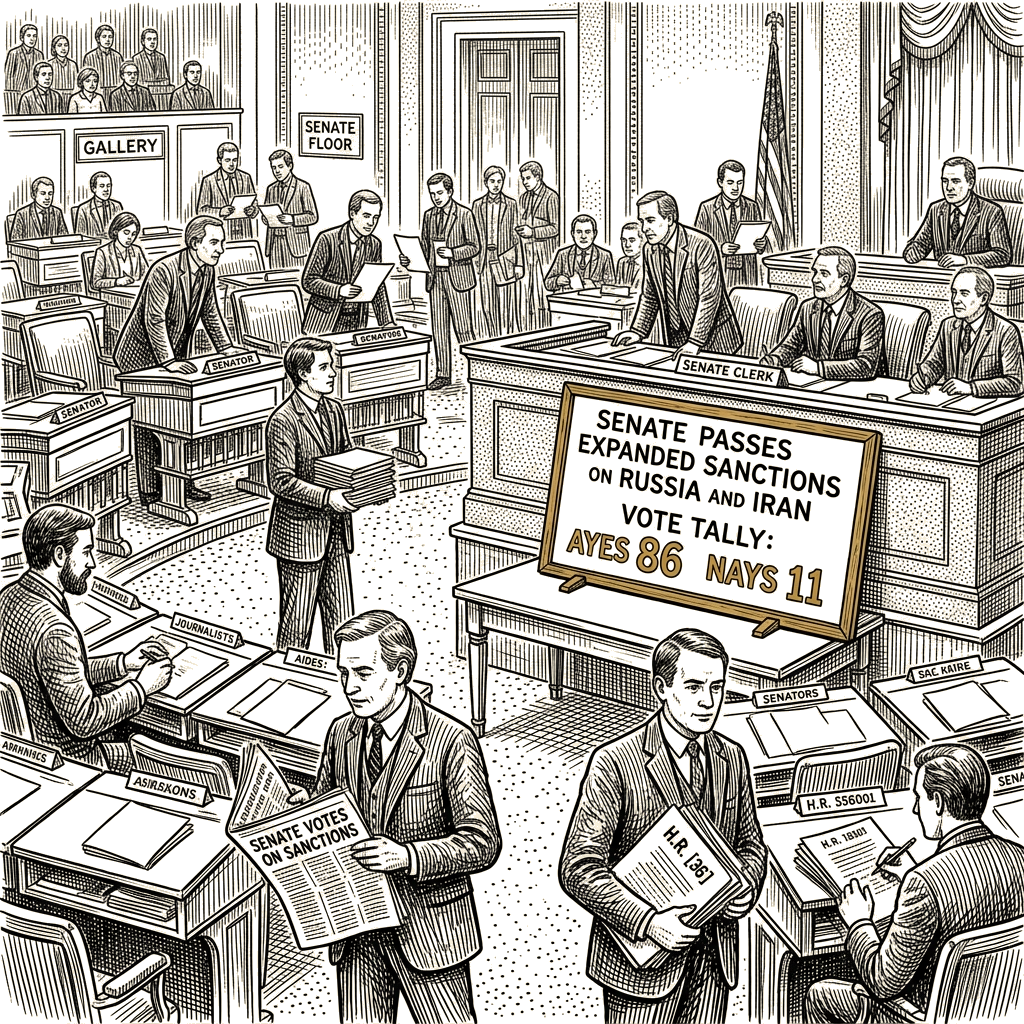
The Senate voted 86-11 to pass the measure expanding sanctions on Russia and Iran, teeing up the legislation for House lawmakers to consider when they return from their August recess.
The bill, named after the late Sen. Lindsey Graham, would introduce new sanctions on Russia’s leadership and allow Trump to place tariffs on countries that purchase its oil and abet its sanctions evasion. Under the legislation, Trump could enact tariffs of up to 100% on goods imported from the top five purchasers of Russian crude oil and gas, and on the top five countries found to aid Russia’s energy sanctions evasion. The measure also extends sanctions against Iran.
In a separate move announced Friday, the Federal Trade Commission said it would stop bringing disparate-impact lawsuits against businesses, saying the legal theory — used to bring bias cases regardless of a company’s intent — likely runs afoul of the U.S. Constitution. Under the disparate-impact theory, differences in outcomes between two groups are presumed to emerge from bias. If an auto lender tends to charge Black customers higher interest rates than it charges Asian customers, for example, a disparate-impact case can be brought regardless of the lender’s actual intent. The decision could change compliance policies for consumer-facing businesses across the economy.
Elsewhere, an explosive-laden drone discovered at an airport in Germany this week likely belongs to the Russian government, according to U.S. officials familiar with intelligence reports about the incident. The drone was spotted on the tarmac at Leipzig/Halle Airport in eastern Germany on Tuesday night in a secure area near a Ukrainian cargo jet, prompting the airport to shut down for the night. Germany’s interior minister said the incident represented “a new level of danger,” pointing to a sophisticated foreign actor as a potential culprit.
The assessment comes as U.S. intelligence found that Russian President Vladimir Putin poses an increased threat to NATO’s eastern flank. New U.S. intelligence reports say Putin could try to test NATO’s resolve with a limited assault on an allied country in the next few years, envisioning scenarios ranging from a cyberattack to a small-scale land incursion, The Wall Street Journal reported.
The administration also announced a 15% tariff Thursday on imports of solar-energy raw materials and equipment. Companies that commit to building manufacturing facilities in the U.S. can apply for exemptions from the levies, which take effect Dec. 4. The tariffs will likely raise costs for manufacturers and consumers despite more panel production moving to the U.S. in recent years, according to The Wall Street Journal.
MSI previously reported that the Senate passed the Lindsey O. Graham Sanctioning Russia Act by an 86-11 vote on Aug. 7, advancing the bipartisan package to the House. The legislation now awaits House consideration once lawmakers return from their August recess.