Food inflation falls to five-year low even as headline rate climbs
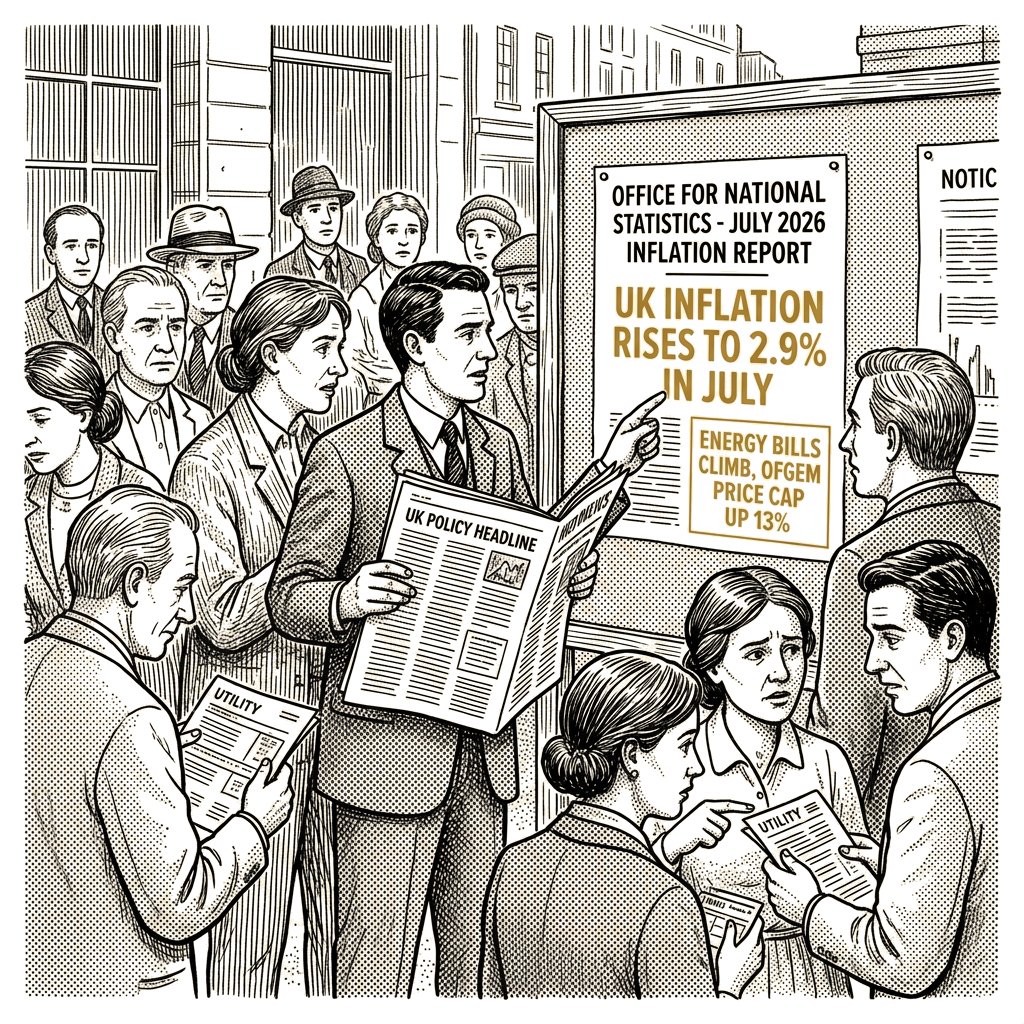
The UK’s annual inflation rate rose to 2.9% in the year to July 2026, the highest level in four months, the Office for National Statistics (ONS) said on Wednesday. The increase was driven primarily by higher household energy costs after the energy regulator Ofgem raised the price cap on gas and electricity by 13% on 1 July, adding £221 a year to the typical household bill.
ONS data showed gas prices rose at the sharpest pace in almost four years. The increase coincided with the effective closure of the Strait of Hormuz, a key passage for oil and liquefied natural gas shipments, after the outbreak of the US-Iran conflict. Analysts at Cornwall Insight, an independent energy consultancy, said households were forecast to see a further 4% rise in energy bills from October, which they said would take bills to the highest level since July 2023.
Cornwall Insight added that energy pressures were being compounded by an ongoing heatwave across Europe, which is increasing gas demand for power generation to meet air-conditioning and cooling needs.
Alongside the rise in the headline rate, the ONS reported that food inflation fell to 1.3%, its lowest rate for close to five years. Prices for pasta, olive oil and fresh fruit all fell in July, according to Harvir Dhillon, lead economist at the British Retail Consortium, who said the declines were “demonstrating that strong competition among grocers is firmly keeping a lid on people’s weekly shop.”
ONS prices director Mike Hardie said furniture prices, which fell by less than usual for that time of year, added to the upward pressure on inflation. He said clothing had not been discounted as much as in previous years.
Motor fuel price rises eased to 15.5% in the 12 months to July, compared with 21.3% in the 12 months to June, though they remained much higher than in 2025.
Chancellor John Healey said the Iran war was continuing to affect prices in the UK, but insisted Britain’s economy was resilient. “We have cut VAT on electricity bills and capped bus fares at £2 — to give breathing space to those feeling the strain,” he said. “There is more to do to restore hope and build a stronger economy where prosperity is shared more fairly across Britain.”
Shadow chancellor Mel Stride said the country was unprepared for global shocks due to Labour’s “mismanagement,” leaving ordinary people “paying the price.”
Economists said the July reading was unlikely to influence the Bank of England’s decision at its next meeting in September. Yael Selfin, chief economist at KPMG, said July marked the start of a gradual rise in inflation, though she said Wednesday’s figure was not enough to spur a change in interest-rate settings. She added that energy-related costs were expected to push inflation higher over the coming months to a peak of about 3.5%.
Ruth Gregory, chief economist at Capital Economics, expects inflation to fall to the 2% target “by the end of next year” provided energy prices do not rise much further. “The Bank of England will keep rates at 3.75% this year and cut them to 3% next year,” she said.
Suren Thiru, chief economist at the Institute of Chartered Accountants in England and Wales, said price stability remained elusive. “Rising inflation is likely to become the biggest threat to UK growth in the coming months as it eats into household budgets by increasing the cost of essentials,” he said, adding that drought-related increases in food prices may also be on the horizon.
Penny Keevil, who founded Second Chance Medway, a crisis support centre that runs a discounted food pantry two days a week, said the cost of living crisis was here to stay. “The need for affordable food now reaches across every part of the community,” she said. “Energy bills are still far too high and wages and incomes aren’t keeping up.”
The Bank of England’s 2% target is the level at which the Bank says prices are stable and allows both people and businesses to plan for the future. The UK economy remains exposed to ongoing uncertainty over the US-Iran conflict.