Trump administration escalates immigration enforcement against truckers
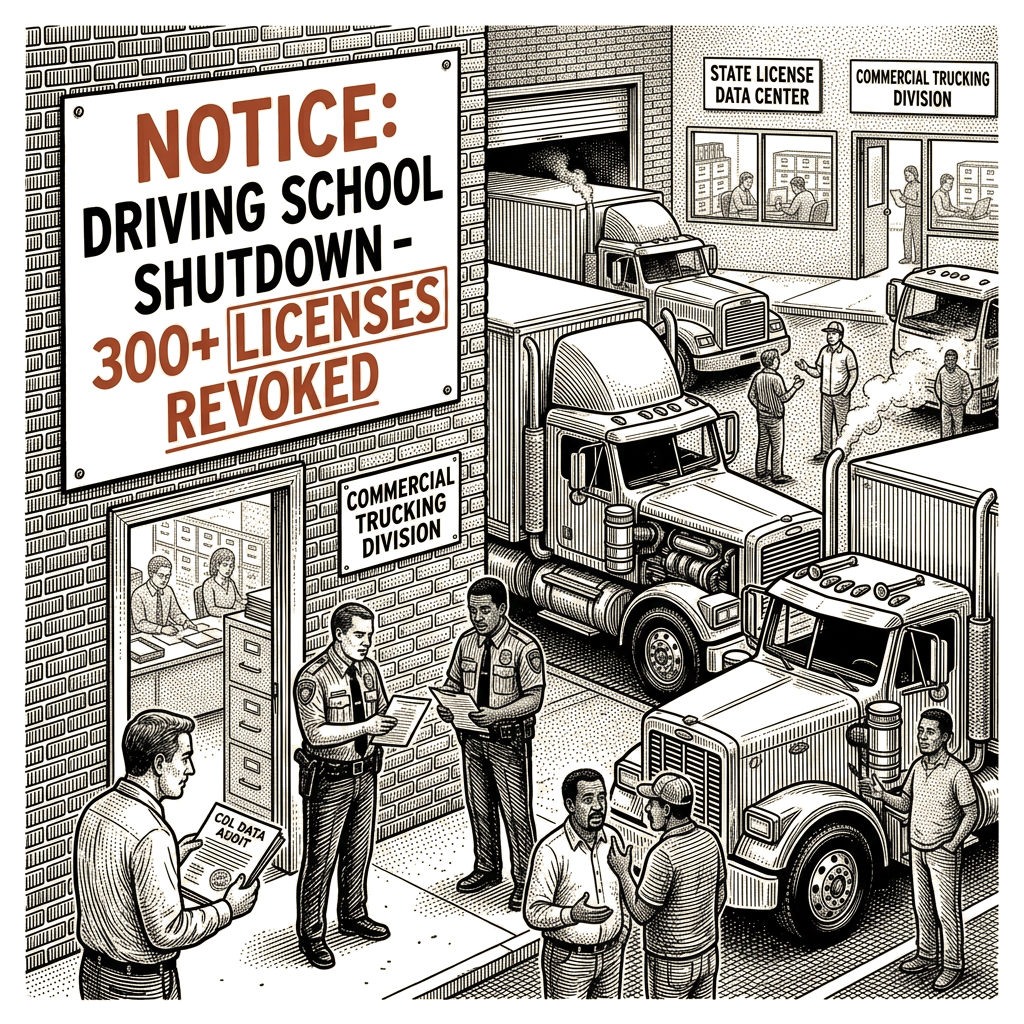
- The Trump administration is escalating immigration enforcement against commercial truck drivers, forcing the emergency shutdown of nearly 300 driving schools.
- The Department of Homeland Security and the Transportation Department are demanding licensing data on immigrant truck drivers across the U.S., in a hunt for what officials say is a rash of drivers with improper certifications.
- More than 20 states sued to block the federal data demands, arguing the administration is violating U.S. privacy laws.
- A federal judge issued a temporary restraining order blocking the data sharing for now, with a key hearing set for September.
- About 200,000 immigrants in the U.S. hold licenses that allow them to haul freight professionally, about 5% of all license holders, according to the Federal Motor Carrier Safety Administration.
- Freight companies say the enforcement push has contributed to a driver shortage, and JB Hunt CFO Brad Delco said the company has more than doubled, if not tripled, its driver recruiting team.
More than 20 states sue over federal data demands; judge blocks sharing
Both the Department of Homeland Security and the Transportation Department are demanding licensing data across the U.S. about immigrants driving trucks, in a hunt for what they say is a rash of drivers with improper certifications. On Monday, U.S. officials said they were intensifying those efforts.
Transportation Secretary Sean Duffy announced at a news conference in Detroit that his agency forced the emergency shutdown of nearly 300 driving schools that he said were failing to train drivers properly. Of those, 110 schools were responsible for a disproportionate number of commercial license applicants who couldn’t pass the English-language proficiency element of the licensing test, and 160 were operating out of facilities too small or unequipped to train applicants on the intricacies of large vehicle operations, he said. “There’s a new sheriff in town,” Duffy said.
The administration is focusing in part on drivers whose licenses may still be valid or in use after their relevant visas or work permits expired, officials said. About 200,000 immigrants in the U.S. hold licenses that allow them to haul freight professionally, representing about 5% of all license holders nationwide, according to the Federal Motor Carrier Safety Administration. The licenses are available to drivers who aren’t U.S. citizens or lawful permanent residents.
A handful of high-profile fatal crashes involving noncitizen truck drivers have become a rallying cry in some conservative circles, heightening calls for increased oversight of the industry. This August marked the first anniversary of a deadly crash in Florida, where a noncitizen driver allegedly performed an illegal U-turn, blocking traffic and causing a pileup that killed three people, according to the Florida Department of Highway Safety and Motor Vehicles. At Monday’s event, Trump administration officials were joined by a young California girl who at 5 years old was severely injured in a six-car pileup in 2024 that DHS said was the fault of an immigrant truck driver. Overall, 5,350 people died in large truck crashes in 2024, according to the most recent data available from the nonprofit Insurance Institute for Highway Safety.
Immigration officials have been setting up stings on interstate highways for months, sweeping up hundreds of migrants who allegedly are in the country illegally. In one three-day operation in July that focused on highways in Illinois, Indiana, Iowa and Ohio, DHS said it took 766 unsafe drivers and vehicles “out of service.” The department also detained 51 immigrants it said were in the U.S. illegally and issued 36 violations to drivers for failing English-language proficiency tests.
The Trump administration alleges that several Democratic-led states, including California, Illinois and Minnesota, have been uncooperative in its latest wave of enforcement, and has at times threatened to cut federal funds in response. Objecting states say that while federal regulations guide much of the licensing standards for truck drivers, registration and compliance is managed by the states — and isn’t intended for use in immigration enforcement.
The enforcement push during President Trump’s second term has contributed to a driver shortage across the country, some freight companies have said, and they are stepping up efforts in driver recruitment and retention, including offering higher wages. “We’ve probably more than doubled, if not tripled, the size of our driver recruiting team. They’re hitting the phones. We’re increasing advertising and marketing to get drivers in,” Brad Delco, chief financial officer of JB Hunt Transport Services, said during a recent investor event. “He who has the driver wins,” Delco said.
Some small businesses have said they are experiencing worse service from trucking companies since the start of the year, and shipping rates and fees have also gone up. “If you order a truck, it doesn’t come,” said Michael Goldblatt, a Pennsylvania business owner who sells tire chains.
The administration has loosened the requirements for military veterans to obtain commercial driver’s licenses in an effort to fill empty jobs, announcing a “Freedom Haulers” program to fast-track veterans’ applications.
The biggest fight between the Trump administration and some states is over access to a database that holds information about 17 million drivers, including truckers, school-bus drivers, garbage-truck operators and other large-vehicle drivers. At the center of the dispute is the American Association of Motor Vehicle Administrators, which holds all the data. All states, as well as Washington, D.C., and U.S. territories, feed into the database and use it to manage their licensing and check for issues including red flags on individuals’ driving records.
The Transportation Department in August threatened to pull the organization’s funding if it didn’t comply with a demand for years of data on millions of drivers. DHS meanwhile issued a subpoena for the same records. A group of more than 20 states sued in a bid to block the federal data demands, arguing the administration is violating U.S. privacy laws and has no legitimate need to take over a database of state records. A federal judge has issued a temporary restraining order blocking the data sharing for now, with a key hearing set for September.
The database, known as the Commercial Driver’s License Information System, processes approximately 90 million record checks a month, according to the organization. It hasn’t previously been used for wholesale immigration investigations, the group said.