Lala hit Big Island and Oahu with first hurricane-force gusts in 155 years
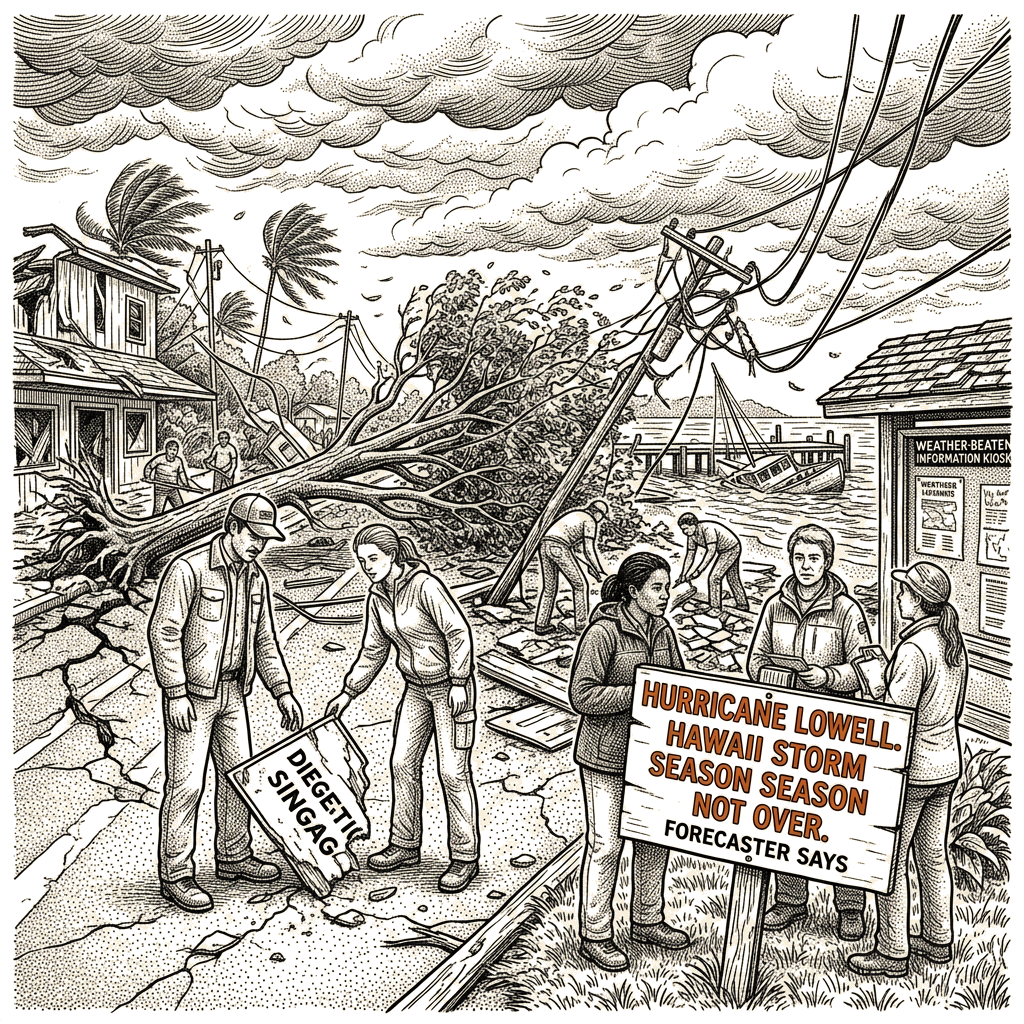
Hurricane Lowell surged near the Hawaiian Islands this week, leaving downed trees and power lines, crumbled roads, sunken boats and destroyed piers on Kauai. A NOAA satellite image showed the storm near Hawaii on Tuesday, September 8.
Lowell was the second named storm to brush the islands this year. Hurricane Lala hit the Big Island and Oahu with damaging winds in August, the first time hurricane-force gusts had been recorded there in 155 years.
The Guardian reported that residents were grappling with the damage and with what the paper described as “rising risks to the tropical archipelago” as sea-surface temperatures climbed. Cleanup and repair efforts began after Lowell.
Hawaii stretches roughly 1,500 miles across the central north Pacific but typically avoids the worst hurricane effects. Nicholas Grondin, an assistant professor of environmental science at the University of Tampa, wrote in an editorial published by The Conversation that the islands’ location, rather than luck or a supposed “force field,” typically protects them.
Grondin described Hawaii as among the most isolated island chains on Earth and a small target in a vast area of open ocean. Most approaching storms also pass over cooler waters east of the islands, which helps weaken them.
“Without warm oceans to provide fuel, hurricanes tend to weaken and fizzle out as they approach the islands,” Grondin said.
Michael Brennan, director of the National Hurricane Center, discussed Lowell’s forecast during a recent broadcast and said, “An event of this magnitude is somewhat rare.” Brennan added that Hawaii had not experienced a direct hurricane landfall since Hurricane Iniki in 1992.
Iniki brought winds of 145 miles per hour to Kauai and destroyed or damaged roughly 70% of the island’s homes and businesses.
Sea-surface temperatures in the tropical Pacific are exceptionally warm this year because of El Niño, The Guardian reported. The climate phenomenon has developed and is expected to strengthen through the coming months, with forecasters warning it could reach a historic intensity.
El Niño typically limits hurricane activity in the Atlantic while enhancing the development and strength of storms in the Pacific. Rosencrans said El Niño has caused hurricanes to form farther south and west this year, which “puts them in a place where they could make that westward run towards the Hawaiian islands.”
Hurricane risks typically extend from July through the end of November before tapering off in later months. September and October are far busier during El Niño years.
The Guardian reported that human-caused warming has also played a part in strengthening storms, with the effects of El Niño layered over warming trends. Lowell temporarily reached Category 5 status on September 2.
The storm swept over waters that were unusually warm, which helped fuel its intensity. Climate Central, an organization of scientists and advocates that researches the effects of global heating, reported that sea-surface temperatures along Lowell’s path were “made up to 60 times more likely because of human-caused climate change.”
The Guardian reported that El Niño and the climate crisis were expected to “supercharge” extreme weather events around the world over the next year. For Pacific storms, Rosencrans said, that could mean more moisture and stronger winds.
Cleanup and repair efforts began after Lowell, The Guardian reported, with the paper noting that emergency management officials would need to continue keeping close watch on the waters for the next big storm.
“They just need to reset and regard any potential upcoming impacts,” Rosencrans said. “The season is not over – there is still a long bit to go.”