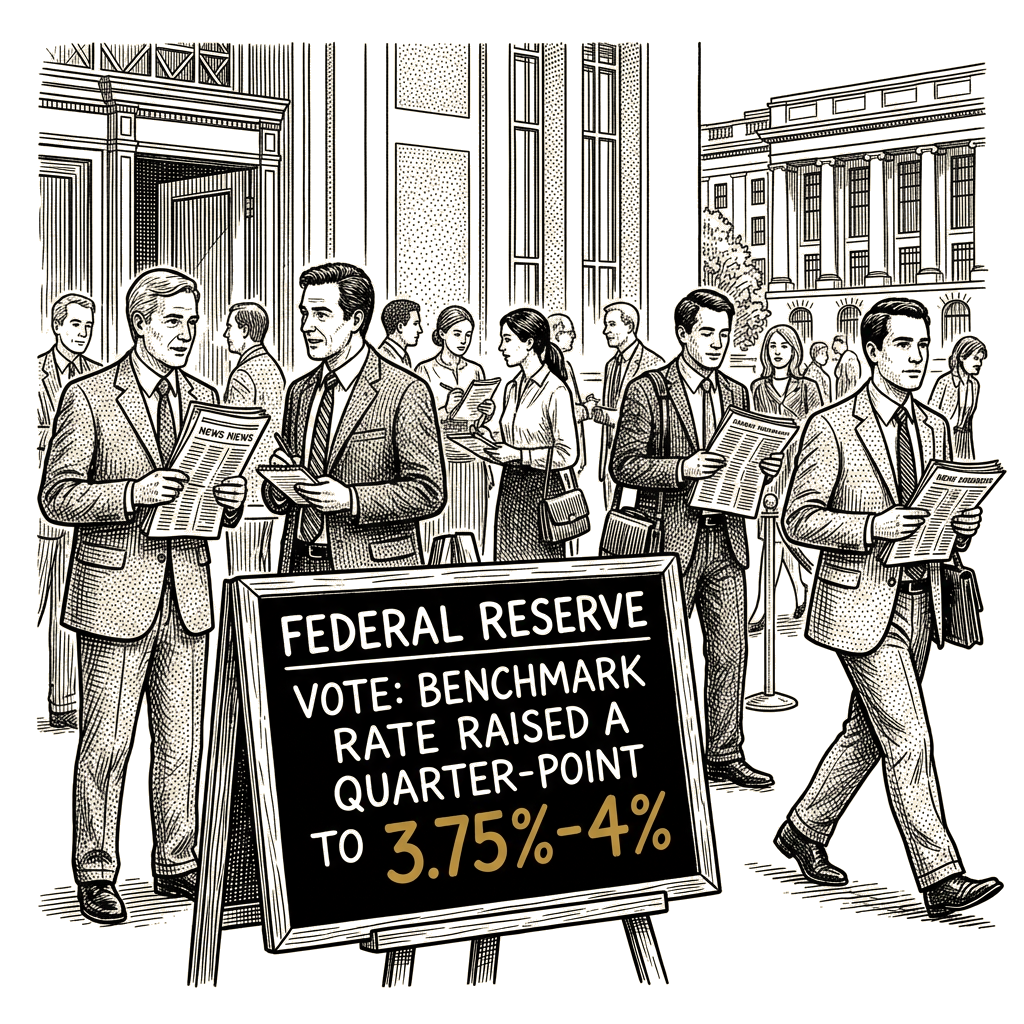
Majority of Fed officials project another hike before year’s end
The Federal Open Market Committee raised rates over President Donald Trump’s public objections, citing inflation that officials expect will not return to the central bank’s 2% target until roughly 2029.
The committee’s policy statement said: “Inflation remains elevated. Today’s policy action will support a timelier return to the Committee’s 2 percent goal.” New projections released alongside the decision showed a majority of officials penciling in another rate hike before the end of the year, with four officials predicting the benchmark rate would reach a range of 4.25% to 4.5% by December. While estimates on the country’s economic growth and unemployment rate were upbeat, the projections showed inflation reaching the 2% target only around 2029.
Trump has said the United States should have the “LOWEST RATE of any country in the World” and threatened to “stop trading with countries with which we have a deficit” if the central bank declined to lower rates. Trump nominated Fed Chair Kevin Warsh under the expectation that he would cut rates, though Warsh has said he maintains independence from the White House.
The Guardian reported that the ongoing US-Israel war with Iran has driven up inflation, particularly energy prices. Gasoline prices have remained on average $1 a gallon more expensive than a year earlier. Diesel fuel — used for buses, trains and trucks — recently reached an all-time high of $6.31.
Concerns about inflation have triggered a sell-off in the US bond market. The yield on the 10-year Treasury note hit a 19-year high earlier in the week, despite Treasury efforts to calm the market. The 10-year yield stood at 4.97% on Wednesday, according to Federal Reserve Economic Data. Trouble in the bond market can lead to higher interest rates for consumer and business loans.
The Fed uses interest rates as a tool to cool price increases by slowing economic activity. Higher rates affect mortgages, car payments, student debt and other types of loans. After inflation reached a generational high of 9.1% in June 2022, the Fed raised rates 11 times from 2022 through 2023, bringing the target range to 5.25% to 5.5%. The central bank began lowering rates in 2024 and 2025.
At the start of 2026, when the annualized inflation rate was 1% lower than current levels, a majority of Fed officials had predicted a rate cut before the end of the year. But inflation remained stubbornly high in August while unemployment was steady, raising the probability of a hike.
Higher prices have weighed on the economic outlook as voters prepare for November’s midterm elections. In August, hourly earnings for employees fell 0.1% year-over-year after accounting for inflation and dropped 0.3% from the prior month. Consumer sentiment has declined sharply, according to a monthly University of Michigan survey, while expectations for further inflation have climbed.
Voters remain split on which party holds the greater advantage on economic issues, according to recent Pew Research Center data. Trump has urged Republican voters to “pretend” they are voting for him on their midterm ballots and has promised every American a $5,000 “Trump dividend” if Republicans retain control of Congress. Critics have called the move akin to bribery and warned of the financial implications, particularly after US government debt reached a record high of $40 trillion last month.