BofA survey flags AI hyperscaler capex as top systemic credit risk
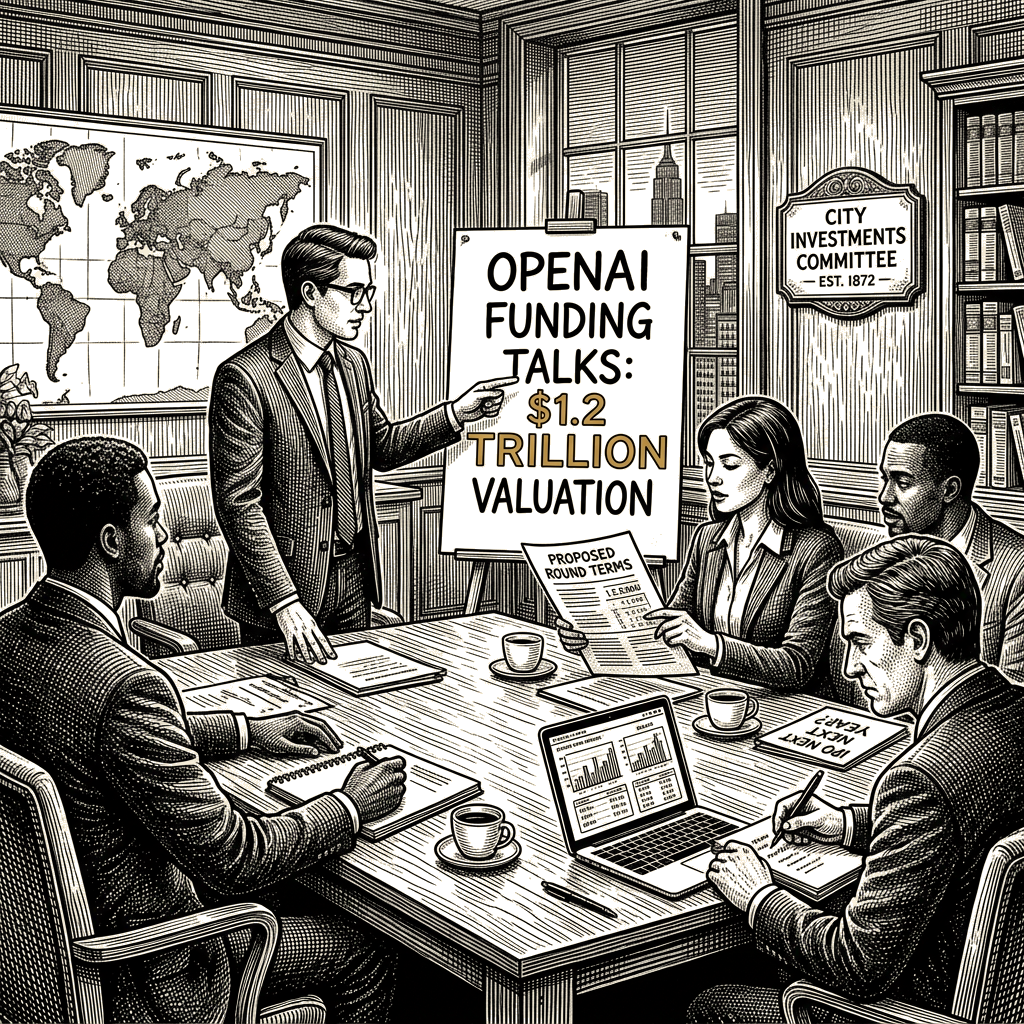
OpenAI is in early talks with investors for a new funding round that could value the company at more than $1.2 trillion, The Wall Street Journal reported Wednesday. The potential valuation would mark a sharp increase from the ChatGPT maker’s $852 billion mark in March and comes ahead of the company’s anticipated initial public offering, which is now expected next year.
The funding discussions follow the release of Astra, OpenAI’s latest cutting-edge model, which the company described as the world’s most intelligent and aligned model, the Journal reported.
Bank of America’s September survey of global fund managers showed continued confidence in AI infrastructure spending, with 79% of respondents saying they did not expect one of the AI hyperscalers to announce a cut in capital expenditures this year — up from 71% in August. Yet investors also see risks in that spending: 42% of respondents named AI hyperscaler capex as the most likely source of a systemic credit event, and a net 33% said companies are overinvesting.
The survey also found that 53% of respondents identified “long global semiconductors” as the most crowded trade, matching last month’s result.
Wells Fargo Chief Financial Officer Mike Santomassimo offered a corporate perspective on AI adoption at the Barclays Global Financial Services Conference on Wednesday. He said the bank has significant remaining opportunities to use AI to drive efficiency, with the technology already deployed across operations, call centers, and autonomous coding.
“It’ll bring headcount down more,” Santomassimo said. “Whether headcount will be down every quarter forever, probably not, but we still have a lot more to continue to drive it.” Santomassimo was asked at the conference about headcount being down for several quarters.
In analyst notes compiled by the Journal, J.P. Morgan upgraded French semiconductor-materials maker Soitec to overweight from neutral, citing growth in the company’s silicon photonics business. Analysts wrote that concerns about market decline and share loss in mobile communications remained but were “overwhelmed by raised expectations for the silicon photonics business.” J.P. Morgan estimated photonics revenue will exceed 1 billion euros in the fiscal year ending March 2030. Soitec shares traded 11% higher at 136.60 euros following the upgrade. Earlier this month, Soitec raised its revenue guidance for the current quarter amid continued AI-related demand.
Separately, CGS International analyst Weerapat Wonk-urai downgraded Thailand’s telecommunications sector to underweight from overweight, citing slower service revenue growth expectations of 1.2% to 1.9% over 2027–2028, compared with 4.6% to 17% in 2025. The downgrade reflects a lack of new revenue drivers and concerns about sector valuation relative to Southeast Asian peers, Wonk-urai wrote. He cut his 2027–2028 earnings-per-share estimates for Advanced Info Service by 4.1% to 8.7% and trimmed 2026–2028 EPS projections for True Corp by 3.7% to 8.6%.