Patriot production talks stalled as interceptor stockpiles shrink
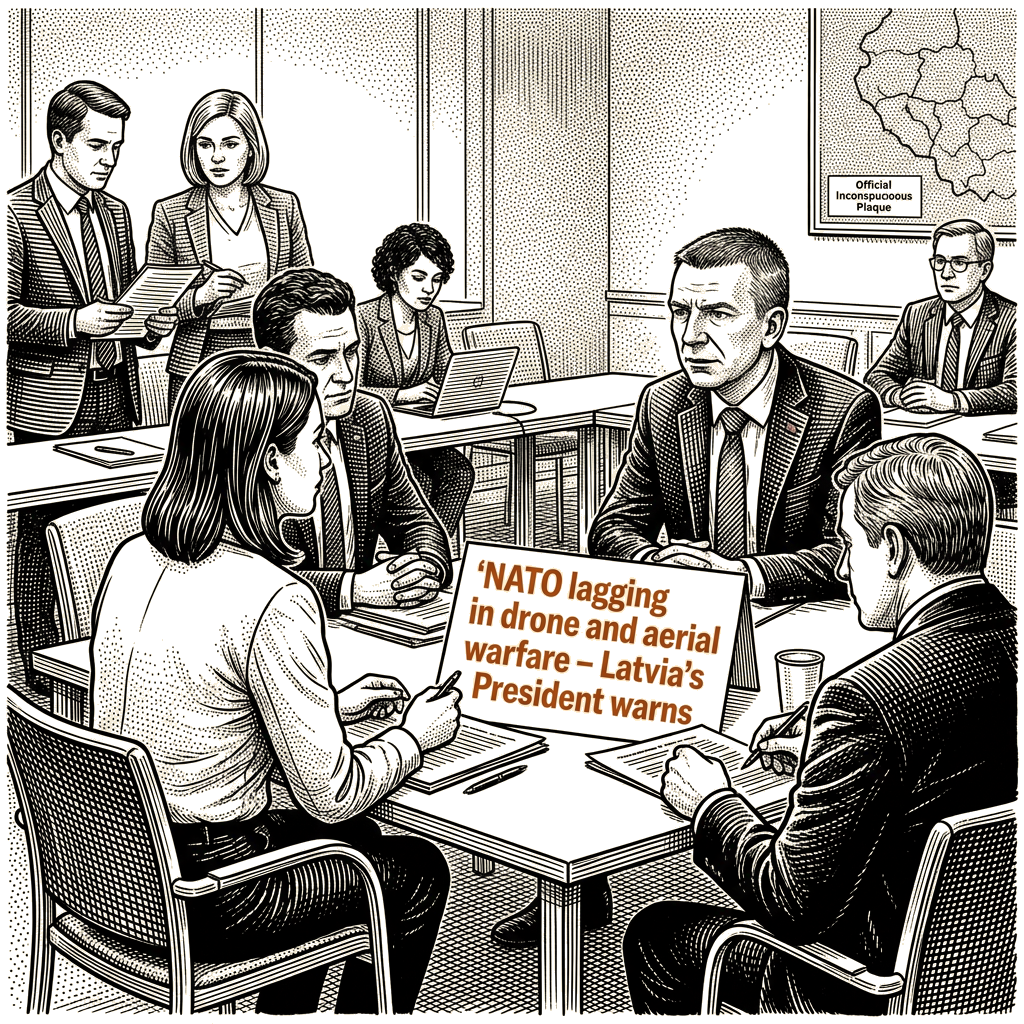
Latvia’s President Edgars Rinkēvičs warned in a Guardian interview published Thursday that Europe and NATO are not keeping pace with drone and aerial warfare developments in Ukraine, and that most member states would struggle to repel a Russian missile attack if the conflict expanded beyond Ukrainian territory.
Rinkēvičs made the remarks in Washington DC ahead of the United Nations General Assembly in New York, where US President Donald Trump is expected to hold meetings with senior European leaders.
“What we see is that air defense, drone defense, anti-ballistic defense has serious problems,” Rinkēvičs said. “And let’s be frank. Ukraine has it. The whole of Europe and Nato has it.”
He added: “Because if Russia decides to use a couple of missiles in that territory, I think that would be a serious challenge today for many countries to cope with that.”
The Latvian leader said technological advances in drone warfare are moving at “lightning speed” and that current European efforts to prepare for an aerial war could be obsolete by the middle of next year.
Rinkēvičs said he would rule out a conventional Russian military incursion into NATO territory but cautioned that other threats remain. “I would rule out a conventional military incursion but we should be very vigilant when it comes to all kinds of other possibilities,” he said. Russia is expected to increase mobilization after local elections, then use the winter to “push” in Ukraine and “do whatever it takes to dissuade nations that are supportive of Ukraine to continue,” according to Rinkēvičs. Acts of sabotage, cyber-attacks, and drone and missile incidents have all indicated Russia testing European resolve to support Ukraine, he said.
Ukraine and European allies face a delay in supplies of Patriot and other air-defense missiles. The US has expended nearly two-thirds of its stocks of critical interceptors during the war in Iran, according to analysis of a Congressional Budget Office assessment, and it could take at least five years to replenish those stocks.
The US has considered outsourcing Patriot production to Ukraine and Europe, but no agreement has been reached. “It’s up to the United States government, it’s up to the company,” Rinkēvičs said, noting that discussions were ongoing and acknowledging the difficulties of some technical issues with licensing. “We have some capacities in Europe, but let’s face it: Patriots are still one of the best, if not the best, to tackle this.”
Polish Prime Minister Donald Tusk warned Thursday that Russia could launch drone or missile strikes against NATO countries supporting Ukraine in the coming months to test the alliance’s commitment to collective defense under Article 5 of its charter.
Tusk said Russia would seek to “weaken Nato’s integrity” and demonstrate that “article 5 is more theoretical than practical,” adding that Russia would seek to portray any such incidents as accidents.
The Baltic nations, which sit on Russia’s eastern flank, have tempered their warnings, saying there is no indication that Moscow seeks to launch a conventional war to retake territory once held under the Soviet Union.
A NATO jet shot down a Russian drone over Lithuania on Tuesday. Poland scrambled fighter jets and closed the Lublin and Rzeszów-Jasionka airports on Thursday due to a Russian strike on western Ukraine.
Rinkēvičs also expressed concern about whether European allies are on track to hit a goal of spending five percent of GDP on defense, which has become a White House benchmark for the Trump administration’s continued support for NATO.
He said discussions about Europe bearing a greater burden for its own defense were growing “more constructive” but added that real capabilities require time. “Our message is also to do that, we need time,” Rinkēvičs said. “It cannot happen in a month, or in a year.”