China presses Iran to rein in Houthis after Saudi appeal
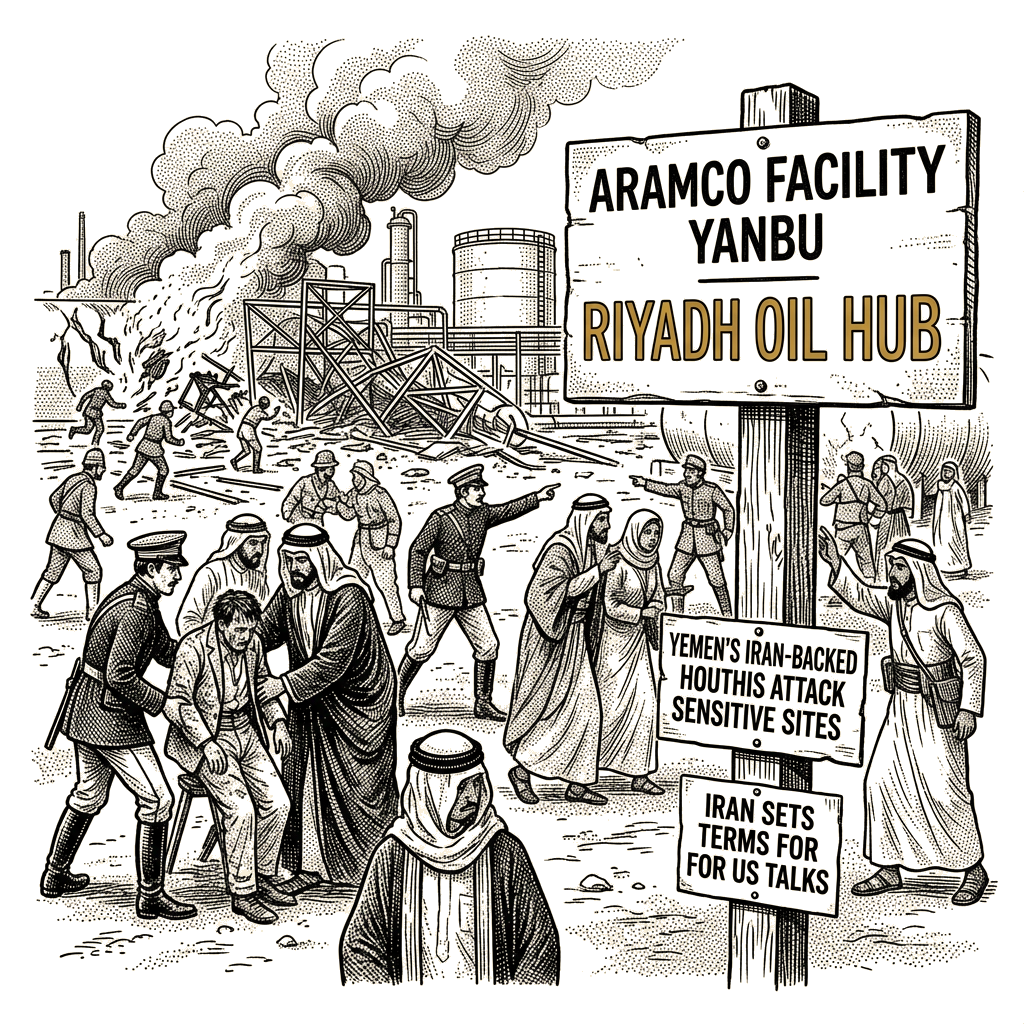
Yemen’s Iran-backed Houthis said they struck “sensitive” sites in the Saudi capital of Riyadh and attacked an Aramco facility in the Red Sea port city of Yanbu with missiles and drones on Saturday, as Iran’s security chief separately laid out Tehran’s conditions for re-entering negotiations aimed at ending the war with the United States.
In an interview with Al Jazeera on Saturday, Iran’s security chief Mohsen Rezaei said Tehran had conveyed its conditions to mediators for resuming negotiations aimed at ending the conflict with the United States, Reuters reported. On Monday, Revolutionary Guards spokesman Hossein Mohebbi said Iran would use new weapons and target locations not previously attacked if the United States launched a new offensive, according to Iran’s Fars news agency.
The Houthi strikes hit Saudi Aramco’s East-West pipeline, prompting the state energy firm to halt some Yanbu shipments and ramp up exports through the Strait of Hormuz this month and next.
China’s government has asked Iran to help rein in the Houthis after Saudi Arabia appealed to Beijing, three Iranian sources told Reuters.
JPMorgan analysts said on Friday that Middle East oil flows remained “surprisingly strong” despite the disruption to Saudi Arabia’s East-West pipeline. Total oil flows averaged 17.1 million barrels per day over the past 10 days, 6.1 million bpd below the 2025 average, according to the bank.
“The most notable pivot has come from Saudi Arabia,” the analysts wrote, citing satellite data showing Saudi oil moving through the Strait of Hormuz averaged 2.9 million barrels per day over the past six days, up from 700,000 bpd in August.
The developments came as broader market optimism over US-Chinese trade and artificial intelligence discussions helped lift Asian shares while oil prices fell, according to The Guardian’s live business blog.