Trump has prioritized maintaining good relations with Xi ahead of summit
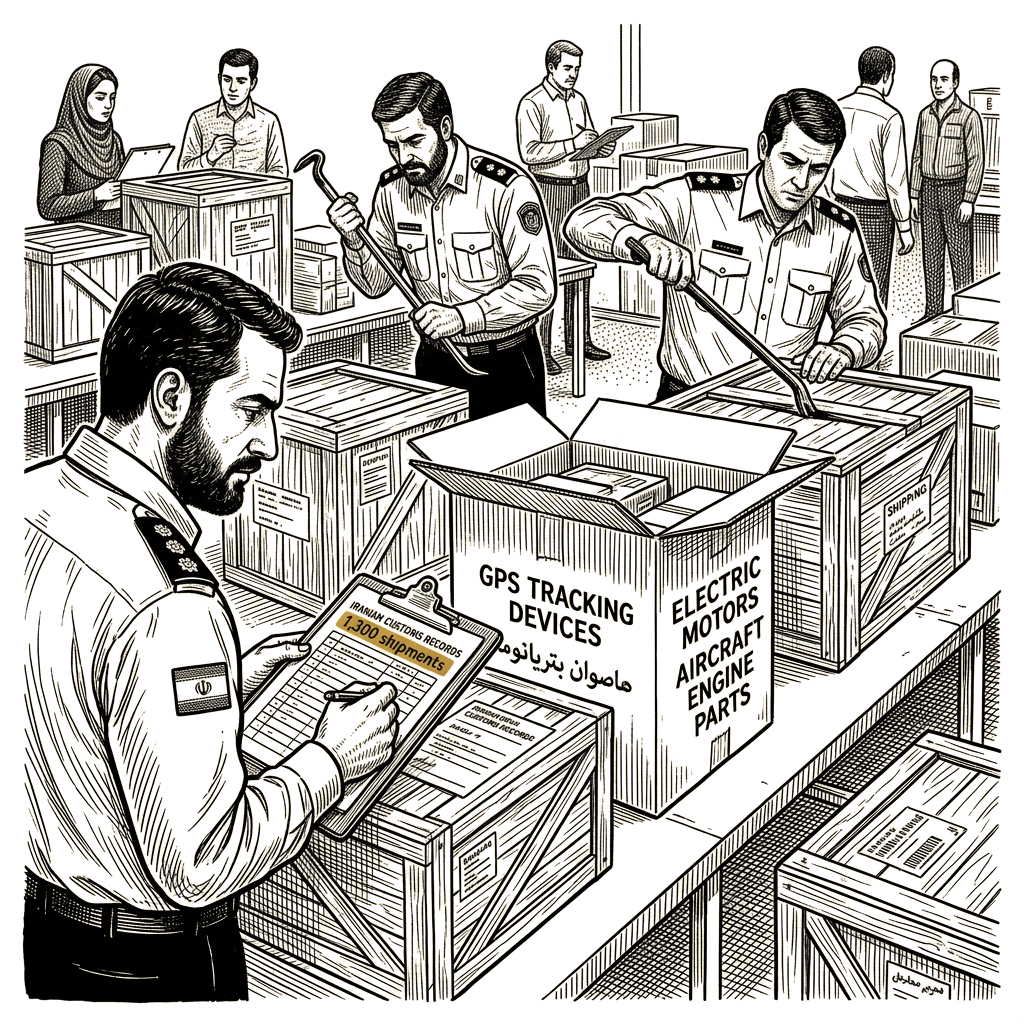
The shipments reviewed by The Wall Street Journal arrived at Tehran’s Imam Khomeini International Airport in cartons containing GPS tracking devices, electric motors and aircraft engine parts, according to Iranian customs records provided by the trade database ImportGenius. The records document about 1,300 deliveries of “dual use” components from China to Iran’s defense ministry in the first half of 2026 — including one plane that landed in Tehran on the same day in June that the United States and Iran signed a temporary truce carrying a defense-ministry shipment with electronics components usable in drone and missile-guidance systems. Two days later, more than a dozen additional shipments arrived carrying parts worth more than $6 million that can be used in drones.
The disclosures come days before Chinese President Xi Jinping is to meet with President Trump in Washington for a summit whose stated agenda covers trade, artificial-intelligence safety and relations with Taiwan. The Wall Street Journal reported that the level of Chinese support documented in the customs data has not been previously reported or publicly acknowledged by the Trump administration, and has helped extend a conflict that is increasing global energy prices, draining weapons stockpiles and heaping pressure on Trump ahead of the midterm elections. Sen. Elissa Slotkin, a Michigan Democrat, wrote in a letter to Trump on Friday that was shared with the Journal that “there is now a large and growing body of evidence that Chinese companies are helping Iran target and kill American troops, keep Iran’s drone and missile programs alive, and sustain Iran’s economy.” Slotkin urged Trump to make Chinese support for Iran a “centerpiece” of his talks with Xi.
Records from January 2025 through the end of June this year show thousands of shipments to Iran’s defense ministry and Iranian companies of items usable in drones and other weapons, the Journal reported, with many of the entries marked with a reference to “Article 119” — a section in Iranian customs regulations that grants full tariff exemptions for armaments and defense imports. On June 17, the day the United States and Iran signed a 60-day truce, China publicly touted its role in easing Middle East tensions, saying its foreign ministry had made dozens of calls to nudge peace along and that Xi had personally intervened with suggestions to end the fighting, the Journal reported. Days later, Iranian customs noted air shipments from China with more than $6 million of electronics components that the U.S. government has said are used for a variety of military purposes, including in flight control units for precision-guided weapons.
Once the war began on Feb. 28, trade between Iran and China initially collapsed, according to Iranian customs data and Kpler, a research firm that tracks oil shipments. The U.S. Navy blockade of Iranian ports, announced in April, tightened further, the Journal reported. Tehran responded by expanding air links through Mahan Air — the Iranian airline sanctioned by the U.S. that Treasury says has ferried cash, weapons and personnel for Iran. Mahan Air increased flights from Beijing, Shanghai and Guangzhou to Tehran to about 27 per week by the end of April, up from four at the start of March, according to FlightRadar24 data cited by the Journal. Mahan Air did not respond to requests for comment.
On the battlefield, U.S. officials have concluded that Iran used satellite imagery procured from Chinese entities before and after a July 17 strike that killed three American troops, linking the imagery directly to the attack, the Journal reported. The Treasury Department had sanctioned three Chinese satellite-imagery companies in May for providing data it said could help Iran target U.S. forces. Chinese companies have also helped provide chemical precursors used to manufacture the types of ballistic missiles used in that strike, according to a document viewed by the Journal and people familiar with the matter.
In the years after Beijing and Tehran signed a 25-year strategic partnership in 2021, Chinese companies produced for Iran chemical materials such as sodium perchlorate — a propellant precursor for ballistic missiles — the Journal has previously reported. Those exports became more important after Israel largely destroyed Iran’s missile program in attacks in 2024, leaving the regime to rebuild its arsenal. The sales became widely known when the Journal and other outlets reported on them in 2025, and U.S. forces later that year raided a ship carrying dual-use components from China to Iran, signaling that Washington was watching.
Days before the war began, Iranian customs data showed a delivery of 300 tons of chemical compounds from China to Iran’s defense ministry. One Chinese company that attempted to sell chemical materials, Haokun Energy, told a U.S.-sanctioned importer of products for Iran last December that exports of sodium perchlorate required government licenses, writing in a letter viewed by the Journal that it had coordinated with Chinese authorities “to process part of the licenses confidentially.” Treasury had earlier sanctioned Haokun and the importer for helping Iran sell oil to China. The December letter said Haokun had set up a Beijing-based shell company for the sodium perchlorate transaction, which the Journal verified was established weeks before the letter’s date. It could not be determined whether the deal progressed. Haokun did not respond to requests for comment.
In May, Treasury sanctioned Chinese and Hong Kong-based companies it said were trying to help Iran acquire weapons, including shoulder-fired missile launchers. A video posted that month on Iran’s Tasnim news agency, affiliated with the Islamic Revolutionary Guard Corps, showed militia members receiving training on how to use the missile launchers, known as manpads, to shoot down U.S. fighter jets. Iran currently operates manpads manufactured inside the country based on older Chinese versions, according to former Treasury officials, but Iranian officials want access to China’s latest, more effective models, the former officials said. One procurement network tried to buy manpads for Iran’s Center for Innovation and Technology Cooperation — which works to adapt foreign-made weapons for domestic production — through Belarus to obfuscate the Iranian end-user, but the attempt failed, U.S. officials told the Journal.
Researchers who track trade with Iran say the shipments involve little-known Chinese suppliers working with Iranian importers, and some of the components on offer are known to be used to make Shahed drones, said Kate Koren, deputy director of the economics program at the Center for Strategic and International Studies in Washington. The Iranian drones have caused significant damage to U.S. bases, the Journal reported. In a soon-to-be-published report, Koren said she found several Chinese companies that publicly advertised sales this year for sensitive electronics, including those found in the Shahed.
China has become the only major buyer of Iranian oil despite U.S. sanctions meant to halt the flow, providing billions of dollars to Tehran this year, the Journal reported. According to the Journal, China has offered economic and military support for Iran for decades, but the two sides deepened ties after the Trump administration in 2018 launched a “maximum pressure” campaign that the Journal described as designed to cut Iranian oil exports to zero and force Iran to negotiate over its nuclear program. That campaign, according to the Journal, included sanctions penalizing foreign entities that helped Iran, cutting them off from the U.S.-led global financial system.
Rejecting those rules, Tehran and Beijing signed a 25-year strategic pact in 2021, and China became Iran’s biggest oil importer — buying more than 80 percent of its crude exports, according to U.S. lawmakers cited by the Journal. Chinese exporters of dual-use goods and electronics have also attended trade fairs in Iran, translating their corporate slogans into Farsi to build local ties, according to an analysis of social-media posts by CSIS. Chinese front companies help launder Iranian oil revenues while Chinese banks route transactions through China’s financial plumbing in yuan to evade U.S. oversight, U.S. officials and people familiar with the flows told the Journal. Hong Kong has said it enforces United Nations sanctions but not those imposed unilaterally by nations, which it says violate international law.
Roughly four million barrels of Iranian oil were delivered to China in the week after the United States launched “Operation Economic Outcast” in late August, according to Kpler calculations cited by the Journal. The Mahan Air air bridge has become a crucial supply route for Iran’s drone and ballistic-missile programs as the U.S. Navy blockade has cut off Iranian sea trade, defense experts told the Journal. The airline flew from China to Iran 39 times in the first week of September — roughly double its prewar level — with many of the flights appearing to focus exclusively on cargo. Mahan’s website did not offer the early-September tracked flights for booking. Last week, Iranian state-affiliated media said Mahan would suspend flights to Oman and Turkey; the airline continues to fly to China, the Journal reported.
In one episode detailed to the Journal, transactions involving Iranian petrochemicals sold to Egypt and paid in U.S. dollars were routed through the United Arab Emirates branch of Banque Misr, an Egyptian state-owned bank. After Treasury sent warnings, the bank shifted payments into yuan to be cleared through China’s Cross-Border Interbank Payment System — a network in which transactions are harder for U.S. authorities to track — people familiar with the transactions said. The plans failed after U.S. officials became aware of them and communicated their disapproval to Egyptian officials, and Treasury later moved to cut the bank’s access to U.S. dollars. Egypt’s foreign ministry and Banque Misr said they were communicating with U.S. authorities about Treasury’s allegations; Banque Misr added that it respects “relevant regulatory and legal frameworks.” The episode created tension between China and Egypt, with Beijing suspicious that Egyptian officials had shared information with the Americans, people aware of the details said. Xi himself raised the issue at a summit with Egypt’s president in Cairo earlier this month, one of those people added.
In backing Iran, Beijing hopes to undermine Washington’s diplomatic standing and draw down U.S. weapons inventories — weakening the United States militarily, political analysts told the Journal. Yet China is also wary of going too far: it values economic ties with America and, as the world’s largest energy importer, suffers when the oil shock caused by the conflict drags on, the analysts said.
Trump has prioritized maintaining good relations with Xi and has told top officials and aides that doing so is a priority for this week’s summit, people familiar with the discussions told the Journal. Senior officials have repeatedly played down the significance of Chinese aid to Iran and avoided criticism of Beijing that could jeopardize the meeting, according to people familiar with the discussions and the Journal’s reporting. Trump made improved relations with Beijing a priority after a tariff war last year showed that China has options to hurt the U.S. economy, including restricting American access to rare-earth materials, the Journal reported.
Defense Secretary Pete Hegseth told lawmakers in July that China, along with Russia, was enabling Iran “at different levels.” Days later, Trump publicly pushed back: “I don’t know that they’re enabling,” he said, insisting that Xi had personally assured him China would not provide Iran with weapons. “I trust them,” Trump said of Xi and Russian President Vladimir Putin. “There could be some things they do. But thus far, at least, it has not been major.” Asked earlier this month whether he would raise Chinese support for Iran with Xi, Trump said, “I think he’s behaved reasonably well, and we behave reasonably well.”
The same week as Hegseth’s testimony, after meeting Chinese Foreign Minister Wang Yi in Manila, Secretary of State Marco Rubio told reporters that “nothing that China has done has in any way changed the trajectory” of the conflict and that Beijing had in some instances been “quite cooperative.” Rubio said Wednesday that the U.S. and China would have “a very frank conversation” at the Xi-Trump summit and would “talk about everything that’s relevant” and “talk about everything that’s important.” A Treasury Department spokesperson said the agency “maintains an active channel with Chinese counterparts” and “won’t hesitate to act when warranted,” adding that “this administration has repeatedly targeted malign Iran-related activity that exploits or transits China’s jurisdiction and will continue to do so.” The White House has said it is working aggressively to disrupt and penalize anyone who does business with the Iranian government.
Many within the administration believe the reluctance to take on Beijing is weakening America’s ability to pressure Tehran, the Journal reported, and lawmakers from both parties have urged Trump to press Xi more directly. Washington has launched hundreds of sanctions targeting Iran since the war began on Feb. 28 — including penalties against companies and individuals in China U.S. authorities believe are helping Tehran — the Journal reported. Those steps, along with an embargo of Iranian trade, have contracted Iran’s economy. In July, the U.S. added sanctions on individuals and companies working for Mahan Air, including a China-based company the Treasury Department said acted as a sales agent for the airline coordinating electronics transport, and issued more than 100 additional sanctions that month. In late August, Trump and Treasury Secretary Scott Bessent launched “Operation Economic Outcast” to “sever every economic lifeline” sustaining the Iranian regime. The sanctions wave included a China-owned oil tanker that transported Iranian oil and a network of Chinese companies and individuals that helped Iran obtain critical components, but no major Chinese companies were targeted. When reporters twice asked Bessent whether the administration would strengthen sanctions against Chinese banks and businesses, he declined to single out China, saying that “every country” should be prepared to face U.S. sanctions.
Beijing disputed the Journal’s characterization. “China consistently abides by international rules and opposes attempts to smear China by associating it with the conflict,” it said, adding that China maintains cooperation with Iran and supports all efforts toward peace in the Middle East. China has said it strictly regulates exports of dual-use components, which can serve both civilian and military purposes, and rejects unilateral U.S. sanctions — including those punishing unauthorized trading of dual-use materials — as violations of international law. Iranian officials did not respond to requests for comment.