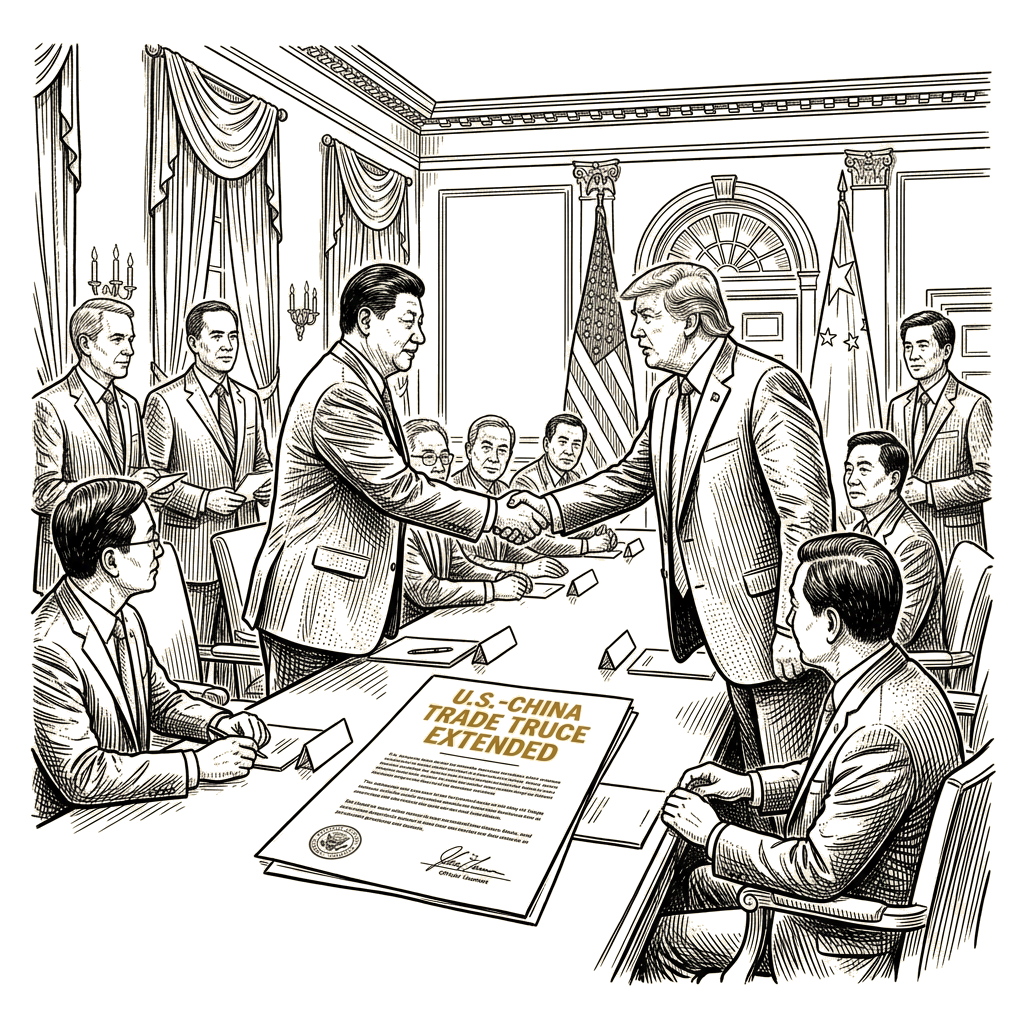
China’s Iran oil buys, drone shipments threaten to cloud Trump’s summit with Xi
WASHINGTON — President Trump opened a White House summit with Chinese President Xi Jinping on Thursday, hosting the Chinese leader, whom officials across multiple U.S. administrations have described as Washington’s principal geopolitical rival and a potential military adversary, for a state visit heavy on ceremony but aimed at narrowing differences on trade, artificial intelligence, and the war in Iran.
Trump and first lady Melania Trump greeted Xi and his wife, Peng Liyuan, on a red carpet outside the White House on Thursday morning. The ceremony included a presidential salute from the U.S. Marine Silent Drill Platoon, which features two-dozen newly trained infantry Marines, and U.S. Joint Forces Command. A flyover featuring a B-2 stealth bomber and F-22 Raptor jet fighters was also planned.
Trump heralded the “tremendous strides” he and Xi had made and previewed the day’s discussions on national security and technology issues, saying that “the decision we make in these areas today can promote peace and prosperity for decades and decades to come.” Xi, speaking through a translator, told Trump: “I am ready to work with you to steer the giant ship of China-U.S. relations on a steady course toward the future.”
Beneath the pomp is a relationship that is increasingly strained. As Trump pushes to bring an end to the war in Iran, China is buying oil from Tehran and shipping components used in drones and missiles to the country. The U.S. and China are racing for AI dominance, and they have long been at odds over trade. Tensions are also mounting in the Indo-Pacific as China’s rapid military buildup alarms U.S. military planners and close U.S. allies in the region.
China has long been seen by officials across multiple U.S. administrations as Washington’s principal geopolitical rival and a potential military adversary. Trump has struck a conciliatory tone toward Beijing in recent months as U.S. officials laid the groundwork for this week’s highly anticipated meeting. The summit is expected to sidestep tensions and focus on identifying modest areas of cooperation, officials said. Former officials say they anticipate a summit strong on ceremony but likely to include few major developments. A main objective for Trump and Xi this week is to forge a more predictable relationship and potentially notch a few deals.
The meeting comes just weeks before November’s midterm elections, in which Republicans face the prospect of widespread losses that could bring Democrats to power in Congress. Some Republicans have questioned Trump’s decision to hold a high-profile summit with a U.S. adversary so close to the election. “Had the White House asked me for advice, I would have suggested the president not invite Xi Jinping to Washington for such a lavish welcome here in the United States of America,” Senate Armed Services Committee Chairman Roger Wicker said earlier this week.
Trump previewed his approach on social media Thursday morning, where he heaped praise on the Chinese leader and his wife. Xi, Trump said, “looks strong, vibrant, and fit.” The U.S. president also said “super intelligence,” his moniker for AI, would be a topic of discussion. “I want to leave it exactly where it is. That is China’s position also,” Trump said, suggesting he does not want to stand in the way of AI’s rapid development.
A state dinner on Thursday night in the East Room will feature sparkling wine honoring the so-called toast of peace shared between President Richard Nixon and Chinese Premier Zhou Enlai during Nixon’s historic 1972 visit to Beijing.
The most concrete win that Xi could take back to Beijing may already be in hand. Treasury Secretary Scott Bessent told Fox News on Wednesday night that both countries had agreed to extend their trade war truce by two months — from Nov. 10 to Jan. 10 — while floating the possibility of a “bigger deal” down the road. Bessent said China had already agreed to buy 25 million tons of U.S. soybeans and had been “very fulsome” in following through, though it remained “a little behind” on some $17 billion in other agricultural commitments Washington is pressing it to meet.
Xi did not bring a business delegation to Washington, a sign of muted expectations for major commercial engagement. People involved in summit preparations said roughly a third of more than 100 seats for Thursday night’s state banquet were allocated to the Chinese side, which in Beijing’s view would leave no room for Chinese business representatives.
Beijing has weighed bigger purchases of American farm goods to please Trump ahead of November’s hotly contested midterms, people close to the Chinese side said. None of the planned deliverables would resolve the underlying clash of interests. Beijing is pressing the U.S. to forgo weapons sales to Taiwan and is determined to bring the self-governing democracy under its control. The U.S. is also rattled by China’s rapid buildup of its nuclear-weapons stockpile; Beijing is on track to have more than 1,000 nuclear weapons by 2030, according to Pentagon estimates, though this issue is unlikely to be front and center in Trump’s meetings with Xi on Thursday.
China’s indirect aid to Iran in its conflict against the U.S. — including thousands of shipments of drone and missile components to Tehran and Chinese satellite imagery aiding Iranian strikes that killed U.S. troops — also threatens to cloud the visit between the two leaders. Some U.S. officials and lawmakers are pressing Trump to bring up the status of U.S. citizens that it considers wrongfully detained in China.