Vistry plans further job cuts and regional office closures
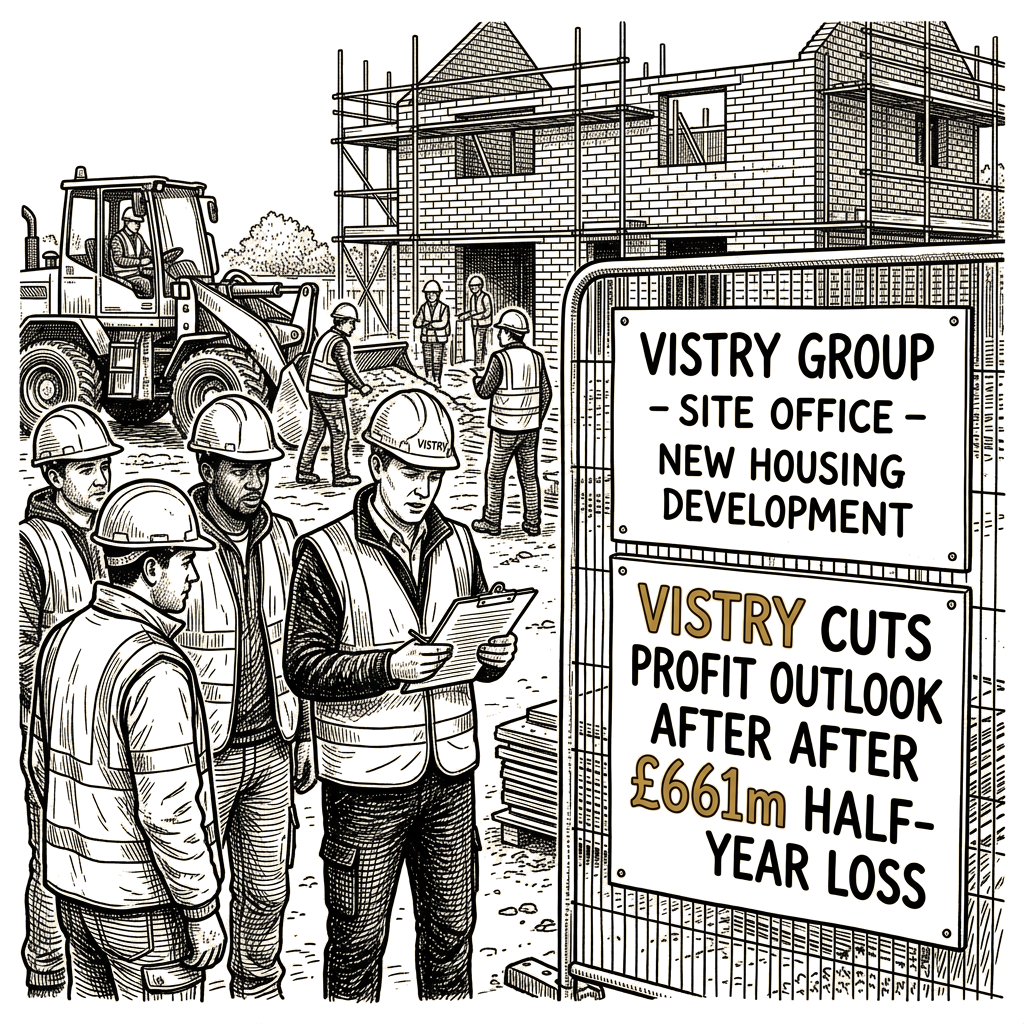
Vistry Group, one of Britain’s biggest housebuilders and the owner of Bovis Homes and Countryside, cut its annual profit expectations this week after half-year losses ballooned to £661.3 million and it was left with a £600 million pile of unsold homes. Chief Executive Adam Daniel, who took the helm in April, said “the issues can be fixed” as he set out a detailed turnaround plan that involves pulling out of private sales in southeast England and slimming operations to turn Vistry into a more focused, 12,000-homes-a-year builder.
The half-year pre-tax loss compared with a profit of £40.9 million in the same period a year earlier. The result was dragged back by a £475 million writedown and a £73 million provision for building-safety works. For the full year, Vistry now expects adjusted pre-tax profit of £165 million, after an adjusted loss of £83.3 million in the first half — far worse than the company had anticipated.
Vistry completed 6,304 homes in the first six months, down 8 percent from a year earlier, and resorted to steep discounts to shift stock. In July, the company said the average discount offered to homebuyers was 7.1 percent. After that discounting push, it was left with £220 million of unsold properties. Half-year revenues fell 9 percent to £1.7 billion, while Vistry’s debt jumped from £293.1 million to £468.8 million.
The company blamed “disappointing summer sales of private homes” and the withdrawal or renegotiation of deals to build affordable homes. Vistry said it has also been hit by cost inflation of 3 to 4 percent as a result of the Iran war, which has driven fuel prices sharply higher. In August, Vistry received £350 million in funding from the UK government to construct 3,000 affordable homes — the largest slice awarded under the £39 billion social and affordable homes programme — and is one of 33 strategic partners taking part. The company said it had already begun building those homes.
Daniel laid out measures including reducing the land bank from 51,000 to 36,000 plots, reorganising the business, simplifying the product range and brands, and shifting greater exposure to the north, Midlands and west of England. “We have made substantial progress in refocusing the business and delivering on our immediate priority to improve cash generation,” Daniel said. “In parallel, we have now completed an extensive review of our business and operating model including how best to position the group for future success.”
Further job losses are in prospect after Vistry announced new cost savings of £50 million, on top of a £25 million voluntary redundancy programme and hiring freeze earlier this year. The company said it had reduced its workforce to 4,150 by the end of July, with 350 people having left since the summer, according to PA.
Vistry is also closing some regional offices, moving from 25 to 12 regions as it concentrates on its narrowed operational footprint.
The Vistry share price plunged more than 8 percent in early trading. Victoria Scholar, head of investment at Interactive Investor, said the housebuilder had faced macro headwinds from this year’s energy shock, leading to cost pressures, weaker affordability and consumer confidence against a higher-for-longer interest rate backdrop. “Shares had already had a painful run lately, shedding close to 60 percent year-to-date before this morning’s further sharp slide, underscoring the challenges at hand for its boss and the need for a drastic turnaround,” Scholar said.