Iran lists four demands for reopening strait and restarting nuclear talks
Speaking Friday on the sidelines of the United Nations General Assembly in New York, Iranian Foreign Minister Abbas Araghchi said Tehran would reopen the Strait of Hormuz and resume nuclear talks with the White House within seven days if conditions were met. The Iranian Foreign Ministry listed the conditions as including a halt in U.S. “acts of aggression,” the lifting of its naval blockade of Iranian ports, an end to what the ministry characterized as a war against Iran’s economy, and the unfreezing of Iranian assets.
Trump said over the weekend that Tehran had put forward a proposal but that he had turned it down, calling it “unacceptable.” He warned the United States could resume strikes on Iran after the Nov. 3 elections, a reversal of his earlier claim that the war would be over shortly after Americans went to the polls and that oil prices would then fall. Araghchi said Trump’s response was a “first reaction” and that he was waiting for “definitive news to be conveyed through intermediaries.”
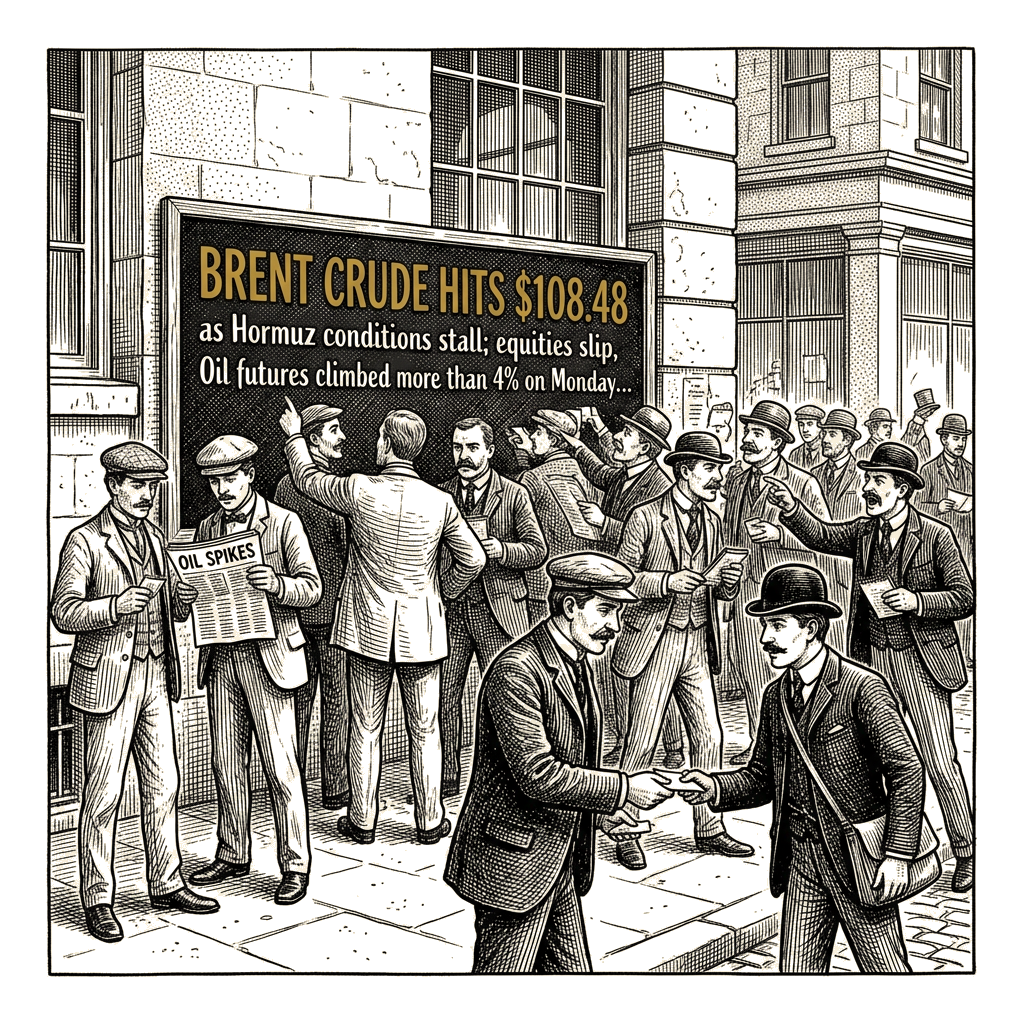
Oil prices surged by more than 4% on Monday. The contract for November delivery of Brent crude spiked to $108.48 a barrel in mid-morning London trade before easing slightly, trading just above $107 in the early afternoon. American crude topped $96.16 a barrel before settling back to around $95. Cornelia Meyer, chief executive of Meyer Resources, told CNBC that the “clear and present danger” of renewed fighting was being priced in by market participants. “I think everybody hopes that this is not the case because, you know, we are living off borrowed barrels. A lot of countries are living off their inventories,” Meyer said.
Brent crude had fallen below $100 a barrel at the beginning of the previous week amid hopes that Saudi Arabian crude exports could resume through both the Strait of Hormuz, with U.S. naval assistance, and the Red Sea via the East-West pipeline, which was reported to be almost ready to reopen after being damaged in Houthi strikes on Sept. 10.
The negative sentiment fed through into equities. S&P futures indicated a 0.5% dip in share prices when American markets opened Monday morning, following declines across most of Asia overnight. Europe’s broad-based Stoxx 600 managed a gain of just 0.48% as of 3 p.m. local time. Prices at the pump in the United States held steady Monday; diesel prices were slightly down.