Fentanyl crisis and Medicaid cuts loom over Haaland’s policy agenda
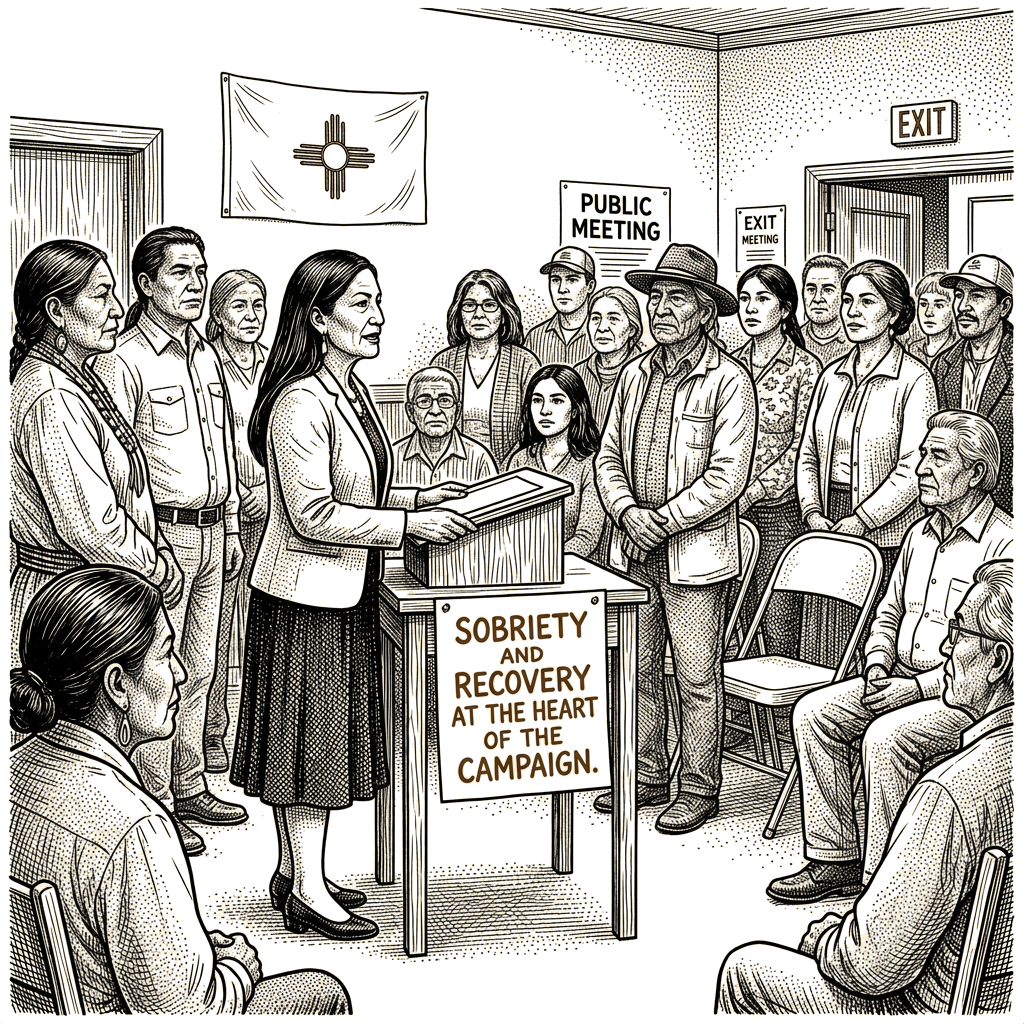
Deb Haaland, the first Native American to serve as a US Cabinet secretary, is writing what she calls the next chapter of a trailblazing political career by placing addiction at the center of her campaign for New Mexico governor. The Democrat, who served as interior secretary under President Joe Biden from 2021 to 2025, told the Guardian that she started abusing alcohol at a young age, was twice arrested for driving under the influence and decided at age 23 to pursue sobriety, a journey she said required inpatient treatment, meetings and therapy. “It’s a lot of hard work to pay attention to yourself,” Haaland said. “I recognised there were so many things in my life that I needed to change.”
Haaland, a member of the Pueblo of Laguna tribe who grew up in a military family, served in Congress from 2019 to 2021 and was one of the first two Native American women elected to the House. She then became the first Native American to serve as a US Cabinet secretary, leading the Interior Department through the Biden administration’s first term. In announcing her gubernatorial bid, she is taking the unusual step of foregrounding her own recovery rather than her Washington biography.
The race sets Haaland against Republican Gregg Hull, the former mayor of Rio Rancho, in the November midterm election. Haaland’s campaign is framing her sobriety as a credential for tackling what she describes as a fentanyl crisis that has reached even the state’s smallest rural communities. “This fentanyl crisis in our state affects even our smallest rural communities here in New Mexico,” Haaland said. “It’s hitting us in the face. People are dying from this drug.”
The campaign’s six-figure broadcast and digital ad buy opens with Jorge, a local father who says on screen he is “one year and one month sober.” The spot also features David, a behavioral health psychologist, who highlights Haaland’s plan to require insurance providers to cover comprehensive treatment and to crack down on drug-trafficking networks. Jorge closes the ad with the line, “With Deb, I have hope.”
Haaland’s policy platform centers on a proposed state Office of Community Safety that would deploy behavioral health specialists to street-corner emergencies that do not involve violent crime. “A lot of these issues with substance use are not criminal in nature and so my office of community safety would ensure that we can help law enforcement to focus on crime,” she said. “Drug traffickers are part of crime and then we can focus on the people who are suffering.”
Haaland used the interview to mount sharp criticism of former Republican governor Susana Martinez. “She essentially destroyed our behavioural health system,” Haaland said. “She accused a lot of behavioural health professionals of fraud and so many of them went out of business and it took years for the attorney general to clear them all of any wrongdoing.” Haaland added, “It’s easy to demolish something; it’s difficult to build something back, so we’re still building back from that and I feel committed to helping people live better lives.”
On the campaign trail, Haaland has visited extended residential care facilities including Grand Summit in Albuquerque, which provides long-term housing, job assistance and financial support for recovering residents. During a recent stop, she invited program residents to walk across the street and cast their ballots alongside her, an experience she said left participants feeling “empowered” and “part of something larger than themselves.”
Haaland framed addiction as a public health issue rather than a moral failing, an emphasis she said is designed to break through the stigma that keeps families from seeking care. “I look at this as a public health issue,” she said. “I look at this as not somebody with a moral failing but essentially a victim of this terrible disease.” She added: “For a lot of folks it’s hard not to feel remorse and shame and all of those things.”
The campaign faces looming federal headwinds. Haaland warned that Medicaid rollbacks under the Trump administration scheduled to begin Jan. 1 could strip addiction treatment coverage from vulnerable New Mexico residents. In response, the state has established a Medicaid trust fund intended to provide longer-term support for the program. She also voiced opposition to recent federal immigration enforcement actions in New Mexico, describing ICE raids as “untenable,” “cruel” and “ruthless” and referencing an incident in which an individual was detained outside a medical clinic in front of his 11-year-old child. “They wear masks, they don’t identify themselves,” she said.
Haaland linked rising voter engagement in the state to economic pressures, including tariffs and rising fuel costs that she said hit rural New Mexicans commuting up to 100 miles round-trip for work. “I can’t say why people are coming out to vote and why people want to build this momentum in New Mexico for Democrats,” she said, “but it’s happening.”