Geely-NIO battery-swap deal marks shift in Chinese auto cooperation
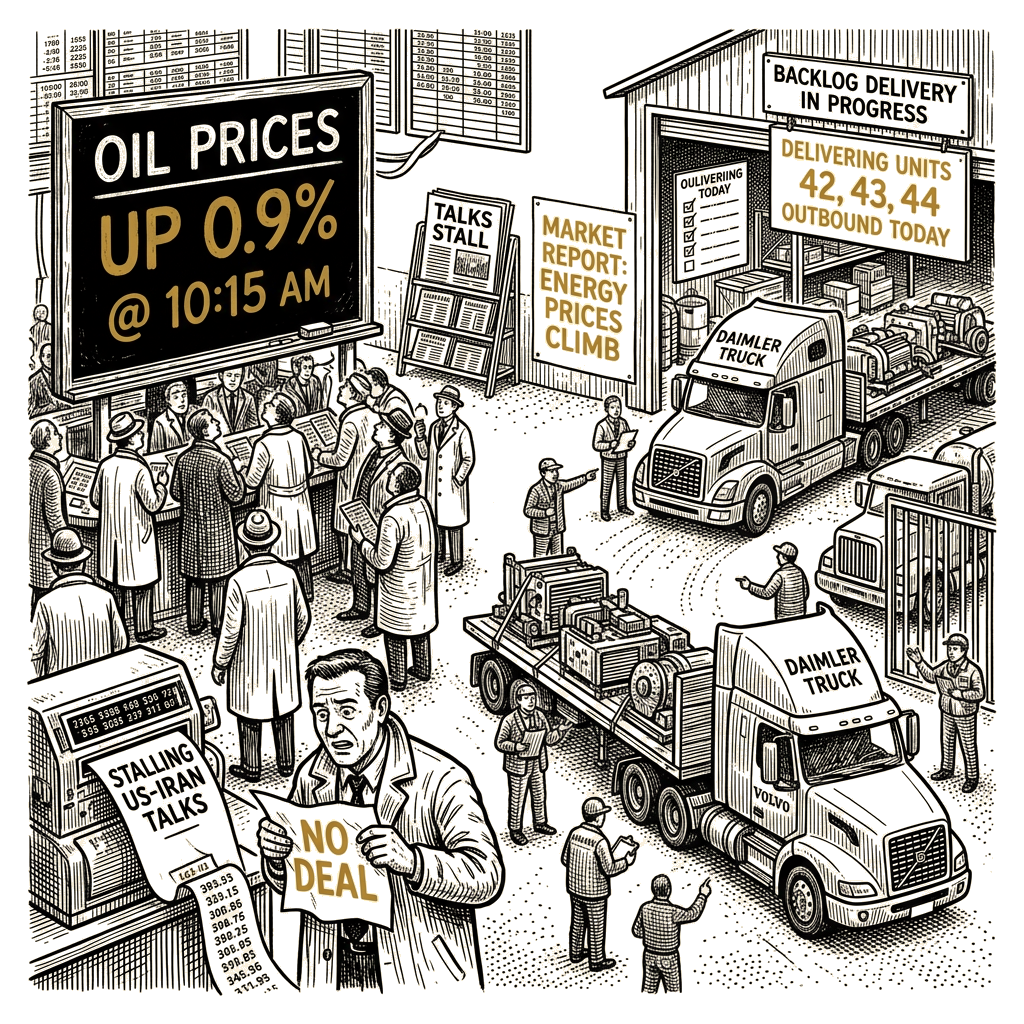
Oil prices rose in early European trading on Tuesday as a lack of progress in US-Iran talks outweighed signs of recovery in Gulf exports. Brent crude futures for November gained 1.7% to $107.05 a barrel, the December contract rose 1.7% to $99.49, and WTI, the US oil gauge, added 1.5% to $94.01. Saudi Arabia has resumed oil exports via its East-West pipeline after repairing damage from a drone strike, restoring a key route around the Strait of Hormuz. Even so, steepening backwardation — when near-term prices exceed longer-term prices — and higher fuel prices signaled persistent supply tightness.
Analysts at ANZ said challenges in oil product markets show no signs of easing, citing the risk of a looming US diesel export ban and Russia’s preparation to extend its diesel export ban for producers by another month.
In a separate note, Nomura analysts said a collaboration between Geely and NIO on battery-swapping technology shows that Chinese automakers are starting to team up and share resources in the market after years of fierce competition. “This is a good sign as it may improve the market’s operating efficiency and create win-win opportunities for participants,” the analysts wrote, adding that the agreement can further advance NIO’s long-term business development. They characterized 2026 as a transition period for the Chinese auto market with sluggish demand, though they said NIO has shown some good performance with its new models.
Bernstein analysts Alex Irving and Antoine Madre wrote that International Consolidated Airlines Group’s fuel bill this year is likely to come in above the €8.6 billion estimated at second-quarter earnings, with nothing materially changed since then as demand remains robust and particularly strong in long-haul markets. “Strong pricing is visible in the North Atlantic, notably at British Airways, while Iberia continues to grow rapidly on North Atlantic routes,” the analysts wrote. Bernstein holds an outperform rating on the stock with a 550 pence target price. Shares were up 0.5% at 438.50 pence and 5.8% higher year to date.
Canadian railways for a fourth straight month notched a rise in carloadings in July, with strong growth in grains more than making up for large declines in coal and potash. Statistics Canada data showed the railways transported 31.7 million metric tons of freight for the month, up 2.6% on-year and the third-highest July on record, exceeding the five-year average for the month of 30.1 million tons. Freight loadings from connections with US railways rose 11.1% on-year to 3.8 million tons, which the data agency said may partly reflect re-routing via American connections amid wildfires in Northern Ontario and British Columbia during the month.
RBC Capital Markets analysts Ruairi Cullinane and Jakub Glinkowski wrote that FirstGroup completed a buy-in of its group pension liabilities valued at £90 million, which should reduce the UK transport provider’s exposure to pension risk. Some £17.5 million of pension escrow funds are returning to the company as a result. RBC characterized FirstGroup’s valuation and capital allocation favorably, citing guidance of £435 million of free cash flow over three years. RBC holds an outperform rating on the stock with a 255 pence price target. Shares were 2.4% higher at 181.80 pence but down 4.6% year to date.
J.P. Morgan analysts wrote that Daimler Truck will benefit from strong order backlogs across Europe and North America into the third and fourth quarters. “But most importantly in the medium term the firm is taking the right structural measures in Europe to improve the profitability,” the bank wrote, listing moves that include shifting production to Eastern Europe and increasing aftermarket and service within the European business, which the bank said will structurally increase margins at Mercedes-Benz trucks. J.P. Morgan rates Daimler Truck at overweight with a €50 price target. Shares rose 0.6% to €42.80.
The bank also wrote that Volvo’s third quarter could be strong, with its key concern being how many trucks the company can deliver following robust demand in the first half. The Swedish truck maker posted record book-to-bill ratio levels in the first six months — 1.7 in North America and 1.1 in Europe — where a ratio above one means more orders were received than filled. J.P. Morgan expects this high order intake to be delivered between the third and fourth quarter, supporting strong earnings momentum into year end. It rates Volvo at overweight with a 360 Swedish kronor price target. Shares rose 0.3% to 326.30 kronor.
Berenberg analysts wrote that Ferrari is seeing continued improvement in sentiment and, most notably, continued strength in personalization spend. After checks with dealers, spending on personalization is tracking above targets, though buyers are more selective in their option choices so as not to over-spec models. Order intake for the Luce electric vehicle and the Amalfi remain low, with the latter falling behind order-intake targets. Still, Amalfi order momentum has improved as customers have begun to test drive the car. “On balance, Q3 checks leave us confident in our buy rating,” the bank wrote. Berenberg has a €384 price target. Shares rose 1.8% to €363.35.