EY chief economist warns fifth 2026 rate hike ‘looks likely’
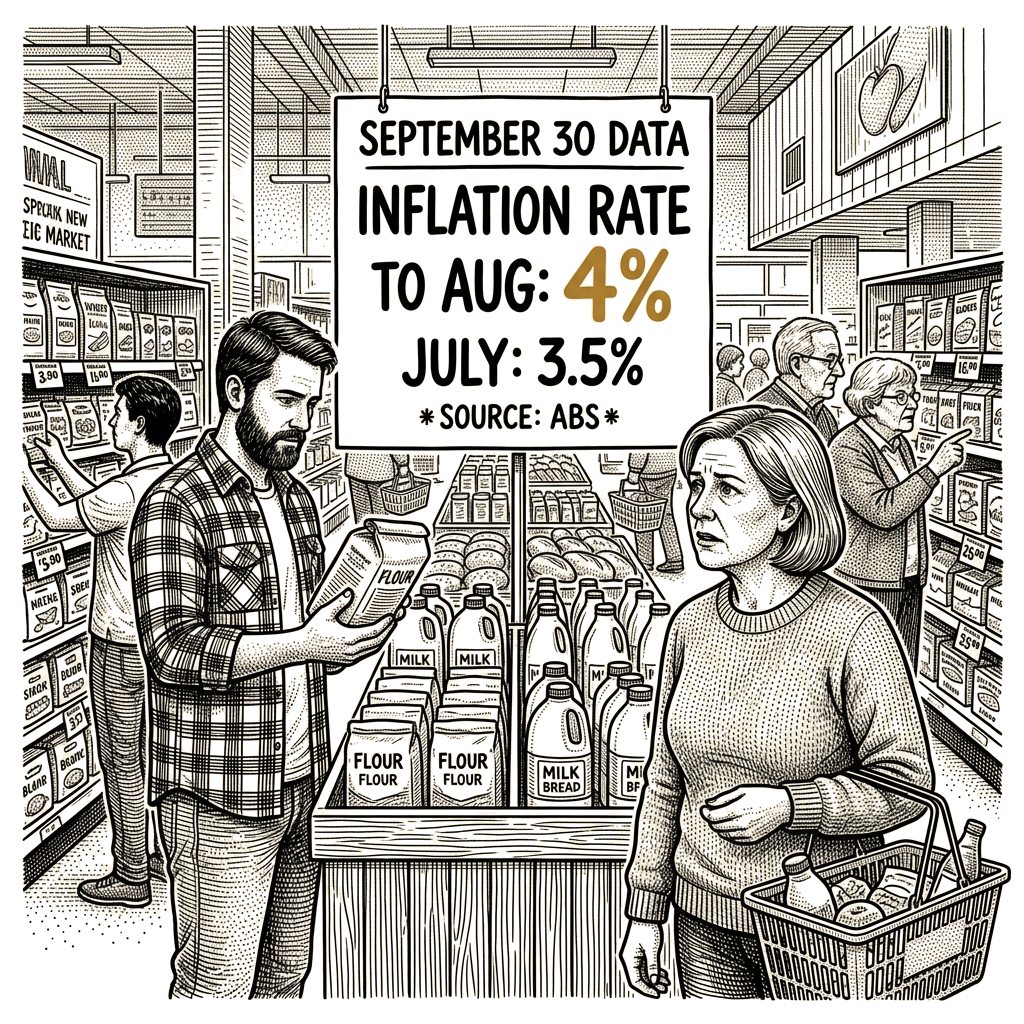
Australia’s headline inflation rate climbed to 4% in the year to August from 3.5% in July, according to Australian Bureau of Statistics data released September 30, intensifying expectations that the Reserve Bank of Australia will lift interest rates again before the end of the year.
The new reading lands a day after the RBA lifted its cash rate to 4.6% — the central bank’s fourth increase in 2026 — and underwrites economists’ view that further tightening is likely. Cherelle Murphy, EY’s chief economist, said “another rate hike looks likely by the end of the year,” adding that the RBA “have an ongoing fight on their hands” and “this is not the end of it.”
Treasurer Jim Chalmers, speaking to reporters in Sydney after the data release, blamed the monthly pickup on fuel prices flowing through from global oil markets. “We can see in today’s inflation figures that the overwhelming reason why annual headline inflation has come up in August compared to July is because of the impact of higher global oil prices flowing through to oil prices in Australia,” Chalmers said. “That’s not an opinion. It’s a fact.”
Chalmers framed the driver as the “ongoing US-Israel war on Iran.” He was accused of “gaslighting” Australians by insisting that government spending was not responsible for high inflation.
The ABS breakdown supported Chalmers’ emphasis on fuel costs. Fuel prices surged 15% last month, after a worsening Middle East conflict triggered a rebound in global oil prices and the government ended its cut to the fuel excise. Rising transport costs were the prime contributor to monthly price increases, the bureau confirmed.
The ABS data also pointed to other persistent pressures. Home building costs rose 5.4% over the 12 months to August, one of the prime drivers of high annual inflation, as builders passed on higher costs for materials and labour. Electricity bills were also higher than at the same point a year earlier, when households were still receiving government rebates.
The rise in headline inflation was slightly less than economists had anticipated, while underlying inflation — which removes the most volatile prices — was steady at 3.6% in the year to August. Both measures remained well above the RBA’s 2.5% target.
Chalmers denied he was at odds with RBA Governor Michele Bullock, who at her press conference the previous day had said “inflation is too high and has been driven by domestic capacity pressures.” But Bullock also pointed to the worsening Middle East conflict and the “sudden boom in AI-related spending on datacentres.” She concluded that “these developments suggest that inflationary pressures will persist for longer than previously expected.”
Murphy said it was a fact that government spending at commonwealth and state levels was high and was adding to demand in the economy, and warned that the government should be “extremely careful” with any new spending, including additional cost-of-living relief, for fear of making the RBA’s job harder.
At the same time, Murphy cautioned that it was impossible to quantify exactly how much government spending was responsible for the persistence of high inflation in 2026. “Do I think this is the biggest part of the inflation problem right now? No, the biggest part of the problem is that we have these global supply shocks,” Murphy said. “What we are witnessing is the accumulation of a number of events happening together, and none of them are good for inflation.”