Gaha campaign reached more than 2.6 million viewers through at least six influencers
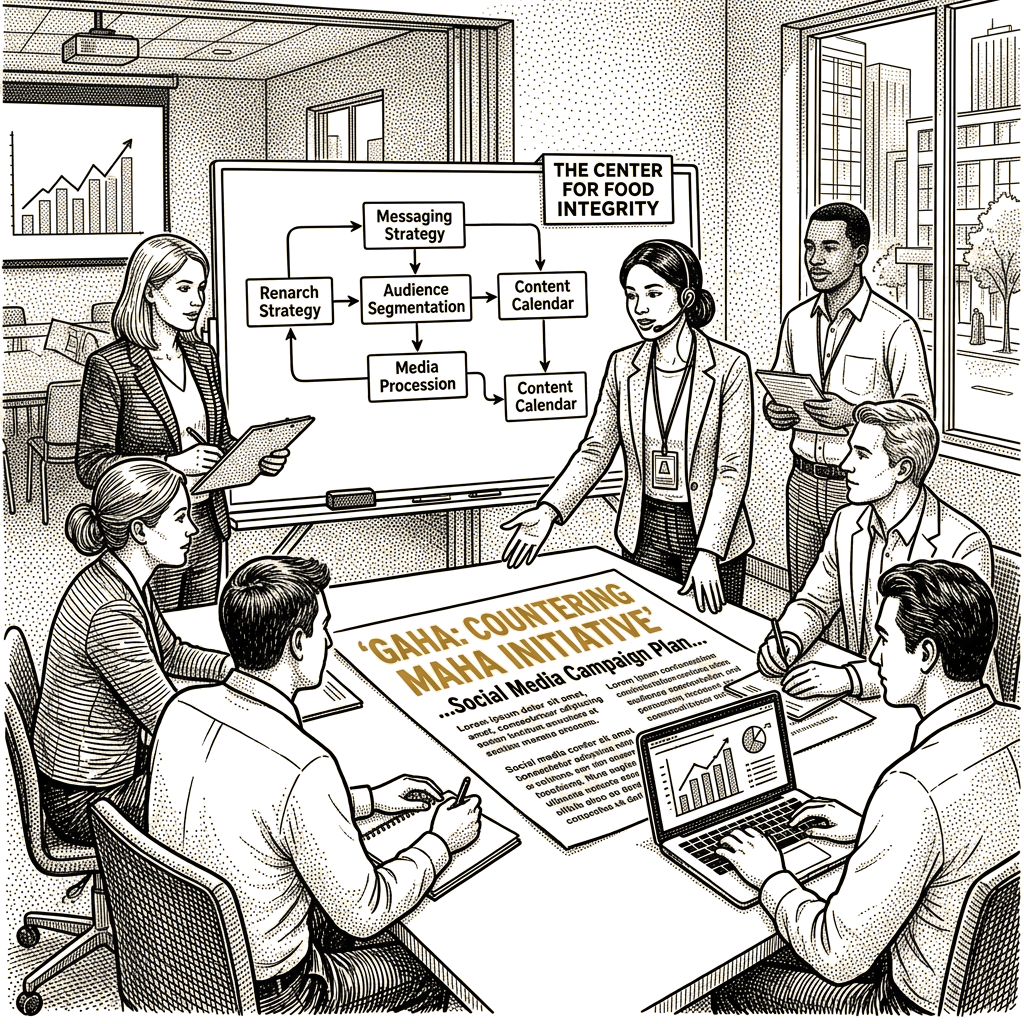
The Center for Food Integrity, an industry-funded non-profit formed in 2007, is running a coordinated social media influencer campaign called Gaha — Growing a Healthier America — to push back against the Make America Healthy Again movement’s messaging on processed foods, seed oils, pesticides, raw milk and other food and agriculture topics, according to internal documents reviewed by the Guardian and the investigative watchdog Documented. The campaign officially launched in late 2025 and has so far enlisted at least six influencers, whose combined audience exceeds 2.6 million viewers, the documents show. In February, CFI compiled a report listing dozens of sponsored posts on platforms such as online blogs, Facebook, TikTok and Instagram about key Gaha subjects.
According to an August 12 brief by the center, the Gaha campaign had generated 13.2 million online impressions, more than 1.1 million engagements and an 8.74% engagement rate. Internal documents obtained by the Guardian and Documented list the campaign’s key focus areas: seed oils, pesticides, high-fructose corn syrup, regenerative agriculture, organic farming, raw milk and dairy, and “big ag.”
CFI’s board is led by Bryan Malenius, who also serves as director of reputation strategy for public affairs at Chick-fil-A. Other board members hold senior positions at Cargill, Dairy Farmers of America and the National Pork Board. Member organizations whose dues fund the center include the American Farm Bureau Federation, several state farm bureaus, CropLife America and the National Restaurant Association.
The Gaha coalition was assembled in partnership with CFI’s member organizations in farming, agribusiness and food. American Farm Bureau Federation president Zippy Duvall took credit for bringing industry groups together to form the coalition during a speech in January 2026.
Industry donors were invited to contribute to the campaign at three levels, according to an internal flyer. Supporters contributing up to $50,000 receive regular updates; donors of up to $100,000 participate in quarterly meetings and provide strategic input; and contributors of more than $100,000 earn a seat on the leadership council, with the opportunity to review and approve strategy and help secure funding from others.
In a July 2025 training video, Kelly Leighton, CFI’s executive director, told industry members that the goal of the campaign was to create an “echo chamber” among food and agriculture groups, aligning them behind “the same ultimate message.” Without a coordinated response, she said, “misinformation [from Maha] risks undermining consumer trust, fueling new regulations and eroding confidence in agriculture as a whole.”
In mid-2025, the Gaha campaign began taking shape when CFI released resources for industry groups to use as a framework for their communications strategies, the documents show. The Guardian and Documented reviewed dozens of pages of internal materials related to the effort, including a “Say This, Not That” guide that offered specific advice about language on key Maha topics, and an influencer campaign creation guide.
Since last May, CFI has also released regular insight briefs identifying Maha narratives that are gaining traction in the news and on social media. A brief covering February and March, for example, noted that childhood obesity had reached a new high according to the Centers for Disease Control and Prevention and cited a Canadian study linking ultra-processed foods in early childhood to “adverse behavioral and emotional changes” in children, then directed members to new resources to “support” their communications on processed foods.
The campaign’s influencer outreach is tailored to different audience segments, according to a CFI influencer campaign guide. For audiences who value authenticity, the center suggested local farmers and wellness enthusiasts; for rationalists, scientists and dietitians; and for comfort seekers, lifestyle creators or faith-based voices.
The Make America Healthy Again movement gained momentum with Robert F. Kennedy Jr.’s elevation to secretary of health and human services. Kennedy has said chronic illness is primarily caused by processed foods and dyes, exposure to certain chemicals, and poor farming practices, along with what he falsely claims is an overuse of dangerous vaccines. A Maha summit in Washington this week is scheduled to feature Vice President JD Vance and several members of President Donald Trump’s cabinet.
A KFF poll from May 2026 found that about four in 10 US adults support the Maha movement, while 64% say there is not enough regulation of pesticides used in agriculture and 75% say the same about chemical food additives. The Trump administration has largely stopped short of enacting new food regulations, but cross-partisan support in Washington on these issues poses a threat to the food industry’s bottom line, according to the Guardian.
Influencers who participated in the Gaha campaign framed their work as countering misinformation. Slade Wentworth, who has more than one million followers on his Instagram account thedadbriefs, said he participated as part of a series that helps families “think critically through political and cultural noise.” “In my opinion, many of the loudest voices in the Maha movement and in the food/wellness spaces in general tend to push anti- and pseudo-scientific claims,” Wentworth said via email. “To me, engaging with CFI was an opportunity to present a balanced discussion on topics that overlap with what I’d typically cover.” One of his pieces, on the raw milk movement, drew “varied and substantive” comments, he said, a sign that the content “struck a good balance, enabling folks to lean into their perspectives thoughtfully.” The anonymous creator of hydroxide.foodscience, which has more than 300,000 followers on Instagram, posted about regenerative agriculture, ultra-processed foods and seed oils as part of the paid program and said the campaign offered a “uniquely positive spin on food and agriculture.” “It can be difficult for people to sort through the weeds of food and food science and agriculture to really get the facts, so I think that was like a big reason why this campaign resonated with me,” the creator said. Other influencers the center included in its campaign were Happy Strong Healthy, Dietitian Hannah and Veggies and Chocolate; those accounts did not respond to emailed requests for comment.
Jessica Steier, the CEO of Unbiased Science, said her organization received “a modest fee” to interview a farmer as part of the campaign but retained full editorial and scientific control. The center did not script the post or direct its content, which Steier said would have been a dealbreaker for Unbiased Science. Much of the information amplified by Maha, Steier noted, falls under a “wave of chemophobia,” where people are told they are being harmed without much evidence. “The wellness economy that profits from fear about food and ‘toxins’ is enormously lucrative,” Steier said. “Explaining why a preservative is safe is not where the money is. The people being richly rewarded for shaping what Americans believe about their food are not the ones defending the evidence.”
Tom Philpott, a senior research associate at the Center for a Livable Future at Johns Hopkins University, said the campaign reflects industry anxiety about the shift in public sentiment. “That surely freaks the industry out,” Philpott said. “For the industry, they are very concerned about, for want of a better word, a vibe shift.”
Jerold Mande, a nutritionist who served as deputy undersecretary for food safety at the US Department of Agriculture under President Barack Obama, said the campaign sounds like “crisis management.” Mande, who has worked for decades to make food policy a priority, said Maha, with its cross-partisan appeal, represents the biggest threat to the food industry that he has seen. Using influencers to counter Maha, which is in essence a loose grouping of influencers itself, makes sense, Mande said. “They realize now that they’re facing an existential threat, and their whole business model over the last decades has evolved around, you know, how do we make money?” Mande said. Without regulations, he added, the movement will not translate into meaningful changes: “You’re not going to make progress if you don’t use government’s two powerful levers: funding and rules.”
Marion Nestle, a molecular biologist and nutritionist who has studied food politics, said industry campaigns to protect their interests are “nothing new,” particularly with Republicans now engaging on agrochemicals. “Of course, they’re going to lobby, and they’re going to do it in absolutely every way they can,” Nestle said. Using outright attacks on Maha influencers — many of whom, she said, are mothers who “really care about their kids” — would not be effective, she added. Nestle said the movement “isn’t getting anywhere” with major changes to the food system, given the refusal to regulate coming from Kennedy and the Trump administration. “Food companies have license to do all the lobbying they want, and they can say whatever they want,” Nestle said. “They don’t have to do anything. Nobody’s making them do anything. Nobody’s holding them accountable for anything.”
The Center for Food Integrity declined an interview request, saying in a statement that the organization “recognize[s] the critical link between diet and health” and that Gaha “supports an informed dialogue about how the food system can work together to assure a healthy affordable food supply and strong rural communities.” The American Farm Bureau Federation declined to comment and referred questions to CFI as the project’s sponsor.