Pocock urges Albanese to address burial dignity at national cabinet
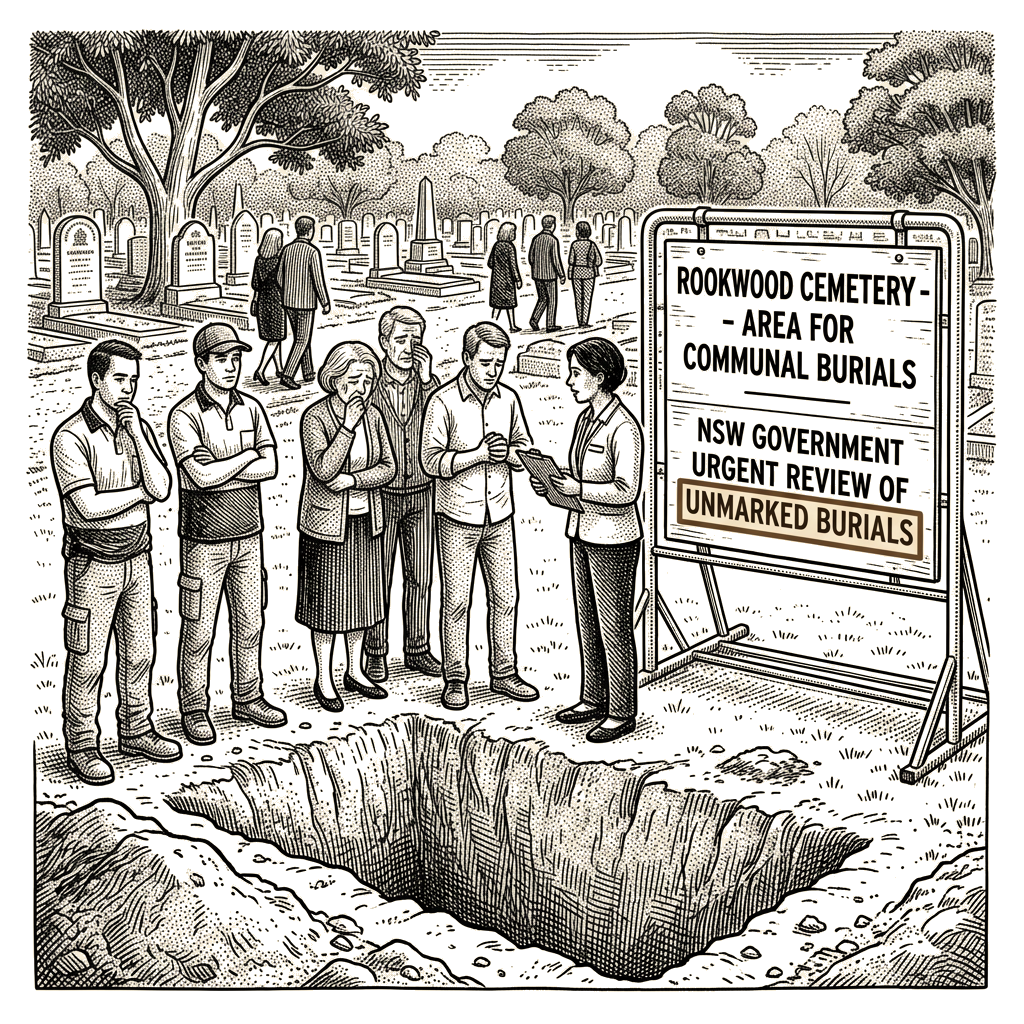
Guardian Australia’s investigation has identified serious failings in the New South Wales government’s practice of burying people it deems too poor to afford their own funerals, with the state now committing to an urgent review of the use of unmarked communal graves at Rookwood Cemetery in western Sydney. The Guardian reported that the revelations prompted widespread political condemnation on Tuesday, including from federal Liberal MPs, state Labor ministers, and the Greens.
The NSW Health Minister, Ryan Park, said on Tuesday he had not previously been aware of the way the graves were being used and tasked his department with exploring reforms, including emulating the Victorian model, where individuals are buried with their own plot and marking — a process that costs about $3,000 per funeral. “I think it’s something that we need to do better,” Park said. “Quite clearly, the dignity of those who have … passed, as well as for their families, is something that we need to take into consideration, and we need to do this better.” Park has accepted that past failings are “unacceptable.”
The shadow minister for defence personnel, Phillip Thompson, described the burials of war veterans as “deeply concerning.” “I am disappointed to hear Australian veterans are among those being buried in unmarked mass graves,” Thompson said. “These men and women served our nation and deserve dignity, respect in death, regardless of their financial circumstances.” He said it was the job of the federal government to ensure every veteran is identified and appropriately commemorated.
NSW Greens MP Sue Higginson called on the state government to urgently examine whether its process for identifying friends and family of the deceased had “the people, resources and safeguards” necessary. “Matters of grief, death and human dignity cannot be treated as administrative burdens to be processed at the lowest possible cost,” she said. “Nobody should receive a lesser measure of humanity in death simply because they died without money.”
Independent senator David Pocock urged Prime Minister Anthony Albanese to raise the issue at national cabinet and seek a uniform agreement across states and territories to ensure dignified burials and a basic standard of notification to families, friends, and others associated with the deceased. “Being poor in a country as wealthy as Australia should not condemn you to an unmarked communal grave,” Pocock said. “While I appreciate that this may not be at the top of most people’s list of daily concerns, how we treat our most vulnerable, including in death, goes to our values and who we are as a country.”
The investigation found that Vietnam veterans, rough sleepers, people with gambling addictions and migrants from developing countries have been buried together at Rookwood, with each plot often holding between four and six unrelated people. In at least six cases identified by the Guardian, friends, families, homelessness charities and community leaders had not been informed about the process, denying them a chance to intervene and pay for alternative funeral arrangements — a likely breach of NSW Health policy. The Guardian also identified at least 18 people known to homelessness services who had been buried in unmarked and communal graves without the sector’s knowledge.
NSW Health has apologised, acknowledging that it has not always treated those without financial means with the dignity and respect they are entitled to. “Families and friends who have lost a loved one face many challenges managing arrangements during a time of grief, and all deceased persons should be treated with dignity and respect, regardless of their financial circumstances,” a NSW Health Pathology spokesperson said. “It is clear this has not always occurred with respect to the burials or cremations for deceased people without the financial means to pay for a funeral, and NSW Health apologises for the distress this has caused to those who have lost someone they love.”
The rules require the government to do whatever it can to contact family, friends and others associated with the deceased before burial or cremation, to check whether they want to fund alternative funerals. Responsibility for that notification process had been shared between NSW Health and police until 2025. Reforms last year gave NSW Health Pathology responsibility for the process when deaths occurred in the community or in cases before the coroner, replacing police. Park said the changes made since 2025 had been significant in establishing a more “person-centred approach to ensure all deceased persons are treated with the respect and compassion they deserve.” “Losing a loved one is never easy, and everyone should be treated with dignity and respect when they pass, regardless of their financial circumstances,” Park said. “Previous arrangements have meant that this has not always been the case, and that is unacceptable.”
The investigation nonetheless identified serious failings in burials that occurred this year, after the 2025 reforms. That includes the case of Peter Giesel, a Sydney man who died in 2024 and was buried in an unmarked communal grave in June without the knowledge of his sister, Nicole, or close friend Elaine Grady.
NSW Health also said it is “committed to changing the way we work,” with reforms to better coordinate with loved ones, funeral service providers and partner agencies to “assess and manage deceased persons without financial means.” The government has also signalled greater cooperation with community and charity groups to seek funeral funding.
NSW Health said it had updated its policy to require “the provision of a uniform flat grave marker for people who have been buried.” Despite this, burials have continued to occur without any marker. The operator of Rookwood, Metropolitan Memorial Parks, says the state government has not funded it to provide grave markings.
Independent Sydney MP Alex Greenwich welcomed changes made by NSW Health. “Those who are marginalised and vulnerable in our community deserve the opportunity to be farewelled respectfully, honouring the life they lived,” he said.