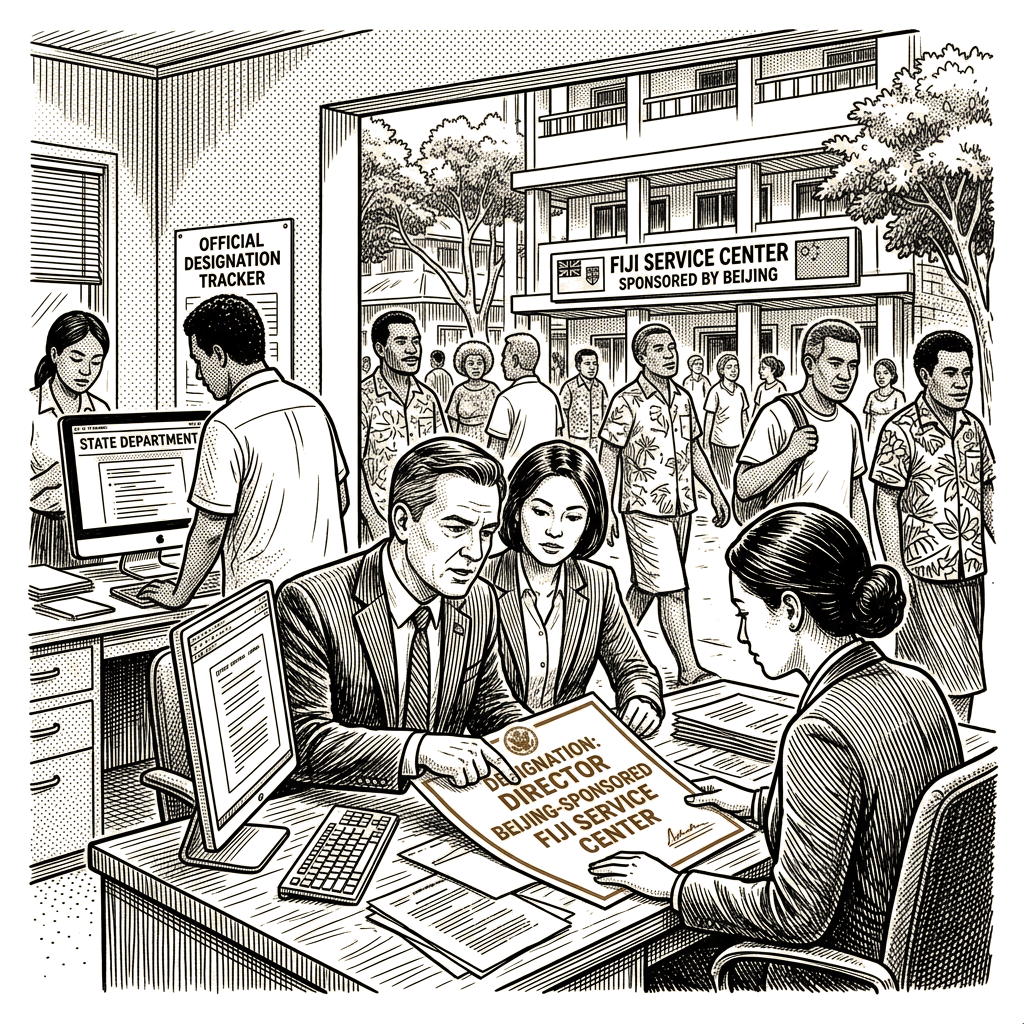
Embassy alleges corruption leaves Fiji vulnerable to malign foreign influence
The State Department’s Wednesday announcement, by spokesman Tommy Pigott, said Zhao was being publicly designated for abusing his position as director of the Beijing-sponsored Overseas Chinese Service Center in Fiji “by paying bribes to Fijian citizens to advance China-based government, business and criminal interests.”
“His actions constituted significant corruption and adversely affected U.S. interests in Fiji,” Pigott said.
The U.S. Embassy in Suva, in a separate online statement, alleged that Zhao’s activities “have left Fiji vulnerable to malign foreign influence facilitated by Chinese government, business and criminal actors inside and outside of Fiji.”
“Corruption stunts opportunities for foreign investment and foreign assistance, facilitates organized crime, offers a permissive environment for malign actors, drives illegal migration and undermines citizens’ faith in government,” the embassy said. “This directly impacts U.S. national security, economic and foreign policy interests and those of our partner nations and is why the department is taking these actions.”
The Organized Crime and Corruption Reporting Project, a global nonprofit investigative journalism organization, has reported that Australian law enforcement and intelligence agencies suspect Zhao of being a senior member of a criminal syndicate involved in drug smuggling, money laundering and human trafficking. Australian authorities designated Zhao a Priority Organization Target in 2023, according to the OCCRP report.
OCCRP’s reporting described the Chinese Communist Party as using diaspora members like Zhao to advance its interests through a strategy known as the United Front — defined by the U.S.-China Economic and Security Review Commission as a political strategy implemented through a network of organizations seeking to advance the party’s objectives by co-opting and neutralizing sources of potential opposition.
Zhao has denied the prior allegations of criminal wrongdoing.
Andrew Harding, a policy analyst for national security and Indo-Pacific affairs at the conservative Heritage Foundation think tank, said the State Department’s public designation should serve as a deterrent to others considering similar conduct.
“Zhao’s actions directly harm shared U.S.-Pacific interests, and no freedom-loving country should tolerate this corruption,” Harding said on social media. “This should only be the beginning of exposing malign Chinese influence operations in the Pacific.”
Zhao’s lawyers told Australia’s ABC News they were unaware of the U.S. investigation and would seek clarity from the U.S. government over the allegations.