Russian strikes kill 23 in Zaporizhzhia as bombing continues
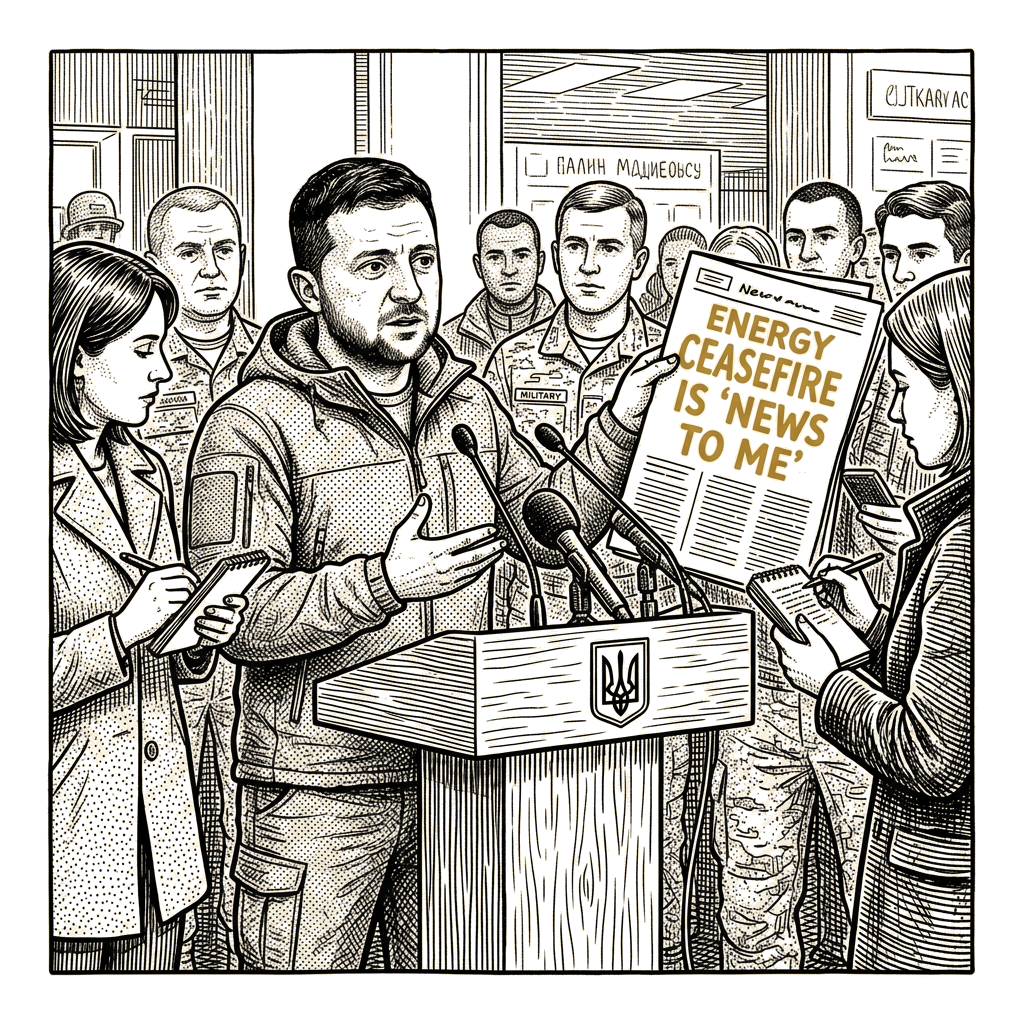
Ukrainian President Volodymyr Zelenskyy said Donald Trump’s announcement of an “energy ceasefire” between Ukraine and Russia was “news to me,” the Guardian reported, and said Ukraine would accept the deal if Russian President Vladimir Putin agreed to the same terms. Trump announced the agreement in a post on Truth Social, writing: “Effective immediately, there is an ENERGY CEASEFIRE in the War between Russia and Ukraine. Both parties have agreed. Do not break it!” He offered no further details.
Zelenskyy said he was surprised by the announcement. “If President Trump negotiated it with Putin – please tell us when the ceasefire begins. We are ready and we will accept it,” the Ukrainian president told the Axios website.
Zelenskyy earlier rebuffed Trump’s demand, made on Saturday, that Kyiv stop bombing Russian oil refineries. He said Moscow had to first halt its own “brutal” attacks on Ukraine’s energy infrastructure. Any deal to end long-range drone strikes by Ukraine on targets inside Russia would have to be “reciprocal,” he said. It should be backed by “real guarantees” — meaning punitive measures against Moscow from Ukraine’s allies, including the US.
Ukrainian officials said the White House is demanding that Kyiv give up its most effective weapon without demanding any corresponding concessions from Russia. In recent weeks, Kyiv has dealt a major blow to Russia’s economy, striking oil complexes, warehouses and datacentres. Ukrainian officials said Russia was still bombing Ukraine on Sunday, with several energy sites damaged.
The dispute between Washington and Kyiv began on Friday, when Trump announced he was lifting sanctions on Russian diesel exports. He said the move would reduce global and domestic fuel prices before next month’s US midterm elections. Zelenskyy called the decision “weak” and said it would generate “billions” in extra revenue for Putin, enabling him to wage war “even more intensely.” Trump said Zelenskyy should “damn well stop” hitting Russian refineries. Ukraine needed a “new leader,” he said on Saturday.
Responding to Trump, Zelenskyy said it was up to Ukrainians to choose “one or another leader.” He told ABC News he was willing to accept Trump’s demands and to organise elections, but only if Putin agreed to a “total” 60-day ceasefire.
On Saturday, Trump said Zelenskyy had refused to make a deal to end the fighting. Zelenskyy laid the blame for Europe’s biggest war since 1945 on “Russia and Russia alone.” “It is possible to stop strikes on energy infrastructure as early as today, but Putin does not want to do so,” he said.
The Guardian reported that this is not the first time Trump has announced an energy ceasefire deal; he made the same claim in September, which turned out to be untrue. The Guardian also reported that the public dispute is the most serious between the US and Ukraine since last year, when Trump berated Zelenskyy in the Oval Office.
Russia’s bombing continued over the weekend. On Saturday it killed 23 people in the city of Zaporizhzhia, including four children, and hit a five-storey apartment block in the frontline town of Sloviansk. The Guardian published images of the aftermath of a Russian strike on residential homes in Kharkiv and of medics helping a woman injured in a residential area in Zaporizhzhia. Zelenskyy said Moscow’s aerial campaign involved thousands of aerial bombs and jet-powered drones and continued “unabated.”
Ukrainian negotiators had been meeting in Florida with their American counterparts, Steve Witkoff and Jared Kushner, when Trump announced the US was lifting sanctions on Russian diesel. The Ukrainians went home early. “It felt like a trap,” one Ukrainian official told the Kyiv Independent newspaper.
The New York Times has reported that US officials have offered the Kremlin economic incentives in exchange for a ceasefire. They reportedly include releasing billions in Russian sovereign assets that are frozen. The Trump administration also revisited a plan to sell parts of Russia’s energy company, Lukoil. The multibillion deal would benefit Middle Eastern investors, the paper reported, some with “business ties” to US negotiators.
On Saturday, Zelenskyy held a series of conversations with key European allies, including UK Prime Minister Andy Burnham, French President Emmanuel Macron and Finnish President Alexander Stubb. Downing Street said Burnham recognised that the last 24 hours had been “difficult” for Ukraine and “reiterated his complete solidarity.” The two leaders agreed “to maintain pressure on Russia” and to strengthen the sanctions regime, despite Trump’s efforts to the contrary, Downing Street said. “Russia should agree to an immediate energy ceasefire, ending its brutal strikes on Ukrainian infrastructure and its attacks on shipping in the Black Sea,” a statement added.
Oleksandr Merezhko, head of Ukraine’s foreign affairs committee, said Trump’s “bullying” demand for Zelenskyy to quit had strengthened him at home “paradoxically,” after recent corruption scandals. “Putin’s plan is to decapitate Zelenskyy and remove him as a wartime leader. Trump is siding with Putin,” Merezhko said. He added: “I’m afraid that behind this situation is Trump’s worldview. He wants to do business with Putin. For him, Ukraine seems like an obstacle to be removed. Both Trump and Putin wish to pressure us into capitulation.” Referring to the 1939 agreement between Nazi Germany and the USSR, Merezhko said: “We are moving to a new Molotov-Ribbentrop pact and to a world of strongmen and spheres of influence.”
Merezhko said Ukraine would continue to destroy enemy oil refineries, against US wishes, because they funded Russia’s war machine, and acknowledged that a cutoff of US intelligence sharing with Kyiv — threatened by the Trump administration — would “blind” Ukraine’s air defence systems. “This would be an act of complicity with Putin’s genocide. It would mean more dead civilians and dead children,” he said.
Speaking over the weekend, Zelenskyy said Trump’s decision empowered Putin and gave him “extra money for the war,” running into millions and “perhaps billions.” “It is certainly not fair. It is certainly not how partners should act. And, in my view, it is a weak decision,” he said.