Modelling projects 80,000 older Australians will drop private cover
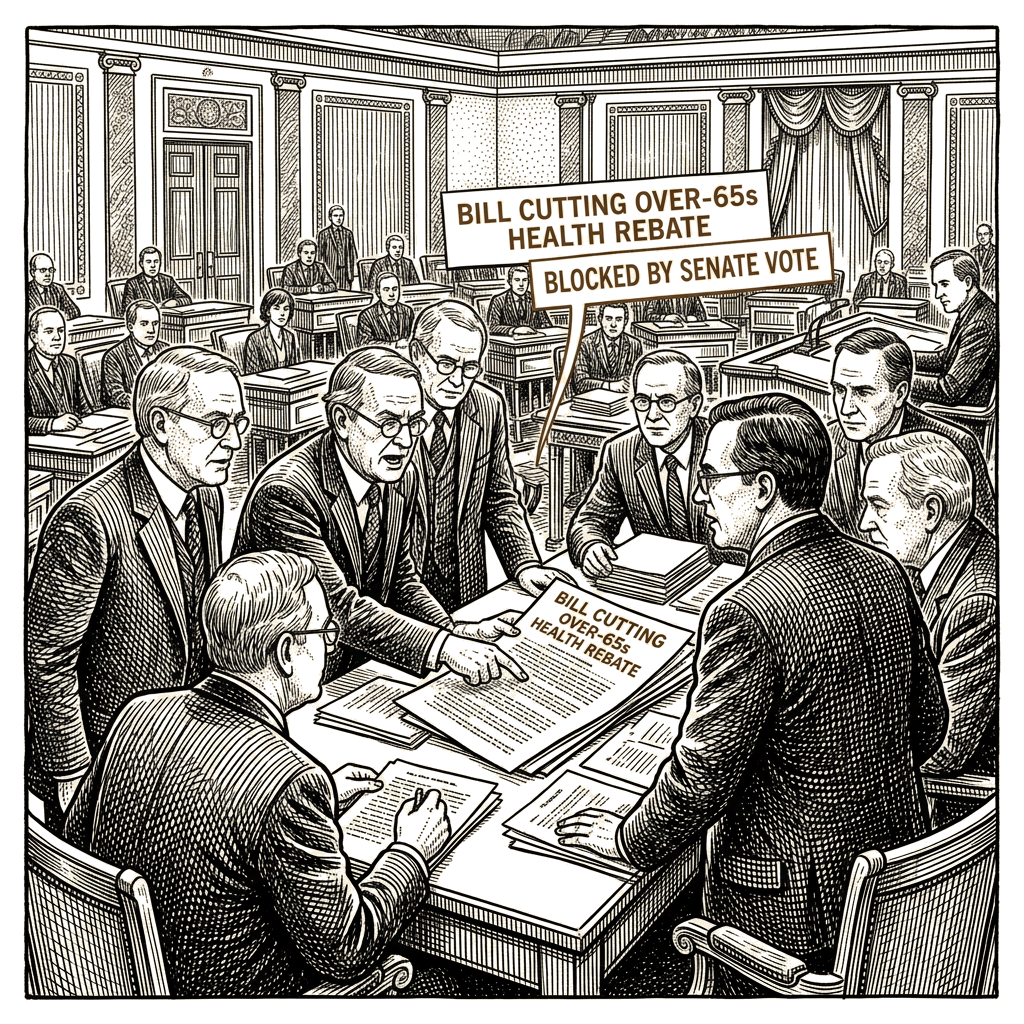
A rare procedural move has killed the Albanese government’s bill to reduce the private health insurance rebate for Australians aged 65 and over, with the Greens, Coalition and crossbench senators combining in the upper house on Wednesday to discharge the legislation. The bill would have trimmed the higher subsidy paid to older policyholders to deliver about $3 billion in federal budget savings, with the changes due to take effect from April 2027.
Health Minister Mark Butler said the government planned to reintroduce the same bill to parliament Thursday, arguing that older Australians deserve a full parliamentary debate on the measure rather than a procedural block.
“It is important that the parliament have a proper debate, that these really important questions for older Australians are not held hostage to political stunts, but instead that the elected members of the House of Representatives and elected senators take these issues seriously and debate them properly,” Butler said.
Australians aged 65 and over currently receive a larger rebate on their private health premiums than younger policyholders, with those 70 and over entitled to an even higher subsidy. The government’s bill would have reduced the higher subsidy paid to those 65 and over.
Greens leader David Shoebridge said the party would only support the bill if the government carved out pensioners from the changes, citing the 1.2 million Australians in receipt of the age pension. He framed the policy as an attack on older Australians during the cost-of-living crisis.
“We say to Labor, if you want to bring this bill back … carving out 1.2 million pensioners from this attack … come and talk to us,” Shoebridge said. “We will pass it in a heartbeat. But we will not be joining with Labor to punch down on pensioners in the middle of a cost of living crisis.”
Butler accused the Greens’ new leadership of having “spied a political opportunity” to team up with the Coalition.
Modelling from the Department of Health and Aged Care, released under freedom-of-information laws, projects that almost 80,000 older Australians will drop their private health cover by 2028-29 as a direct consequence of the rebate cut.
Patricia Sparrow, chief executive of the Council on the Ageing Australia, rejected the framing that the savings were needed to fund aged care. “Older Australians shouldn’t have to choose between protecting their health and paying for everyday essentials. Nor should they be asked to choose between affordable healthcare and a properly funded aged care system,” she said.
Shadow health minister Anne Ruston said the policy would have hit up to 1.5 million pensioners and accused the government of using the health system to plug gaps elsewhere in the budget. “The idea that a government would have to cut the health system to need to pay for the aged care system … just reflects the fact of how much this government has lost control of their budget bottom line,” she said.
State and territory health ministers also criticised the proposal, warning that any retreat from private cover would translate directly into additional demand on public hospitals. Victorian Health Minister Ingrid Stitt said she had raised concerns with Butler and would oppose “any move that makes it harder for Victorians to get the care they need.” “Any commonwealth savings shouldn’t come at the expense of older Victorians or simply shift pressure on to our public hospitals,” she said.
NSW Health Minister Ryan Park said the state was already under “significant pressure” on its public health system because of the commonwealth’s failure to provide enough aged care placements. “This is not good for [the aged] and they deserve better,” he said.
Queensland Health Minister Tim Nicholls said the “additional pressure will come at the expense of the thousands of older Australians already stuck in hospitals right across the country.” Tasmanian Health Minister Bridget Archer said the federal government was “already refusing to provide solutions to get aged care patients out of hospital and this dog of a policy will make things even worse.”
The defeat is the second major cost-saving measure the government has lost in parliament this year, following an earlier backdown on its plan to cap veterans’ allied health payments that would have saved $748 million over three years.