Three transgender prisoners challenge policy in New Jersey, Florida and Minnesota
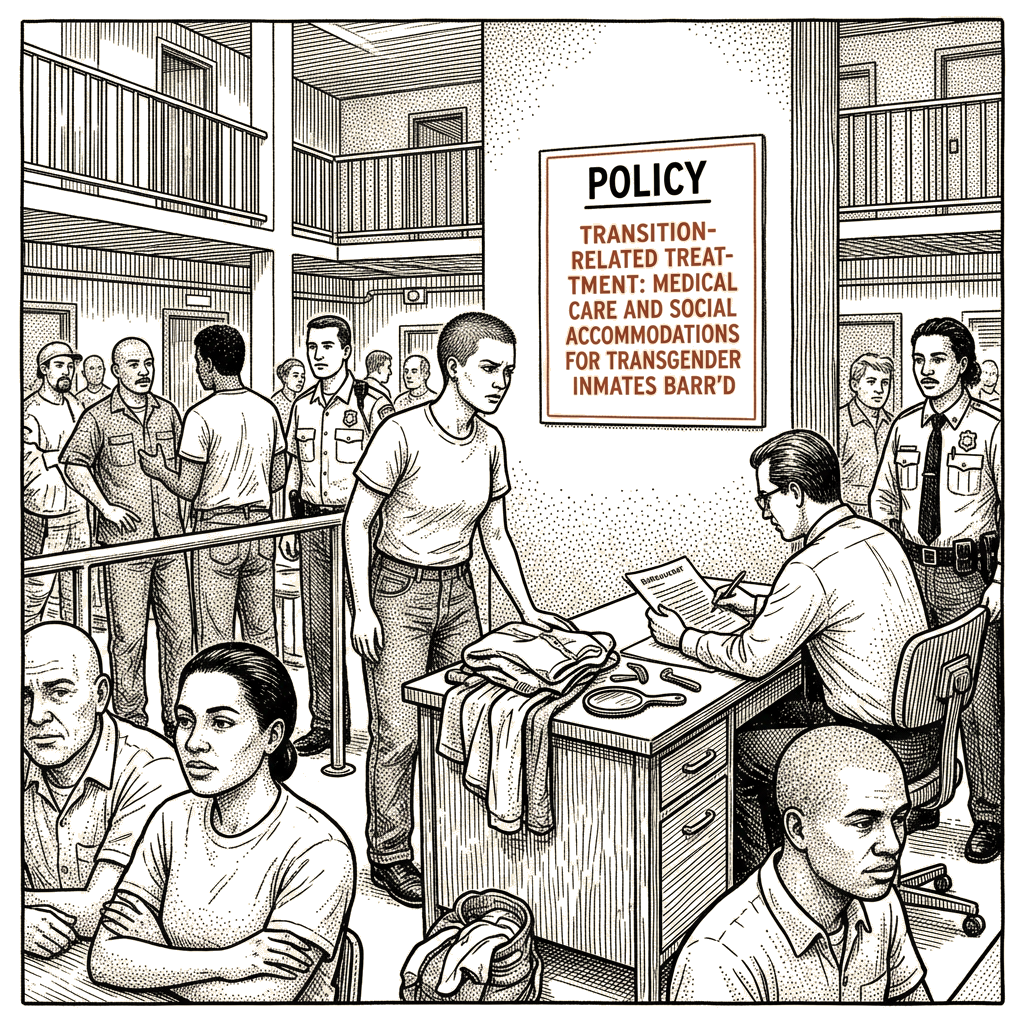
A Federal Bureau of Prisons policy introduced earlier this year would sharply limit medical care and other accommodations available to transgender people in federal custody. Under the measure, medical and surgical treatments related to gender transition would be prohibited. The restrictions would also extend to “social accommodations”, including access to clothing and hair-removal devices intended to help prisoners present themselves in a way that matches their gender identity. Psychiatric care would remain available under the policy.
The restrictions prompted three transgender people incarcerated at federal correctional facilities in New Jersey, Florida and Minnesota to bring a class-action lawsuit challenging the government’s actions. The Guardian reported that the proposed changes represent a big departure from longstanding federal prison practices. According to the plaintiffs, the federal prison system has provided hormone treatment to prisoners experiencing gender dysphoria since at least 1992.
Government lawyers defending the prison restrictions in court have characterized gender-transition medical treatment as “unproven sex-rejecting interventions”. In their legal filing, the plaintiffs argued that a decision favoring the administration would result in “immediate and catastrophic” harm. They warned: “Patients who are denied hormone therapy can suffer from increased depression, anxiety, suicidal ideation and self-harm.”
The dispute comes amid Trump’s broader campaign to roll back transgender rights since the beginning of his second presidential term, according to The Guardian. On his first day back in the White House, Trump signed an executive order declaring that the federal government would recognize only two genders, male and female, while portraying transgender identity as false. The order directed multiple federal agencies to revise their practices, including requirements ensuring that “males are not detained in women’s prisons” and ending government funding for medical procedures provided “for the purpose of conforming an inmate’s appearance to that of the opposite sex”.
On Wednesday, the U.S. Supreme Court refused to allow the immediate enforcement of the restrictions, turning away an emergency appeal from the Justice Department that sought to overturn a federal judge’s order. The order prevents the Federal Bureau of Prisons from putting the policy into effect while the lawsuit challenging it moves forward. Two conservative members of the court, Clarence Thomas and Samuel Alito, publicly opposed the decision.
The Guardian described the decision as an unusual victory for transgender rights before the nation’s highest court, which it said has largely sided with the administration and other opponents of transgender rights in several major cases. The court, which holds a 6-3 conservative majority, has issued multiple decisions since last year that favored restrictions affecting transgender Americans, according to The Guardian. Among those decisions, the justices supported state laws preventing transgender athletes from competing on female sports teams at public schools, including colleges and universities. The court also permitted the Trump administration to enforce its ban on transgender people in the military. In another decision, the justices allowed the administration to prevent passport applicants from selecting gender designations reflecting their gender identities.
The Guardian’s report included a photograph of demonstrators carrying transgender flags outside the U.S. Supreme Court in Washington, D.C., on 13 January, credited to Kevin Lamarque/Reuters.
The legal fight carries potential consequences for thousands of people within the federal correctional system. More than 2,000 transgender prisoners were housed in federal prisons and halfway houses in 2025, according to reporting from NPR. The federal judge’s order remains in place while the lawsuit proceeds, leaving the policy’s provisions blocked from taking effect.