Lamberth barred policy implementation; appeals court rejected request to pause his order
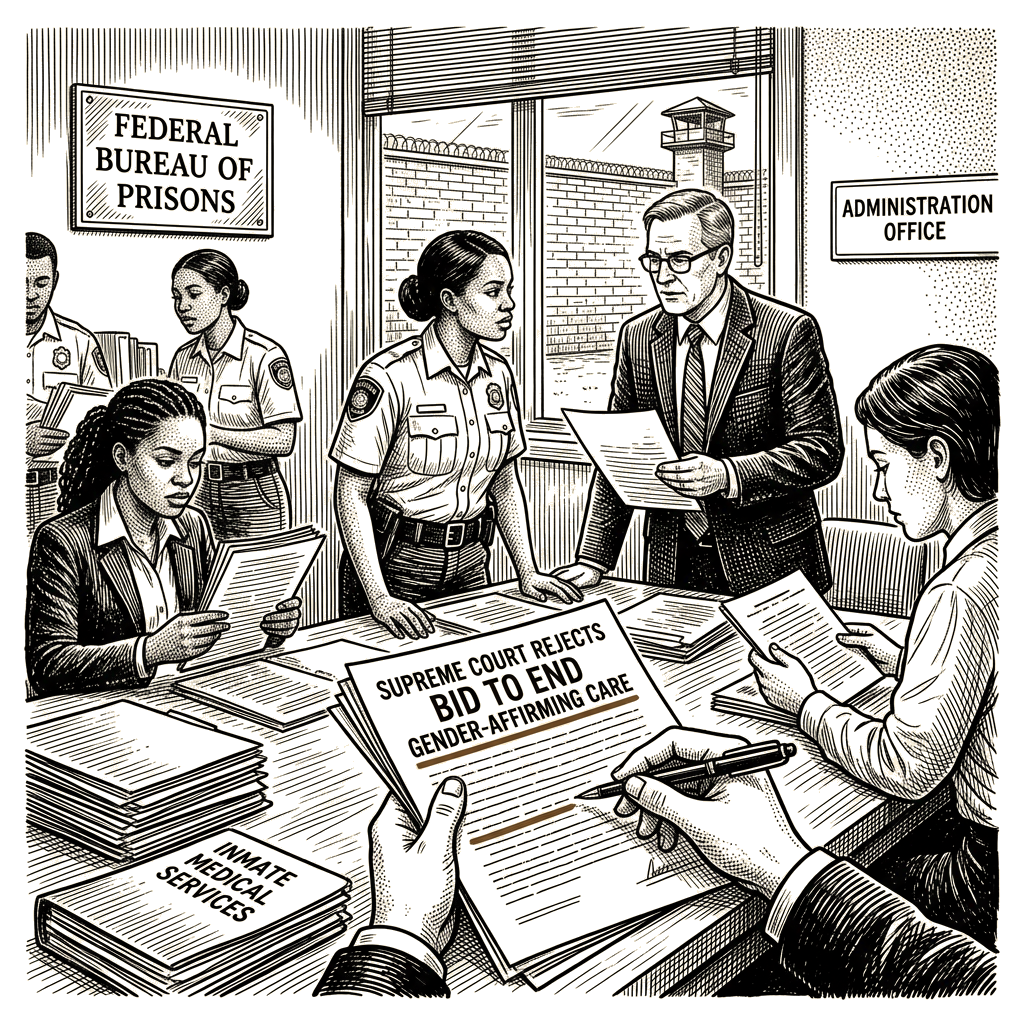
The Supreme Court denied the Trump administration’s request on Wednesday, requiring the administration to continue providing gender-affirming care to transgender inmates in federal prisons. The emergency ruling maintains U.S. District Judge Royce Lamberth’s injunction against a Bureau of Prisons policy that would terminate hormone therapy and other treatments.
The action came in an emergency appeal and carried no explanation. The order stated: “The application for stay presented to The Chief Justice and by him referred to the Court is denied.” The Supreme Court said Justices Clarence Thomas and Samuel Alito would side with the Trump administration and grant the application for a stay.
Li Nowlin-Sohl, a senior staff attorney at the American Civil Liberties Union and a lawyer involved in the case, said the organization believes more than 2,000 people in Bureau of Prisons custody identify as transgender. The agency stopped publishing data reflecting transgender inmates after Trump took office in 2025 and records only male or female individuals incarcerated in the federal system.
Nowlin-Sohl said Kingdom v. Trump represents 1,000 inmates who have a gender dysphoria diagnosis. The ACLU believes about 800 have been prescribed hormone therapy, and many are also receiving social transition accommodations, she said.
NPR reported that access to gender-affirming care is considered medically necessary to treat gender dysphoria, a medical term used to describe deep discomfort caused by a mismatch between a person’s assigned sex at birth and their gender identity. NPR said people without the care can struggle severely with mental health issues including heightened anxiety and depression, with some turning to self-harm and suicide.
Gender-affirming care can include “…hormone therapy, and gender-affirming surgeries among others,” according to the World Professional Association for Transgender Health. The standards were developed by experts in transgender health and are used by organizations across the world. Some transgender people may require hormone therapy and gender-affirming surgeries, while others may not require any of those interventions.
NPR previously reported on the impact of losing hormone treatments among people who are incarcerated. One woman said she experienced severe physical and mental anguish when she lost access to hormone treatments.
In its request for an emergency stay on the earlier rulings, the Trump administration argued that providing this specialized care poses several risks overall, including risks for recipients of the care, whom it said would become “targets for attacks.” The administration also raised what it called “fairness concerns,” saying the care would “breed resentment” with other inmates. Its Supreme Court filings also questioned the standards of care published by the World Professional Association for Transgender Health.
The ACLU responded that the Bureau of Prisons has treated people diagnosed with gender dysphoria since at least 1992. The organization wrote: “Had BOP’s doctors found this treatment unhelpful or harmful to patients or had the agency found that the treatment compromised security, surely BOP would have mentioned it in the administrative record.” The ACLU called this a “glaring omission” and said it appeared to indicate that the administration’s arguments were simply “contrived.”
Before the Supreme Court acted, Lamberth barred the Bureau of Prisons from implementing the policy that summer. The U.S. Court of Appeals for the District of Columbia Circuit rejected the administration’s request to pause Lamberth’s order. U.S. Solicitor General D. John Sauer then asked the Supreme Court to intervene.
NPR said the Supreme Court’s prison-care decision “is at odds with other rulings that support the Trump administration’s anti-trans policy agenda.” Last June, the court ruled that states can ban transgender girls from participating in sports at publicly funded schools. Separately, in 2025, the court upheld state laws that make it illegal for doctors and other health professionals to provide gender-affirming care for minors.
NPR said one of President Trump’s first executive orders in his second term “targeted the trans community” with a declaration that his administration recognizes just two sexes, male and female. NPR said the order was the basis for a host of “anti-trans policies” throughout the administration.
The Supreme Court’s order does not end the case. Lamberth’s injunction remains in place, and the legal battle over the prison policy continues.