Department of Homeland Security stopped regular deportation-data releases in January 2025
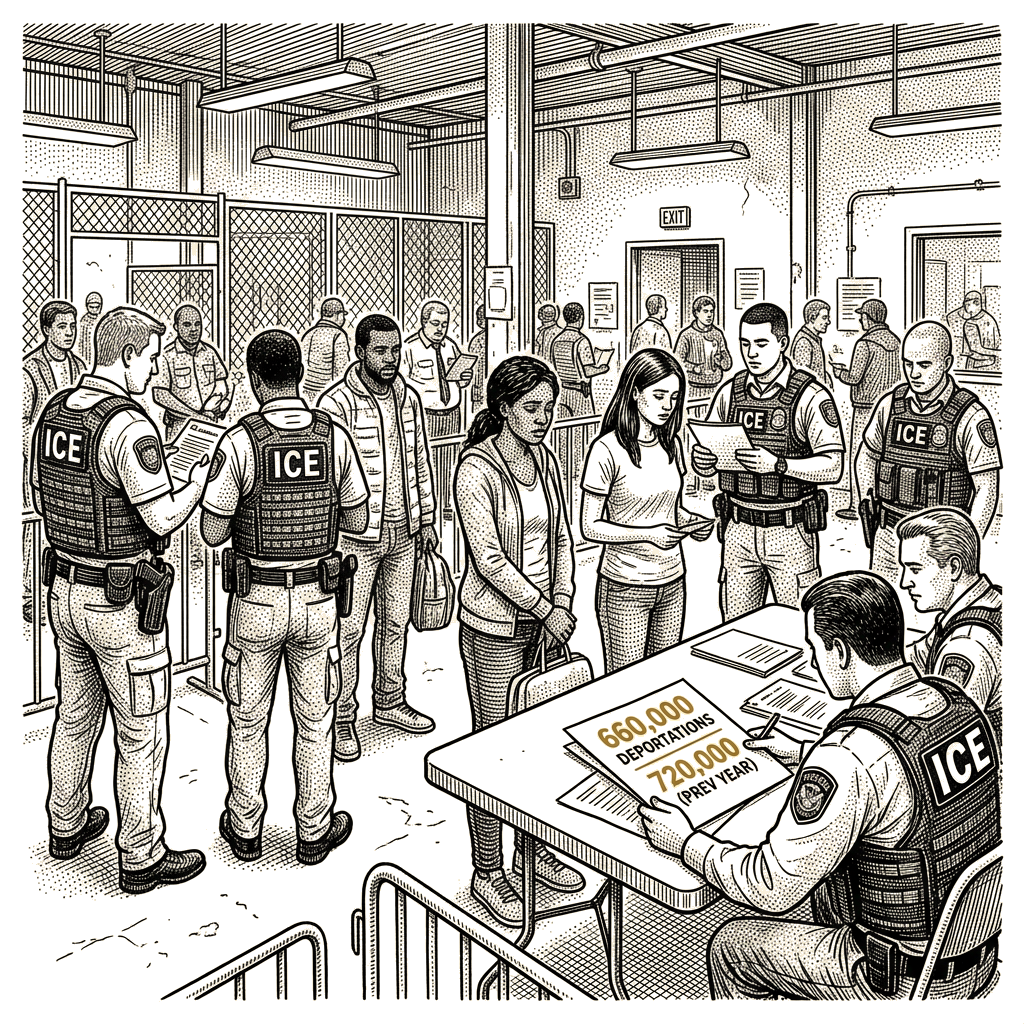
A Migration Policy Institute report released Thursday estimated that the Trump administration deported about 660,000 people during the last fiscal year, up from 620,000 during the first year of Trump’s second administration. The report also found that the Department of Homeland Security carried out 980,000 deportations during the first 18 months of the administration’s second term.
The 660,000 estimate was 26% higher than the yearly average from 2021 to 2024 during Joe Biden’s presidency. The report said the totals remained below previous highs in the early 2000s, including 1.86 million deportations recorded in 2000 under Bill Clinton.
The administration fell short of the promise it made when it received billions from Congress: The money would allow for 1 million deportations annually. Trump returned to power in 2025 promising to reduce crossings at the southern border and intensify immigration enforcement. His administration pushed through restrictions on both legal and illegal immigration and launched high-profile arrest operations as arrests ramped up across the country. The billions Congress provided were intended to expand immigration enforcement.
The Migration Policy Institute based its analysis on publicly available data obtained through Freedom of Information Act requests. It came after the Department of Homeland Security stopped publicly releasing similar figures in January 2025, making it difficult to track one of Trump’s key campaign promises. The administration said it was transparent.
On Tuesday, the administration released figures in a document boasting of its immigration achievements, including 1.2 million migrants deported or removed during the second term. The 1.2 million figure could not immediately be reconciled with the institute’s analysis. Figures the administration has released were inconsistent and unverifiable.
White House spokesperson Lauren Bis said, “President Trump has delivered the largest reduction in illegal immigration in modern history.” In the absence of regular Homeland Security data, analysts and activists interested in immigration trends have relied on information obtained through lawsuits and limited, sporadic federal-agency releases.
The report cited changes in the migrant population as one challenge. Historically, many immigrants living in the United States without authorization came from Mexico and did not often seek asylum; in recent years, migrants have arrived from a wide range of countries, which the institute said can make deportation more complicated. Immigration courts, which ultimately decide whether someone can be removed, also face significant case backlogs.
Voluntary departures — when people give up their cases in immigration court and agree to leave the country — reached an all-time high, according to the institute. About 170,000 people chose that route since Trump returned to office in January 2025. People who choose voluntary departure could one day return to the United States. Some immigrant advocates and lawyers said people sometimes give up their court fight and agree to leave simply to get out of U.S. Immigration and Customs Enforcement detention.
The administration was also increasingly deporting people arrested in the country’s interior, the institute said, reflecting stepped-up enforcement against migrants who had been in the country for a long time. In 2025, about 28% of people deported were arrested inside the country; by July 2026, that share had risen to 39%.
Migrants arrested at the southern border still accounted for 69% of all deportations between Jan. 20, 2025, and July 31, 2026, the institute said. People who had been in the country longer may have more opportunities to contest removal, while the government typically has greater authority to fast-track deportations for people arrested at the border.
The analysis said most people deported had never been convicted of a crime, a pattern also found in previous government data. The finding came as the administration said it was targeting the “worst of the worst.”
Taken together, the report shows increased removals without a return to early-2000 highs. The gap between the institute’s 660,000 annual estimate and the administration’s 1.2 million second-term total remained unresolved while the Department of Homeland Security had stopped publishing regular deportation figures.