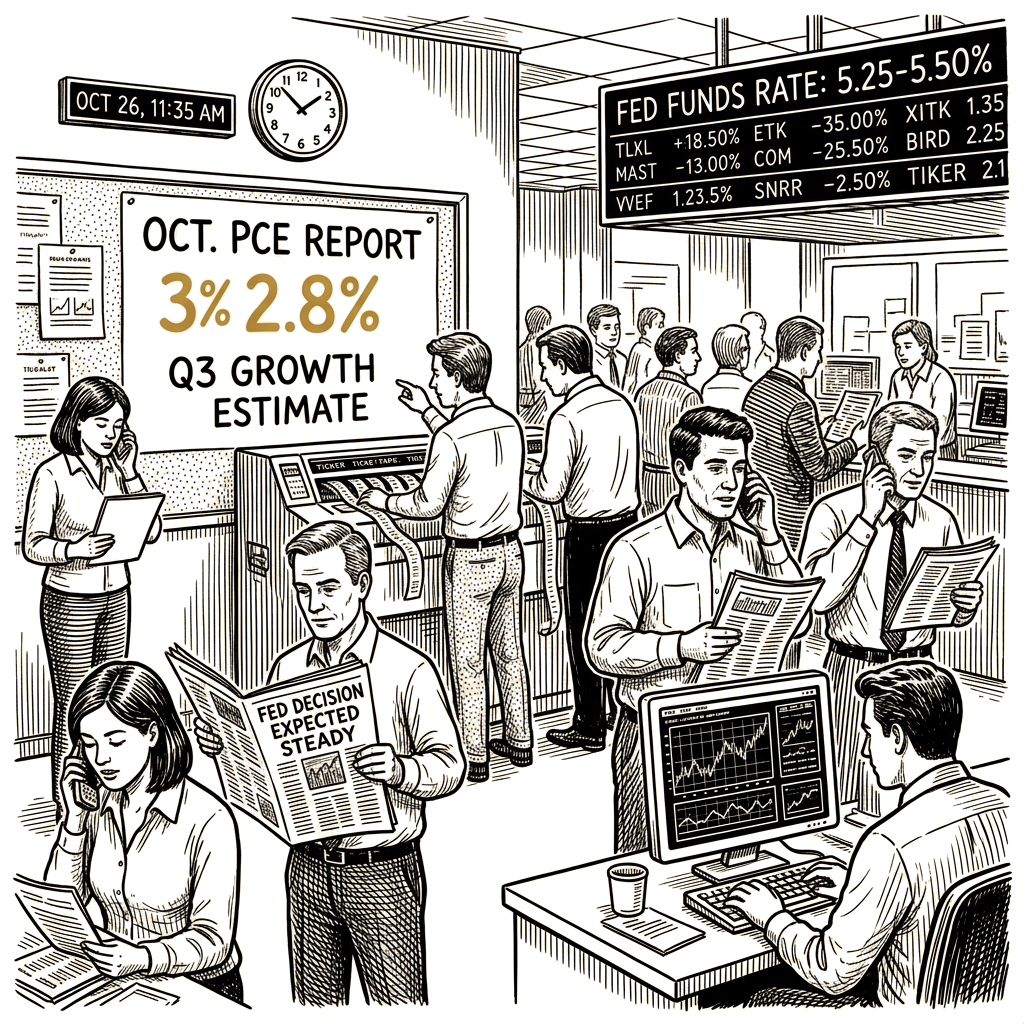
Conference Board confidence survey, GDP estimate and PCE report also due
Next week’s U.S. economic calendar concentrates the Federal Reserve’s rate decision, a third-quarter growth estimate and an inflation update between Tuesday and Thursday, with corporate earnings reports running alongside them. The Conference Board, a business group, publishes its consumer-confidence survey Tuesday, the Federal Reserve closes a two-day meeting Wednesday, and the Commerce Department releases its first estimate of third-quarter gross domestic product Thursday, the same day as the September personal consumption expenditures report. Earnings from Alphabet, Intel, Amazon and other major companies run through Friday.
The Federal Reserve is expected to hold its benchmark interest rate steady when its two-day meeting closes Wednesday, following a hike at its September meeting. The central bank has been signaling that it remains worried about inflation and that it may have to continue raising rates to help tame rising costs, and Wall Street still expects one more rate hike at the December meeting. Higher interest rates make borrowing more costly, which in turn can slow economic growth and cool stubbornly hot inflation. The Fed has to balance that effect against supporting the jobs market: higher rates and slower growth could dampen rising inflation, but they could also hurt job growth at a time when the somewhat resilient employment market is showing signs of stress.
Economists expect the Commerce Department’s initial report on third-quarter growth, due Thursday, to show a sluggish result. They forecast that gross domestic product, the nation’s output of goods and services, rose 1.7% from July through September, an easing from 2.2% growth during the second quarter. The release is the first of three estimates for the quarter and can be revised higher or lower. GDP growth has been slowing since the first quarter under pressure from higher oil prices fueling already stubborn inflation.
The same Thursday schedule includes the personal consumption expenditures report, or PCE. Economists expect the inflation measure to have jumped at a 3.7% rate in September, up from a 3.4% rate in August, with prices on everything from gasoline to clothing and groceries marching higher at a faster rate. The PCE is the preferred measure of inflation used by the Fed, which wants to bring inflation down to its target rate of 2%. Several other measures of inflation have also moved stubbornly above a 3%.
Inflation has been rising at an even sharper rate since the U.S. war with Iran started in February, a conflict that essentially shut down the vital Strait of Hormuz and stifled the global oil supply. That has prompted a surge in gasoline prices that has been a direct hit to household budgets. Higher diesel fuel costs have raised the cost of shipping and warehousing goods, which businesses typically pass along to consumers.
Those pressures arrive against an economy whose growth has been bolstered by a strong stock market and by businesses investing in artificial-intelligence technology. The latest updates on retail sales show that household spending remains strong on the surface, though much of that spending reflects paying higher costs, especially for gasoline. Households have been struggling with higher costs on everything from gas to groceries eating up more of their budgets at the same time that average wages for workers stagnate.
The Conference Board’s Tuesday survey is expected to show that consumer confidence kept shrinking in October. Americans are losing confidence in the economy as rising prices for everything from gas to groceries strain household budgets. The last report showed confidence plunged in September to the lowest level in more than a decade, and the survey puts consumer confidence down sharply from two years ago.
Over those two years, the United States was involved in broad tariff disputes with much of the world, including neighboring countries and close trading partners. The uncertainty around sudden shifts in tariffs left businesses and consumers wary about planning ahead over worries about higher costs. The U.S. war with Iran that started in 2026 sharply reduced global oil supplies and contributed to rising prices.
Corporate earnings reports could shed light on AI investments and household spending. Reports from big names could provide more insight into plans for AI spending and how inflation is influencing profits. The most closely watched reports are likely to come from the big technology and technology-related companies, which have seen their stock values surge as they invest heavily in artificial-intelligence technology with hopes for a big benefit. Google’s parent company Alphabet reports its results Wednesday, with Intel and Amazon reporting theirs Thursday. Analysts expect all three companies to report profit gains as Wall Street tries to determine whether their big artificial-intelligence investments will translate into future growth and whether their outsized stock values are justified.
A wide range of other companies will report results this week. The broader slate could provide more insight into inflation’s impact across industries. Shipping company UPS and beverage giant Coca-Cola report Tuesday, Starbucks reports Thursday, and oil giants Exxon Mobil and Chevron report Friday.
All of it arrives just weeks before the Nov. 3 midterm elections that will determine the future makeup of Congress, with the U.S. economy contending with constantly shifting global trade conflicts and a global oil-supply disruption caused by the U.S. war with Iran. The releases will provide new readings on inflation, consumer confidence, interest rates and output before the elections.